Best Bowls for Flat-Faced Dogs: Shallow & Tilted
Feeding bowls designed for brachycephalic dogs. Shallow profiles, tilted angles, and elevated stands that make eating easier for short-snouted breeds.

Alex Corsa
Founder & Editor ·
📖 Table of Contents
Affiliate Disclosure: As an Amazon Associate, we earn from qualifying purchases. This comes at no extra cost to you and helps support our independent testing and reviews. We only recommend products we genuinely believe in.
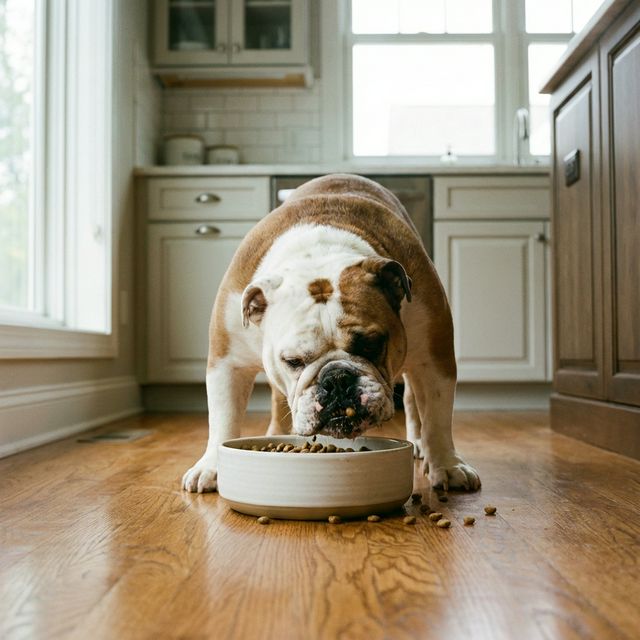
Have you ever watched a flat-faced dog try to eat from a standard dog bowl? Their nose hits the back rim, they can only reach food at the edges, and half the kibble ends up scattered across your kitchen floor. What should take three minutes turns into ten minutes of frustrated pushing, snorting, and mess.
The first bowl I bought Mochi was a deep stainless steel model from the pet store. He could barely reach the food at the bottom. He would press his face down into the bowl, his nostrils would close against the metal, and he would pull back gasping. Then try again. It was awful to watch.
Switching to a shallow, tilted bowl changed everything. He eats comfortably, swallows less air, and finishes meals without the facial gymnastics. The right bowl is one of those deceptively simple upgrades that makes a significant daily difference.
For related feeding strategies, see our slow feeder guide and French Bulldog food guide.
Why Standard Bowls Fail Brachycephalic Dogs
The Depth Problem
Most dog bowls are 3-4 inches deep. A Labrador with a 6-inch muzzle reaches the bottom without any part of their face contacting the bowl sides. A French Bulldog with a 1-inch muzzle has to submerge their entire face to reach food at the bottom of the same bowl.
This creates several problems:
- **Blocked nostrils. The face presses against food or bowl walls, partially obstructing already-compromised breathing
- Swallowed air. Struggling to reach food increases aerophagia (air swallowing), which causes gas and bloating
- Eye irritation. Facial folds push into wet food or water, trapping moisture around the eyes
- Mess.** Food and water get pushed out as the dog’s flat face displaces volume inside the bowl
The Angle Problem
Standard bowls sit flat on the floor. To eat from a flat bowl, a dog must bend their neck downward at a steep angle. For brachycephalic dogs, this neck flexion can compress the soft palate against the airway, worsening the already-restricted airflow.
A tilted or elevated bowl reduces the angle, allowing the dog to eat with their neck in a more neutral position.
The Width Problem
Narrow, deep bowls force brachycephalic dogs to squeeze their wide jaws into a small opening. Wide, shallow bowls let them approach food on their own terms, using the side-to-side motion that flat-faced dogs naturally prefer.
What to Look For
Shallow Profile
The ideal bowl for a brachycephalic dog is no more than 2 inches deep. This allows the dog to reach all the food without pressing their face against the bottom. Some owners even use dinner plates for wet food, which works perfectly fine.
Wide Opening
A diameter of at least 6-8 inches gives enough room for a flat face to maneuver. Avoid bowls with lips or inward-curving rims that restrict access.
Non-Slip Base
Flat-faced dogs push bowls. Their faces act as shovels, propelling the bowl across the floor with every bite. A heavy base, rubber gasket, or suction cup design keeps the bowl stationary.
Easy to Clean
Stainless steel and ceramic are the most hygienic materials. Plastic bowls scratch, and those scratches harbor bacteria. This matters more for brachycephalic dogs because their facial folds are already bacterial breeding grounds; you do not want the food bowl adding to the problem.
Tilted or Elevated
A 15-30 degree tilt raises the food side toward the dog, reducing neck bend and improving access. Alternatively, an elevated stand that places the bowl 4-6 inches off the floor achieves a similar benefit.
Bowl Types Ranked
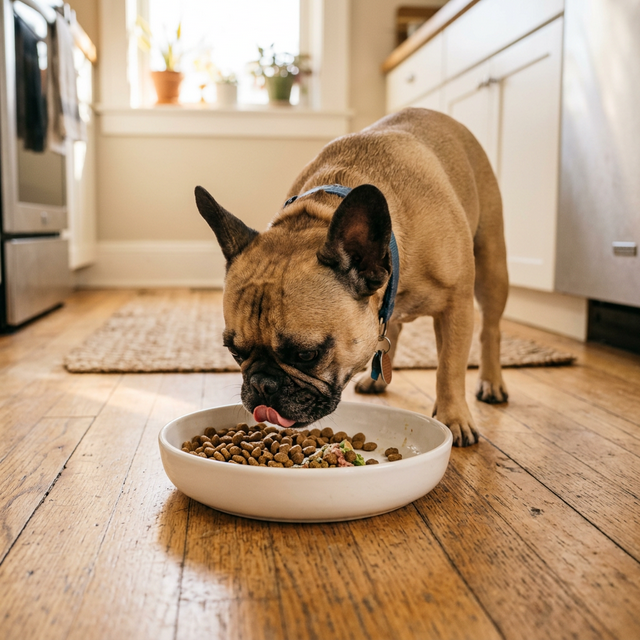 Face-above-bowl is the goal. In a properly sized shallow bowl, a Frenchie’s eye level stays above the bowl rim — no neck compression, no blocked nostrils.
1. Shallow Tilted Bowls (Best for Most Flat-Faced Dogs)
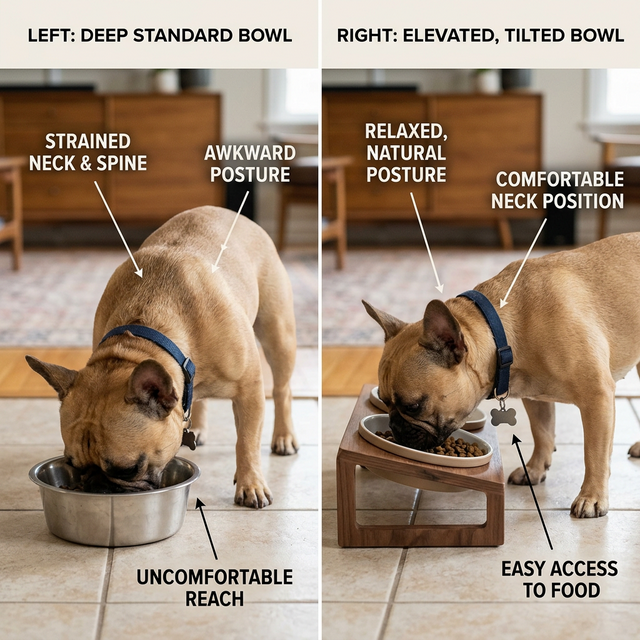 The posture difference is dramatic. In a deep bowl, a Frenchie has to compress its airway to reach the food — the exact opposite of what a brachycephalic dog needs.
These combine the two most important features: shallow depth for face clearance and a tilted angle for comfortable neck position.
**Best for: Daily feeding for all brachycephalic breeds Look for: Stainless steel or ceramic construction, rubber base, 15-degree minimum tilt
The improvement is immediate and obvious. Dogs who previously struggled through every meal will eat calmly and quickly from a properly angled shallow bowl.
2. Elevated Feeding Stations
A stand that raises the bowl to chest height takes pressure off the neck and improves swallowing. Studies on elevated feeding and bloat risk have produced mixed results; the current veterinary consensus is that slight elevation (4-6 inches for small/medium breeds) is generally safe and may benefit brachycephalic dogs specifically.
Best for: Dogs with neck pain, older brachycephalic dogs, dogs that eat from elevated surfaces by choice (many will steal food from coffee tables if given the chance)
Caution: Very high elevation (bowl at shoulder height) is more controversial. Stick with chest-height placement.
3. Slow Feeder Bowls (Dual Purpose)
Many slow feeder bowls designed for flat-faced breeds combine shallow profile with maze-like ridges that extend meal time. These address both the bowl-shape problem and the gulping problem simultaneously.
Our slow feeder guide covers specific models in detail. If your dog eats too fast (most brachycephalic dogs do), a flat-faced-specific slow feeder may be the single best bowl investment you make.
4. Water Bowls
Water bowls need similar considerations but with one additional factor: splash control. Flat-faced dogs are messy drinkers. Their short muzzles cannot form a tight seal, and water splashes everywhere.
Options that help:
- No-splash bowls with floating plates that limit the water surface
- Heavier ceramic bowls that resist tipping
- Elevated water stations that reduce the drinking angle
- Water fountain style dispensers with shallow drinking surfaces
Expect some mess regardless. Keep a mat under the water bowl and accept that brachycephalic dog ownership involves wet kitchen floors.
Material Comparison
| Material | Hygiene | Durability | Weight | Best For |
|---|---|---|---|---|
| Stainless steel | Excellent | High | Moderate | Daily use, easy cleaning |
| Ceramic | Excellent | Moderate (can chip) | Heavy (stable) | Dogs who push bowls |
| Melamine | Good | High | Light | Travel |
| Plastic | Poor (scratches) | Low | Light | Not recommended long-term |
Stainless steel wins overall for daily use. Ceramic is the choice for bowl-pushers because its weight keeps it planted. Avoid plastic except for temporary use during travel.
Multi-Dog Households
If you have a brachycephalic dog and a non-brachycephalic dog eating in the same area, you will need different bowls. A shallow bowl that is perfect for a Frenchie will frustrate a longer-snouted dog who keeps nosing food over the low edges.
Feed dogs separately or in different rooms. This also prevents resource guarding and allows you to monitor each dog’s intake accurately, which matters when one dog is on a calorie-controlled diet.
Our Cleaning Protocol
Bacterial contamination in dog bowls is a real problem. Studies have found that dog bowls rank among the top germ-carrying items in a home. For brachycephalic dogs with compromised immune function in their skin folds, clean bowls are especially important.
Daily: Wash with hot soapy water after every meal, rinse thoroughly. Water bowls should be dumped, washed, and refilled at least once daily.
Weekly: Run through the dishwasher on a hot cycle (stainless steel and ceramic only). Or soak in a diluted bleach solution (1 tablespoon per gallon of water) for 10 minutes, then rinse thoroughly.
Replace:** Stainless steel and ceramic bowls last for years. Replace any bowl that develops cracks, chips, or stubborn staining that will not clean out.
Frequently Asked Questions
How many bowls does my brachycephalic dog need?
At minimum: one for food and one for water. I recommend two water bowls placed in different locations so your dog always has access, plus a travel water bottle for walks. Having a spare food bowl makes the cleaning rotation easier.
Should I use an elevated bowl for my puppy?
Yes, but adjust the height as they grow. For an 8-week-old French Bulldog puppy, 2-3 inches of elevation is appropriate. Adult height is typically 4-6 inches. Some elevated stands have adjustable legs, which is ideal for growing puppies.
My dog flips their bowl over. What can I do?
Heavy ceramic bowls are hardest to flip. Alternatively, use a non-slip silicone mat under the bowl, or invest in a suction-cup base model. Some owners bolt a bowl holder to a wall or crate, which eliminates the problem entirely.
Are automatic feeders okay for brachycephalic dogs?
The food dispensing part is fine. The problem is that most automatic feeders use deep, narrow bowls. Replace the included bowl with a shallow brachycephalic-friendly option, or choose a flat-plate style automatic feeder.
You Might Also Like
Alex Corsa
Founder & Editor
Alex Corsa has owned and fostered dogs for over 12 years, with hands-on experience caring for everything from senior mastiffs to reactive rescues and brachycephalic breeds. He started DogSupplyFinder after spending two frustrating years testing gear that failed, broke, or simply didn't work as advertised. Every recommendation on this site has been vetted against real-world use — not affiliate commission rates. Alex cross-references veterinary guidelines and AAFCO regulations for all food and health content.
Dog Tips, Deals & Gear Guides
Expert buying guides, breed-specific product picks, and honest gear reviews. Plus our free New Puppy Checklist for subscribers.
📬 No spam, ever. Unsubscribe anytime. · Get the free puppy checklist