7 Best Dog Muzzles for Safety and Comfort
Basket, wire, and silicone muzzles compared for vet visits, training, and reactive dogs. From $8 to $45.

DogSupplyFinder Research Team
Product Research ·
📖 Table of Contents
Affiliate Disclosure: As an Amazon Associate, we earn from qualifying purchases. This comes at no extra cost to you and helps support our independent testing and reviews. We only recommend products we genuinely believe in.
A 2023 survey by the AVMA found that dog bite injuries in the U.S. account for an estimated $1 billion in insurance costs annually (Insurance Information Institute, 2024). Muzzles prevent the worst outcomes of aggression, fear, and stress, yet they’re still one of the most misunderstood pieces of dog equipment.
The stigma is wrong. A muzzled dog isn’t a “bad” dog. It’s a dog whose owner is responsible enough to manage risk. Veterinary behaviorists recommend muzzle training for every dog, not just reactive ones, because every dog might need a muzzle at some point (vet visits, emergencies, encounters with wildlife).
TL;DR: The Baskerville Ultra ($14) is the best muzzle for most dogs, flexible rubber, heat-moldable for custom fit, allows panting and drinking. For large aggressive dogs, the BRONZEDOG wire basket ($20) is indestructible. For short-snouted breeds, the Canine Friendly Short Snout muzzle ($18) actually fits. A muzzle should never prevent panting.
Quick Comparison
| Muzzle | Type | Best For | Sizes | Price |
|---|---|---|---|---|
| Baskerville Ultra | Rubber basket | Most dogs / vet visits | 6 | $12-$16 |
| BRONZEDOG Wire | Metal basket | Large / aggressive dogs | 8 | $18-$22 |
| Dean & Tyler Freedom | Leather basket | Working dogs / extended wear | 30+ | $35-$45 |
| Mayerzon Basket Muzzle | Silicone basket | Comfort-first / training | 7 | $10-$14 |
| Canine Friendly Short Snout | Mesh short-snout | Brachycephalic breeds | 4 | $15-$20 |
| CollarDirect Leather | Leather basket | Classic style / large breeds | 10 | $20-$30 |
| GGWILD Soft Muzzle | Fabric sleeve | Quick vet checks only | 5 | $8-$12 |
Best Overall: Baskerville Ultra
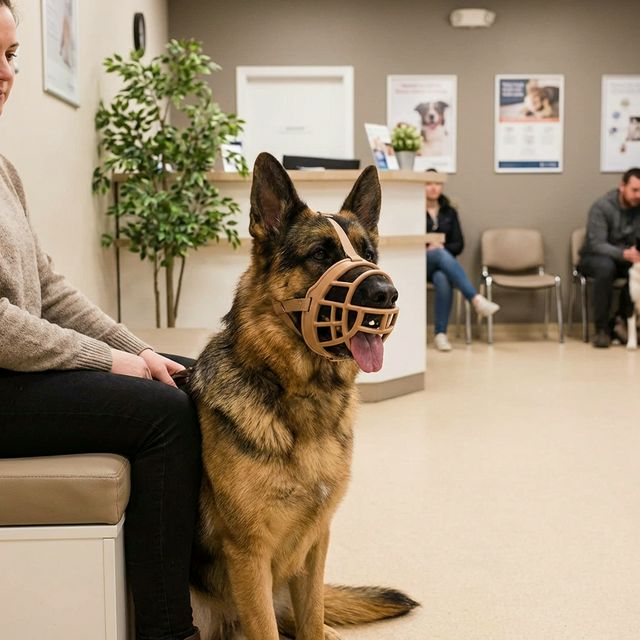
The Baskerville Ultra has been the default recommendation from veterinary behaviorists for over a decade, and that reputation is earned. The thermoplastic rubber (TPR) is flexible enough to be comfortable yet rigid enough to prevent bites. It’s the muzzle that professional dog trainers keep in their bags.
What sets it apart is the heat-moldability. Drop the muzzle in hot water for 30-60 seconds, let it cool slightly, then mold it to your dog’s snout shape. This custom fit reduces rubbing and eliminates the “one shape fits all” problem that plagues cheaper muzzles. Neoprene-padded straps prevent chafing behind the ears, a detail that matters during longer wear sessions.
The wide basket openings let dogs pant freely, drink water, and accept treats. This is critical: a muzzle that prevents panting is a muzzle that causes overheating. The Baskerville Ultra never restricts airflow.
Available in 6 sizes covering dogs from Chihuahuas to Great Danes. Sizing can run small for broad-snouted breeds like Pit Bulls, measure carefully and size up if in doubt.
Price: $12-$16 Sizes: 1-6 (covers most breeds) Best for: Vet visits, grooming, muzzle training, and daily walking of reactive dogs
Best for Large Dogs: BRONZEDOG Wire Basket
When rubber isn’t enough, metal is. The BRONZEDOG wire basket muzzle is virtually indestructible, dogs that chew through Baskervilles in minutes can’t damage a steel wire cage. It’s the muzzle for German Shepherds, Rottweilers, and Malinois with serious bite pressure.
Maximum airflow is the biggest advantage. Wire mesh provides more ventilation than any other muzzle type, which matters enormously for heavy panters and dogs wearing muzzles during physical activity. Adjustable leather straps distribute weight across the head rather than concentrating pressure on the nose bridge.
The downsides are practical. Wire can scratch furniture, car interiors, and human skin during enthusiastic greetings. The metal gets cold in winter (some owners wrap the nose bar with vet tape). And at roughly double the Baskerville’s weight, some dogs resist it initially.
Price: $18-$22 Sizes: Multiple (measure snout circumference and length) Best for: Large breeds, aggressive chewers, and dogs with bite histories
Best for Extended Wear: Dean & Tyler Freedom
Leather basket muzzles are the professional handler’s choice for all-day wear. The Dean & Tyler Freedom uses heavy felt padding along the nose bridge and comes in over 30 sizes, more sizing options than any other muzzle brand. If your dog falls between sizes in other brands, Dean & Tyler probably has an exact match.
The leather softens with use and molds to the dog’s face over time. It’s heavier than rubber or silicone alternatives, but that weight is better distributed thanks to wider straps. Working dogs in police, military, and protection training frequently train in leather basket muzzles for this reason.
Price: $35-$45 Best for: Police/military K9s, protection training, and dogs that wear muzzles for hours at a time
Best Budget: Mayerzon Basket Muzzle
The Mayerzon offers basket muzzle functionality at sleeve muzzle prices. Available in soft silicone with ventilation holes large enough for panting and treat-taking. It’s not as durable as the Baskerville or BRONZEDOG, but for basic muzzle training and occasional vet visits, it works.
The silicone is softer than the Baskerville’s TPR, which some dogs tolerate better during initial muzzle training. Less rigid means less “cagey” feeling against the snout. Seven sizes cover a decent range of breeds.
Price: $10-$14 Best for: Muzzle training introduction and budget-conscious owners
Best for Flat-Faced Breeds: Canine Friendly Short Snout
Standard basket muzzles don’t fit brachycephalic breeds. Pugs, Bulldogs, Boston Terriers, and Boxers have snouts too short for conventional shapes. The Canine Friendly Short Snout muzzle is specifically designed for these breeds, with a wider, shallower basket that accommodates the flat face shape.
The mesh fabric is breathable enough for short-duration use, vet visits, nail trims, grooming appointments. It’s not ideal for extended outdoor wear because mesh restricts airflow more than an open basket design. For brachy breeds that already have compromised breathing, keep wear time under 30 minutes.
Price: $15-$20 Best for: Pugs, Bulldogs, Boston Terriers, Shih Tzus, and other flat-faced breeds
Classic Style: CollarDirect Leather Basket
A traditional leather basket muzzle at a mid-range price point. CollarDirect offers 10 sizes with adjustable straps and a wider leather nose piece than cheaper alternatives. The basket is open enough for panting and drinking, though not as spacious as the Baskerville or BRONZEDOG.
Build quality sits between the budget Mayerzon and the premium Dean & Tyler. It’s a reasonable middle ground for owners who want leather’s comfort without the $40+ Dean & Tyler price.
Price: $20-$30 Best for: Owners who prefer leather aesthetics at a moderate price
For Quick Vet Checks Only: GGWILD Soft Muzzle
Fabric sleeve muzzles hold the mouth closed. This prevents biting but also prevents panting, drinking, and free breathing. They are appropriate for one use case only: brief veterinary examinations lasting under 5 minutes.
Never use a sleeve muzzle for walks, training, or any extended period. A dog that can’t pant can’t regulate its body temperature and can overheat dangerously within minutes.
Price: $8-$12 Best for: Short vet visits and emergency situations only, never extended wear
How to Muzzle Train Your Dog
Want your dog to actually tolerate the muzzle instead of spending 10 minutes trying to paw it off? Muzzle training takes 5-10 days and follows a predictable pattern:
Day 1-2: Introduction
Hold the muzzle in your hand and let your dog sniff it. When the dog touches the muzzle with its nose, immediately give a high-value treat. Repeat 10-15 times per session, 2-3 sessions per day. The muzzle should become associated with food, not restraint.
Day 3-4: Nose In
Smear peanut butter or squeeze cheese inside the muzzle basket. Let your dog push its nose in to lick the treat. Don’t fasten the straps yet. Just let the dog voluntarily put its snout in and eat. When it does, praise calmly.
Day 5-7: Brief Wearing
After the dog confidently pushes its nose in for treats, briefly clip the strap while feeding treats through the basket. Start with 5-10 seconds. Build to 30 seconds. Remove the muzzle while the dog is still calm, don’t wait for fussing.
Day 8-10: Duration Building
Gradually increase wearing time to 5, 10, then 15+ minutes. Walk around the house, go into the yard, take a short walk. Continue treating through the basket periodically. Most dogs accept the muzzle comfortably within 10 days of consistent training.
Muzzle Sizing Guide
Proper fit prevents both injuries and escapes. Measure three things:
- Snout length: From the tip of the nose to just below the eyes (where the muzzle will sit)
- Snout circumference: Around the widest part of the snout with the mouth closed, then add 1-2 inches so the dog can open its mouth to pant
- Neck circumference: Behind the ears where the strap sits
If your dog falls between sizes, always size up. A slightly loose muzzle is annoying but safe. A tight muzzle restricts breathing and causes panic.
Frequently Asked Questions
Is it cruel to muzzle a dog?
No. The AVMA, ASPCA, and most veterinary behaviorists recommend muzzle training for all dogs as a safety practice (AVMA, 2024). A properly fitted basket muzzle allows full panting, drinking, and treat-taking. The perception of cruelty comes from improperly fitted sleeve muzzles that restrict breathing.
How long can a dog wear a muzzle?
A basket muzzle (Baskerville, wire, leather) can be worn for hours if properly fitted. The dog must be able to fully open its mouth to pant. Sleeve or fabric muzzles that hold the mouth shut should never be worn longer than 5 minutes. Monitor for signs of stress regardless of type.
Can a dog eat with a muzzle on?
Dogs can take treats through basket muzzle openings but cannot eat full meals. Remove the muzzle for feeding. The ability to push treats through the basket is actually critical for muzzle training, it creates positive associations with wearing the muzzle.
What size Baskerville Ultra do I need?
Baskerville offers sizes 1-6. Measure your dog’s snout circumference with the mouth slightly open. Common sizing: Size 3 fits most medium breeds (Beagles, Cocker Spaniels), Size 4 fits most large breeds (Labs, Goldens), Size 5 fits extra-large breeds (German Shepherds, Rottweilers). When in doubt, the Baskerville is heat-moldable, so you can adjust after purchase.
Do muzzles stop barking?
Basket muzzles reduce barking volume but don’t prevent it. Dogs can still bark, whine, and vocalize through basket openings. If barking is your primary concern, a muzzle isn’t the right tool, look into bark training or consult a veterinary behaviorist.
You Might Also Like
DogSupplyFinder Research Team
Product Research
Our research team analyzes ingredient lists, AAFCO feeding standards, safety specifications, and thousands of verified owner reviews, with particular attention to breed-specific needs such as brachycephalic breeds and dogs with dietary sensitivities. Evaluations prioritize safety specs, third-party certifications, and manufacturer quality controls over marketing language.
Dog Tips, Deals & Gear Guides
Expert buying guides, breed-specific product picks, and honest gear reviews. Plus our free New Puppy Checklist for subscribers.
📬 No spam, ever. Unsubscribe anytime. · Get the free puppy checklist