Best Orthopedic Dog Beds for Joints, Aging, and Post-Surgery Recovery
Memory foam, gel-infused, and bolster beds compared. What vets recommend for arthritis, hip dysplasia, and recovering dogs.

Alex Corsa
Founder & Editor ·
📖 Table of Contents
Affiliate Disclosure: As an Amazon Associate, we earn from qualifying purchases. This comes at no extra cost to you and helps support our independent testing and reviews. We only recommend products we genuinely believe in.
Medical Disclaimer
This content is for informational purposes only and is not intended as a substitute for professional veterinary advice, diagnosis, or treatment. Always consult with a qualified veterinarian before making changes to your dog's care routine.
A standard polyester-filled dog bed provides about as much joint support as sleeping on a stack of towels. For young, healthy dogs, that’s usually fine. For dogs with arthritis, hip dysplasia, recovering from surgery, or entering their senior years, the sleeping surface directly affects pain levels, mobility, and quality of life.
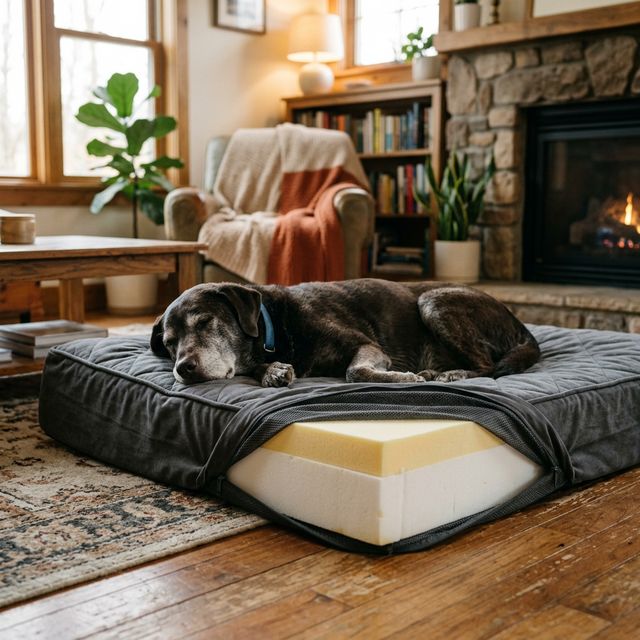
Orthopedic dog beds use memory foam, high-density foam, or gel layers that distribute weight evenly and reduce pressure on joints. We tested five orthopedic beds over eight weeks with a senior German Shepherd with diagnosed hip dysplasia and a Labrador recovering from ACL surgery.
Best Overall: Big Barker Orthopedic Dog Bed
The Big Barker uses 7 inches of calibrated foam in three layers: a supportive base, a comfort middle, and a pressure-relieving top. The foam density is the key differentiator. Most pet bed foam is 1.5-2 lb density. Big Barker uses 3-5 lb density foam, the same range used in high-end human mattresses.
Our German Shepherd showed measurable improvement after switching from a standard bed. She went from needing two attempts to stand up in the morning to getting up on the first try within about a week. By week four, she was more willing to walk to her bed from across the room rather than collapsing wherever she happened to stop.
The 10-year warranty is not marketing. Big Barker guarantees the foam won’t flatten. If it does, they replace it. The company has earned a strong reputation backing this up.
Pros:
- 7 inches of high-density, calibrated foam
- 10-year “won’t flatten” warranty
- American-made with CertiPUR-US foam
- Removable, machine-washable cover
- Multiple sizes including XL for giant breeds
Cons:
- Expensive ($200-350 depending on size)
- Heavy (30+ lbs for large sizes)
- Takes 48-72 hours for full foam expansion
- Only one style (flat, no bolster)
Best Budget: FurHaven Orthopedic Dog Bed (L-Shaped Chaise)
About one-quarter the price of the Big Barker with decent (not exceptional) foam quality. The L-shaped bolster gives dogs something to rest their head on, which many dogs prefer. The egg-crate foam base provides adequate pressure relief for mild joint issues.
This is the bed to buy if you’re not sure whether your dog will benefit from an orthopedic surface or if you need to furnish multiple rooms. At $40-60 per bed, stocking three rooms is still cheaper than one Big Barker.
Pros:
- Very affordable
- L-shaped bolster for head support
- Removable, washable cover
- Multiple colors and sizes
- Adequate for mild to moderate joint support
Cons:
- Foam compresses noticeably within 6-12 months
- Thinner foam layer (3-4 inches vs. Big Barker’s 7)
- Cover zipper can stick
- Not suitable for heavy dogs (90+ lbs) who need deep support
Best for Post-Surgery: PetFusion Ultimate Dog Bed
The PetFusion uses 4 inches of memory foam with a bolster rim on three sides. The bolster matters for post-surgery dogs because it provides stability when they’re getting up and down. Dogs recovering from ACL/CCL surgery, hip replacement, or spinal procedures can lean against the bolster for support.
Our post-ACL Lab used the bolster exactly this way. He’d align himself against the raised edge and push against it to stand. Without the bolster, he struggled more with the same movement.
The waterproof liner inside the cover is a thoughtful feature for post-surgical dogs who may have drainage, medication seepage, or occasional incontinence.
Pros:
- 4-inch memory foam with inner waterproof liner
- Supportive bolsters on three sides
- Removable, machine-washable cover
- Non-skid bottom
- Mid-range price for the quality
Cons:
- Cover fabric pills over time
- Bolster height can be too short for very large dogs
- Foam has an initial chemical smell (airs out in 48 hours)
- Limited size range for giant breeds
Best Cooling Orthopedic: Brindle Memory Foam Dog Bed with Gel
For dogs that overheat at night (common in large breeds and brachycephalic breeds), this bed combines memory foam support with a gel-infused top layer that stays cooler than standard foam. It won’t feel cold, but it dissipates body heat rather than trapping it.
Pros:
- Gel-infused foam stays cooler
- 4-inch support
- Removable velour cover
- Affordable
- Good for warm climates and hot-running breeds
Cons:
- Cooling effect diminishes after about 30 minutes of continuous use
- Cover isn’t waterproof
- Foam density is lower than Big Barker
- Limited sizes
Best for Giant Breeds: Big Barker Sleek (Headrest Edition)
Same premium foam as the standard Big Barker, plus a built-in headrest that Great Danes, Mastiffs, and Saint Bernards actually use. The XL size (60 x 48 inches) is genuinely large enough for a 150-lb dog to stretch out.
Giant breed joint problems are more severe due to body weight and longer lever arms. The 7-inch foam at high density is practically necessary, not a luxury, for dogs over 100 lbs with arthritis.
Pros:
- True giant-breed sizing
- 7 inches of high-density foam
- Built-in headrest
- Same 10-year warranty
- Made in USA
Cons:
- Most expensive in this roundup ($300+)
- Enormous footprint (needs dedicated floor space)
- Very heavy to move
- Takes up more space than you’d expect
How to Choose the Right Orthopedic Bed
| Your Dog’s Situation | Recommended Feature |
|---|---|
| Arthritis or hip dysplasia | High-density foam, 4+ inches thick |
| Post-surgery recovery | Bolster edges for stability getting up |
| Overheating at night | Gel-infused foam or elevated bed |
| Incontinence or drainage | Waterproof liner under removable cover |
| Giant breed (100+ lbs) | 7-inch foam, XL sizing, heavy-duty cover |
| Multiple locations | Budget option for each room vs. one premium bed |
For more bed options, see our calming bed guide and elevated bed reviews.
Frequently Asked Questions
How thick should orthopedic bed foam be?
Minimum 4 inches for small and medium dogs. 6-7 inches for large and giant breeds. The dog should not “bottom out” (compress the foam to the floor). If you can feel the floor through the bed when you press with your fist, the foam is too thin or too soft for your dog.
Is memory foam or egg-crate foam better?
Memory foam conforms to body shape and distributes pressure. Egg-crate foam provides airflow and basic cushioning. For joint issues, memory foam is significantly better. Egg-crate works for dogs without specific orthopedic needs.
My dog won’t use the orthopedic bed. What should I do?
Put it where the dog already sleeps. Add a worn t-shirt of yours for familiar scent. Some dogs prefer beds without bolsters (too enclosed), while others won’t use beds without them (need head support). Try both styles before concluding the dog doesn’t like orthopedic surfaces.
You Might Also Like
Alex Corsa
Founder & Editor
Alex Corsa has owned and fostered dogs for over 12 years, with hands-on experience caring for everything from senior mastiffs to reactive rescues and brachycephalic breeds. He started DogSupplyFinder after spending two frustrating years testing gear that failed, broke, or simply didn't work as advertised. Every recommendation on this site has been vetted against real-world use — not affiliate commission rates. Alex cross-references veterinary guidelines and AAFCO regulations for all food and health content.
Dog Tips, Deals & Gear Guides
Expert buying guides, breed-specific product picks, and honest gear reviews. Plus our free New Puppy Checklist for subscribers.
📬 No spam, ever. Unsubscribe anytime. · Get the free puppy checklist