Dog Dental Care: Why 80% of Dogs Have Gum Disease by Age 3
Most dogs develop periodontal disease early in life. Home care, professional cleanings, and warning signs you shouldn't ignore.

Alex Corsa
Founder & Editor ·
📖 Table of Contents
Medical Disclaimer
This content is for informational purposes only and is not intended as a substitute for professional veterinary advice, diagnosis, or treatment. Always consult with a qualified veterinarian before making changes to your dog's care routine.
Medically reviewed by Dr. Sarah Mitchell, DVM, DVM
Licensed veterinarian. This article has been reviewed for medical accuracy.
The American Veterinary Medical Association estimates that 80% of dogs show signs of periodontal disease by age three. That’s not a typo. The majority of adult dogs have active gum disease, and most owners either don’t know or don’t consider dog dental care a priority until a tooth needs to be extracted.
Dental disease isn’t just a mouth problem. Bacteria from infected gums enter the bloodstream and can damage the heart, kidneys, and liver. A $40 toothbrush and five minutes of daily care can prevent thousands of dollars in veterinary dental procedures and years of discomfort your dog can’t tell you about.
How Dental Disease Develops
The progression follows the same pattern as in humans:
- Plaque forms within hours of eating. It’s a soft film of bacteria on the tooth surface.
- Tartar (calculus) forms when plaque mineralizes (hardens). This takes 24-72 hours. Tartar can’t be brushed off. It requires professional removal.
- Gingivitis develops as bacteria irritate the gum line. Gums become red, swollen, and bleed easily.
- Periodontitis occurs when infection moves below the gum line, destroying the bone and tissue that hold teeth in place. Teeth loosen and fall out. The infection can spread to internal organs.
Stages 1 and 2 are reversible with proper care. Stages 3 and 4 require veterinary intervention.
Signs of Dental Problems
Dogs hide pain. They’re hardwired to not show weakness. A dog with a painful tooth will often continue eating normally, so you can’t rely on appetite changes as a primary indicator.
Check for these signs monthly:
- Bad breath that goes beyond normal “dog breath”
- Red, swollen, or bleeding gums
- Yellow or brown buildup on teeth, especially along the gum line
- Drooling more than usual
- Dropping food while eating
- Pawing at the mouth
- Loose or missing teeth
- Blood on chew toys
- Reluctance to chew on one side
- Nasal discharge or sneezing (upper tooth roots sit close to nasal passages)
Home Dental Care
Brushing
Daily brushing is the gold standard. Yes, daily. Plaque reforms within hours.
What you need:
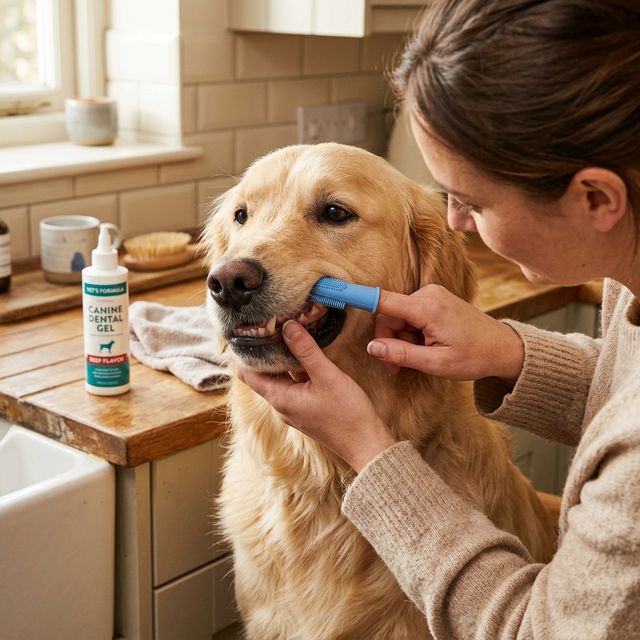
- Dog-specific toothbrush (angled head, soft bristles) or a finger brush
- Dog toothpaste (never human toothpaste, which contains fluoride and xylitol, both toxic to dogs)
- Dog toothpaste comes in flavors like poultry, beef, and peanut butter, making acceptance easier
How to start:
- Let the dog taste the toothpaste from your finger for a few days
- Rub the toothpaste on the front teeth with your finger
- Introduce the brush on the front teeth only
- Gradually work toward the back teeth (where tartar accumulates most)
- Focus on the outside surfaces. Dogs’ tongues keep the inside surfaces relatively clean.
- Aim for 30-60 seconds total. It doesn’t need to be thorough to be effective.
Reality check: If your dog absolutely will not tolerate brushing despite weeks of gradual introduction, the alternatives below are better than nothing. But none of them replace brushing.
Dental Chews
Products with the Veterinary Oral Health Council (VOHC) seal have been tested and proven to reduce plaque or tartar. Not all dental chews earn this seal. The VOHC maintains a list at vohc.org.
Effective options:
- Greenies (VOHC accepted)
- OraVet chews (VOHC accepted)
- Purina DentaLife (VOHC accepted)
These supplement brushing but don’t replace it. Think of them as flossing, not a substitute for brushing.
Water Additives
Enzyme-based water additives reduce bacteria in the mouth. They’re the easiest dental care option but also the least effective on their own. Look for VOHC-accepted products.
Dental Diets
Some prescription dental diets (Hill’s t/d, Royal Canin Dental) are designed with kibble shapes that scrub teeth during chewing. These can be part of a dental care plan, especially for dogs that won’t tolerate brushing.
Raw Bones
Raw (never cooked) beef or bison bones can help scrape tartar. However, they carry risks: tooth fractures, bacterial contamination, and choking. Cooked bones splinter and can perforate the intestine. If you use raw bones, supervise closely and discard the bone when it gets small enough to swallow whole.
Professional Dental Cleanings
Even with daily home care, most dogs benefit from professional cleanings. The American Animal Hospital Association recommends annual dental evaluations starting at age one.
What Happens During a Professional Cleaning
- Pre-anesthetic bloodwork to ensure the dog can safely undergo anesthesia
- Full anesthesia (the dog must be unconscious for thorough cleaning)
- Dental X-rays to assess roots, bone, and below-the-gumline disease
- Scaling to remove tartar above and below the gum line
- Polishing to smooth tooth surfaces and reduce future plaque adhesion
- Extraction of any diseased teeth that can’t be saved
Why Anesthesia-Free Dental Cleaning Doesn’t Work
Some groomers and non-veterinary providers offer “anesthesia-free” dental cleanings. These are cosmetic, not medical. They scrape visible tartar off the crown of the tooth but cannot clean below the gum line, where the real disease lives. They also can’t take X-rays or extract diseased teeth. The teeth look cleaner, but the disease progresses underneath.
The American Veterinary Dental College explicitly opposes anesthesia-free dentistry because it gives owners a false sense that dental disease has been addressed.
Cost
Professional dental cleanings typically cost $300-800 without extractions. With extractions, the cost can exceed $1,500. This is why prevention (daily brushing, dental chews) saves significant money over a dog’s lifetime.
Breed-Specific Concerns
Small Breeds
Yorkshire Terriers, Chihuahuas, Dachshunds, and other small breeds are disproportionately affected by dental disease. Their teeth are the same size as larger breeds but packed into a much smaller jaw, creating crowding and food traps. Small breed owners should start dental care early and plan for more frequent professional cleanings.
Brachycephalic Breeds
Flat-faced breeds have crowded, sometimes misaligned teeth due to their shortened skulls. This creates additional pockets where bacteria accumulate. Daily brushing and regular cleanings are even more critical for these breeds.
Greyhounds
Greyhounds have notoriously fragile teeth and thin enamel. They’re also predisposed to early dental disease. Gentle brushing and regular veterinary dental care are essential for this breed.
Frequently Asked Questions
At what age should I start brushing my dog’s teeth?
Start as early as possible. Puppies who become accustomed to tooth brushing grow into adults who tolerate it easily. Even before adult teeth come in (around 4-6 months), practice the handling and reward process.
How do I know if my dog needs a professional cleaning?
If you can see brown or yellow buildup at the gum line, the gums look red or swollen, or your dog has persistent bad breath, it’s time. Your vet can assess at any regular checkup.
Are nylon or antler chews good for teeth?
They’re too hard. Nylon bones and antlers are the most common cause of fractured teeth (slab fractures of the upper premolars). The rule of thumb: if you can’t indent the chew with your fingernail, it’s too hard for your dog’s teeth.
You Might Also Like
Alex Corsa
Founder & Editor
Alex Corsa has owned and fostered dogs for over 12 years, with hands-on experience caring for everything from senior mastiffs to reactive rescues and brachycephalic breeds. He started DogSupplyFinder after spending two frustrating years testing gear that failed, broke, or simply didn't work as advertised. Every recommendation on this site has been vetted against real-world use — not affiliate commission rates. Alex cross-references veterinary guidelines and AAFCO regulations for all food and health content.
Dog Tips, Deals & Gear Guides
Expert buying guides, breed-specific product picks, and honest gear reviews. Plus our free New Puppy Checklist for subscribers.
📬 No spam, ever. Unsubscribe anytime. · Get the free puppy checklist