Dog Park Etiquette: The Unwritten Rules Every Owner Should Follow
Off-leash parks have rules that nobody posts. From entry protocol to breaking up fights, here's how to make the dog park safe for everyone.

Alex Corsa
Founder & Editor ·
📖 Table of Contents
Dog parks can be the best part of your dog’s week or the worst. The difference usually comes down to how the humans behave, not the dogs. Dogs are fairly good at sorting out their own social dynamics when the humans don’t interfere badly or bring dogs who aren’t ready for off-leash play.
These unwritten rules aren’t posted at the gate, but experienced dog park regulars follow them. So should you.
Before You Go
Is Your Dog Ready?
Not every dog belongs at a dog park. This isn’t a judgment. Some dogs genuinely don’t enjoy crowded, unstructured play with strangers, and forcing them into it causes problems.
Your dog is ready if they:
- Come when called reliably, even at a busy park with squirrels everywhere
- Have been socialized with other dogs and don’t show fear or aggression
- Can handle excitement without losing all impulse control
- Are up to date on vaccinations, including bordetella (kennel cough)
- Have been spayed or neutered (most parks require this, and intact dogs change the dynamics for everyone)
Your dog is not ready if they:
- Have a history of aggression toward other dogs
- Resource guard toys, balls, or water bowls
- Are a puppy under 4 months (incomplete vaccination protection and too fragile for rough play)
- Are in heat (intact females)
- Have not been socialized beyond your household
What to Bring
- Water and a portable bowl (don’t rely on communal bowls)
- Poop bags (never assume the dispensers are stocked)
- Your leash, even though it’s an off-leash area (for entry, exit, and emergencies)
- Your full attention (leave the phone in your pocket)
What NOT to Bring
- Food or treats (resource guarding magnet)
- Prong collars, choke chains, or shock collars (dangerous during play)
- Small children who can’t move out of the way quickly
- Your own toys, unless you’re fine with other dogs taking them
Entry Protocol
This is where most incidents start.
- Watch before entering. Stand outside the gate for 30 seconds and read the vibe. Are the dogs playing loosely or is there tension? Is any dog guarding the gate?
- Remove the leash before entering. A leashed dog among off-leash dogs is a recipe for conflict. The leashed dog feels trapped, and other dogs read the tension.
- Enter quickly. Don’t linger in the double-gate area. Other dogs crowd the gate to greet newcomers, and confined spaces escalate arousal.
- Walk away from the entrance immediately. Gate areas are the highest-conflict zones. Move your dog into the open space within 10 seconds of entering.
- Let your dog get sniffed. The initial greeting includes butt-sniffing and posturing. Let it happen. Picking your dog up or pulling them away during greetings increases anxiety.
While You’re There
Watch Your Dog
This is the most important rule and the most frequently broken. Dog parks are not a break for the owner. You need to watch your dog the entire time so you can intervene before problems escalate.
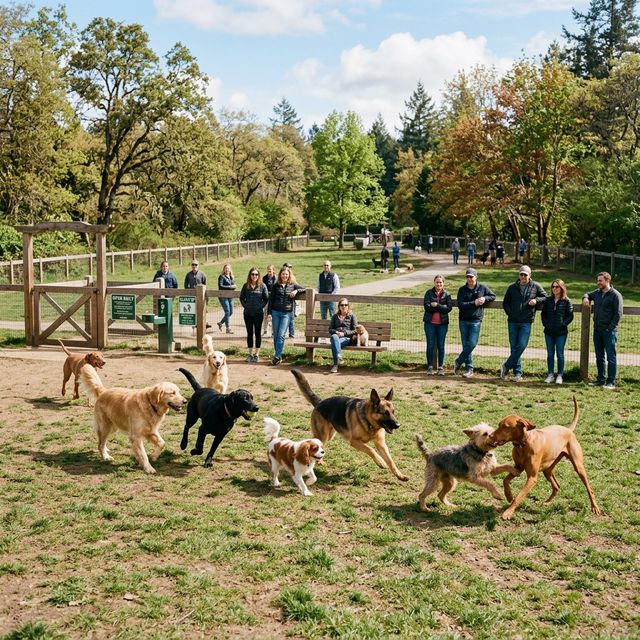
Signs play is healthy:
- Taking turns being chased and chasing
- Play bows before and during rough play
- Bouncy, exaggerated movements
- Brief pauses where both dogs reset before re-engaging
- Matching energy levels
Signs play is crossing the line:
- One dog consistently pinning the other
- Yelping that doesn’t cause the other dog to back off
- A dog trying to leave while the other dog keeps pursuing
- Stiff bodies, hard stares, or raised hackles without play signals
- Ganging up (multiple dogs targeting one)
Intervene at Yellow, Not Red
By the time a full fight breaks out, you’re managing damage. Intervene when things are escalating but haven’t crossed the line yet. Call your dog back, redirect with movement (jog to another area of the park), or physically separate dogs before the situation boils over.
Pick Up Poop Immediately
Not after you finish your phone call. Not on the way out. Immediately. Other dogs step in it, roll in it, and sometimes eat it. It spreads parasites and disease. This is the number one complaint about dog parks and the reason parks get shut down.
Don’t Hover
Standing directly over your dog or following them around the park creates a shadow that increases their stress and makes other dogs uncomfortable. Find a spot with good visibility and let your dog range.
When There’s a Problem
Your Dog Is Being Bullied
If your dog is hiding behind you, trying to leave, or repeatedly yelping and the other owner isn’t controlling their dog:
- Calmly get your dog and walk to another area
- If the other dog follows and continues, clearly say to the other owner: “Can you grab your dog? Mine isn’t enjoying this.”
- If they don’t act, leave. Your dog’s safety is more important than avoiding awkwardness.
Your Dog Is the Bully
Hard to admit, but if your dog is relentlessly pursuing a dog that’s trying to escape, you need to leash up and leave. Not in 5 minutes. Now. Repeated bullying behavior means your dog needs more socialization training before returning to the park.
A Fight Breaks Out
- Never put your hands between fighting dogs (the most common way humans get bitten at dog parks)
- Grab your dog’s back legs and pull backward in a wheelbarrow motion
- If available, throw water or create a loud distraction (air horn, clapping)
- After separation, leash both dogs and move them to opposite sides of the park
- Check for injuries before leaving
Small Dog Areas
If your park has a separate small dog section, use it. A 12-lb dog playing with an 80-lb dog can get seriously hurt even during friendly play. Size differences matter more than temperament when it comes to accidental injury.
Frequently Asked Questions
How often should I take my dog to the park?
2-3 times per week is plenty for most dogs. Daily visits can overstimulate some dogs, and dog park play shouldn’t be the only form of exercise. Walks, training sessions, and backyard play provide variety.
My dog doesn’t play with other dogs at the park. Is that okay?
Some dogs prefer to sniff and explore independently rather than wrestle. That’s perfectly normal. If your dog seems content sniffing around the perimeter, they’re still benefiting from the environment. Only worry if they seem actively afraid or stressed.
Can I bring my dog’s favorite ball to the park?
Generally no. Resource guarding is more common with high-value items like balls and toys. If you bring a ball, accept that other dogs will grab it. Many parks provide communal tennis balls for exactly this reason.
You Might Also Like
Alex Corsa
Founder & Editor
Alex Corsa has owned and fostered dogs for over 12 years, with hands-on experience caring for everything from senior mastiffs to reactive rescues and brachycephalic breeds. He started DogSupplyFinder after spending two frustrating years testing gear that failed, broke, or simply didn't work as advertised. Every recommendation on this site has been vetted against real-world use — not affiliate commission rates. Alex cross-references veterinary guidelines and AAFCO regulations for all food and health content.
Dog Tips, Deals & Gear Guides
Expert buying guides, breed-specific product picks, and honest gear reviews. Plus our free New Puppy Checklist for subscribers.
📬 No spam, ever. Unsubscribe anytime. · Get the free puppy checklist