The Complete Guide to Dog Vaccinations
Which vaccines your dog needs, the core vs non-core schedule, puppy shot timeline, and what happens if you skip boosters.

DogSupplyFinder Research Team
Product Research ·
📖 Table of Contents
Medical Disclaimer
This content is for informational purposes only and is not intended as a substitute for professional veterinary advice, diagnosis, or treatment. Always consult with a qualified veterinarian before making changes to your dog's care routine.
This page is the complete vaccination explainer. Core vs. non-core scheduling is The Complete Dog Vaccination Schedule: Core vs. Non-Core Vaccines.
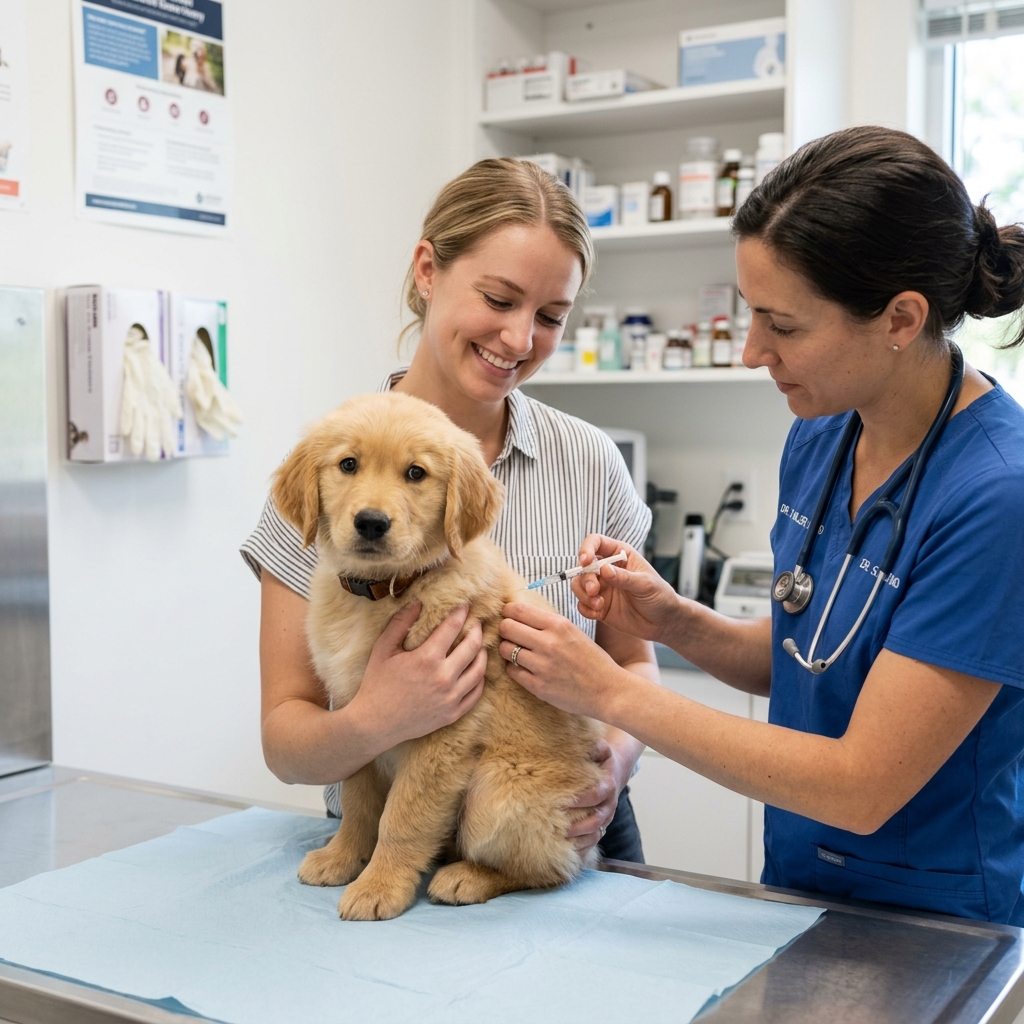
Vaccinations prevent diseases that were killing dogs by the thousands before routine immunization programs existed. Canine distemper, parvovirus, and rabies are still out there. The reason you rarely encounter them is because most dogs are vaccinated, not because the diseases disappeared.
Here’s what the schedules actually look like, what each vaccine does, and where the legitimate debate lies.
Core vs. Non-Core Vaccines
The American Animal Hospital Association (AAHA) divides vaccines into two categories:
Core Vaccines (Every Dog Needs These)
| Vaccine | Protects Against | Why It’s Core |
|---|---|---|
| Rabies | Rabies virus | Fatal once symptoms appear. Required by law in all US states |
| DA2PP (Distemper combo) | Distemper, Adenovirus type 2, Parainfluenza, Parvovirus | All four diseases are widespread, highly contagious, and frequently fatal |
The DA2PP combination (sometimes called DHPP or DAPP depending on the manufacturer) is given as a single injection. It’s been the backbone of canine vaccination programs for decades.
Non-Core Vaccines (Based on Risk)
| Vaccine | Protects Against | Who Needs It |
|---|---|---|
| Bordetella (kennel cough) | Bordetella bronchiseptica | Dogs that board, attend daycare, or visit dog parks |
| Leptospirosis | Leptospira bacteria | Dogs in areas with wildlife contact, standing water, or known lepto cases |
| Lyme disease | Borrelia burgdorferi | Dogs in tick-endemic areas (Northeast, Upper Midwest, Pacific Coast) |
| Canine Influenza (H3N2, H3N8) | Dog flu viruses | Dogs in high-density environments (boarding, shows, shelters) |
Your vet recommends non-core vaccines based on your dog’s lifestyle and geographic risk. A dog that never leaves the yard has different needs than one that attends daycare three days a week.
The Puppy Vaccination Schedule
Puppies receive maternal antibodies through their mother’s milk. These antibodies protect the puppy for the first few weeks of life but also interfere with vaccination because the maternal antibodies neutralize the vaccine before the puppy’s own immune system can respond.
This is why puppies get multiple rounds of the same vaccine. The series is designed to catch the window when maternal antibodies have declined enough for the vaccine to work, which varies by individual puppy.
Typical Schedule
| Age | Vaccines |
|---|---|
| 6-8 weeks | DA2PP (first dose) |
| 10-12 weeks | DA2PP (second dose), Bordetella if needed |
| 14-16 weeks | DA2PP (third dose), Rabies (first dose), Leptospirosis if needed |
| 12-16 months | DA2PP (booster), Rabies (booster) |
The critical point: puppies are not fully protected until 2 weeks after their final DA2PP dose (the 14-16 week shot). Before that, they have partial protection that increases with each dose but isn’t complete.
This creates the socialization dilemma. The critical socialization window (3-14 weeks) overlaps with the period when the puppy isn’t fully vaccinated. The solution most veterinary behaviorists recommend: socialize in controlled environments (puppy classes with verified vaccinated puppies, private yards of known vaccinated dogs) while avoiding high-traffic, high-risk areas (dog parks, pet stores, sidewalks with unknown dog traffic) until the series is complete.
Adult Vaccination Schedule
After the Puppy Series
| Vaccine | Booster Frequency |
|---|---|
| Rabies | Every 1 or 3 years (depends on state law and vaccine type) |
| DA2PP | Every 3 years after the initial annual booster |
| Bordetella | Annually (or every 6 months for high-exposure dogs) |
| Leptospirosis | Annually |
| Lyme | Annually (if in endemic area) |
| Canine Influenza | Annually (if recommended) |
The shift to 3-year DA2PP boosters (instead of annual) is based on duration-of-immunity studies showing that protection lasts well beyond a year for core vaccines. AAHA updated their guidelines accordingly. Some vets still recommend annual boosters, which isn’t harmful but isn’t necessary for core vaccines based on current evidence.
What Each Core Disease Does
Understanding what you’re vaccinating against helps explain why skipping isn’t a good gamble.
Rabies
A viral infection of the nervous system transmitted through the bite of an infected animal. Once clinical signs appear, rabies is virtually 100% fatal in dogs and humans. There is no treatment. Vaccination is the only protection, and it’s legally required because rabies is a public health concern.
Canine Distemper
An airborne virus that attacks the respiratory, gastrointestinal, and nervous systems. Symptoms include fever, nasal discharge, coughing, vomiting, diarrhea, seizures, and paralysis. Mortality rate in unvaccinated dogs is approximately 50%. Survivors often have permanent neurological damage.
Parvovirus
A highly contagious virus that destroys the intestinal lining, causing severe bloody diarrhea, vomiting, and dehydration. It survives in the environment for months to years. Mortality in untreated puppies exceeds 90%. Treatment requires hospitalization (IV fluids, anti-nausea medication, antibiotics for secondary infections) costing $2,000 to $5,000 with no guarantee of survival.
Parvovirus is the reason you don’t bring unvaccinated puppies to dog parks.
Adenovirus (Infectious Canine Hepatitis)
Causes liver failure, eye damage, and respiratory illness. Less common today because of widespread vaccination but still circulating in unvaccinated populations.
The Titer Testing Option
Instead of automatically boosting, some owners request titer testing. A titer test measures the antibody levels in the dog’s blood for a specific disease. If antibody levels are adequate, the dog has current immunity and doesn’t need a booster.
Titer testing works for DA2PP (distemper, adenovirus, parvovirus). It does NOT replace rabies vaccination, which is legally mandated regardless of titer results.
The tradeoff: titer tests cost $100 to $300 compared to $20 to $40 for the vaccine itself. The test tells you whether a booster is needed; it doesn’t provide protection. Most dogs with a completed initial series and at least one adult booster will titer positively for years.
Vaccine Reactions
Most dogs tolerate vaccines without issue. Mild reactions (soreness at the injection site, mild lethargy for 24 hours, slight fever) occur in a small percentage and resolve without treatment.
Serious reactions are rare but include:
- Facial swelling or hives (allergic reaction, typically within 30 minutes to a few hours)
- Vomiting or diarrhea shortly after vaccination
- Collapse or difficulty breathing (anaphylaxis, extremely rare, requires emergency treatment)
Small dogs and brachycephalic breeds have a slightly higher reaction rate. If your dog has reacted to a vaccine previously, your vet can pre-treat with antihistamines and may adjust the vaccination protocol.
Frequently Asked Questions
My dog is “indoor only.” Do they still need vaccines?
Rabies is legally required regardless. For other vaccines, “indoor only” dogs that never contact other dogs or wildlife have lower risk, but not zero risk. Parvovirus can be tracked indoors on shoes. Distemper is airborne. Discuss with your vet, but core vaccines are recommended for all dogs regardless of lifestyle.
Can I vaccinate my dog myself?
DA2PP vaccines are available at farm supply stores. Administering them yourself saves money but carries risks: no veterinary exam before vaccination (missing illness that makes vaccination dangerous), no record in a veterinary system, and no ability to treat an allergic reaction. Rabies vaccines must be administered by a licensed veterinarian in all states.
Are there natural alternatives to vaccines?
No natural preparation has been shown to provide immunity comparable to vaccination. Nosodes (homeopathic preparations) are sometimes marketed as alternatives, but veterinary immunological research shows they do not produce protective antibody response. The diseases vaccines prevent are real and serious. The vaccines work. The alternatives do not.
Related Reading
DogSupplyFinder Research Team
Product Research
Our research team analyzes ingredient lists, AAFCO feeding standards, safety specifications, and thousands of verified owner reviews, with particular attention to breed-specific needs such as brachycephalic breeds and dogs with dietary sensitivities. Evaluations prioritize safety specs, third-party certifications, and manufacturer quality controls over marketing language.
Related reading
Same cluster on this site — live guides only.
Dog Tips, Deals & Gear Guides
Expert buying guides, breed-specific product picks, and honest gear reviews. Plus our free New Puppy Checklist for subscribers.
📬 No spam, ever. Unsubscribe anytime. · Get the free puppy checklist