Front-Clip vs Back-Clip Harness: Which Attachment Is Right for Your Dog?
Front-clip vs back-clip harness: which attachment point controls pulling better, when to use each, and which dogs need dual-clip options.

Alex Corsa
Founder & Editor ·
📖 Table of Contents
Affiliate Disclosure: As an Amazon Associate, we earn from qualifying purchases. This comes at no extra cost to you and helps support our independent testing and reviews. We only recommend products we genuinely believe in.
Every harness has at least one leash attachment point — many have two. The position of that clip changes the physics of how the harness works, and choosing the wrong one is one of the most common mistakes dog owners make.
The Fast Version
Front-clip: Redirects pulling dogs toward you. Best for training and dogs who pull heavily. More awkward leash management.
Back-clip: Moves with the dog naturally. Best for trained dogs, calm walkers, and running. Provides zero pulling control.
Dual-clip: Gives you both options. Use front for training sessions, back for relaxed walks. Best overall for most dogs if you can find the right harness.
How Each Clip Works
Front-Clip (Chest Attachment)
The ring sits on the dog’s sternum at the center of the chest. When the dog pulls forward, the leash creates a cross-body redirect — the dog’s front end turns toward you instead of driving forward. This breaks the pulling momentum physically without any correction from the handler.
The physics: Pulling forward moves the clip sideways, which steers the dog. It’s counterintuitive at first but effective once dogs learn that pulling takes them sideways, not forward.
Back-Clip (Shoulder/Spine Attachment)
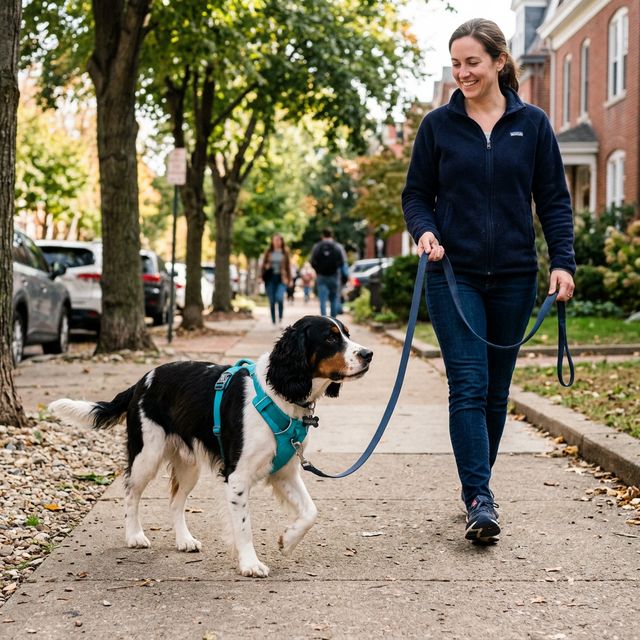
The ring sits between the shoulder blades or near the base of the neck. The leash runs straight back from dog to handler. Pulling moves the dog forward directly — there’s no redirect, no natural brake, nothing stopping a determined dog from dragging you down the street.
Back-clip harnesses are often marketed with words like “comfortable” and “everyday use.” They’re honest about not providing pulling control.
Dual-Clip (Both Attachment Points)
The harness has both a front (chest) and back (spine) ring. Most premium no-pull harnesses — Ruffwear Front Range, 2 Hounds Design Freedom, Julius-K9 — include both.
Some dual-clip harnesses include a special double-ended leash that clips to both points simultaneously, creating a mechanical martingale effect that provides even better pulling control than a front clip alone.
When Front-Clip Is Better
- Active pullers: The redirect works. Dogs learn it quickly.
- Training sessions: Keeps attention toward you.
- Reactive or anxious walkers: The slight slowing of pace gives you better control in triggered moments.
- Large breeds pulling small handlers: The cross-body redirect gives the handler mechanical advantage.
Drawback: The leash can wrap under the dog’s front leg when they turn suddenly. Some dogs find the chest positioning restrictive at a full run. Front-clip is more work to manage — you’ll notice it.
When Back-Clip Is Better
- Already-trained dogs who don’t pull
- Running, hiking, jogging — nothing wraps, full range of shoulder motion
- Seatbelt attachment in car — most crash-tested car attachments use back clip
- Brachycephalic dogs — see below, this matters for flat-faced breeds specifically
Drawback: Zero pulling control. If your dog pulls, the back clip makes it worse — the harness design distributes pulling force comfortably across their chest, making it easier to pull, not harder.
Special Case: Brachycephalic Dogs
Flat-faced dogs (Frenchies, Pugs, Bulldogs) have a specific consideration: any restriction around the neck, chest, or front legs during pulling directly worsens airway compression.
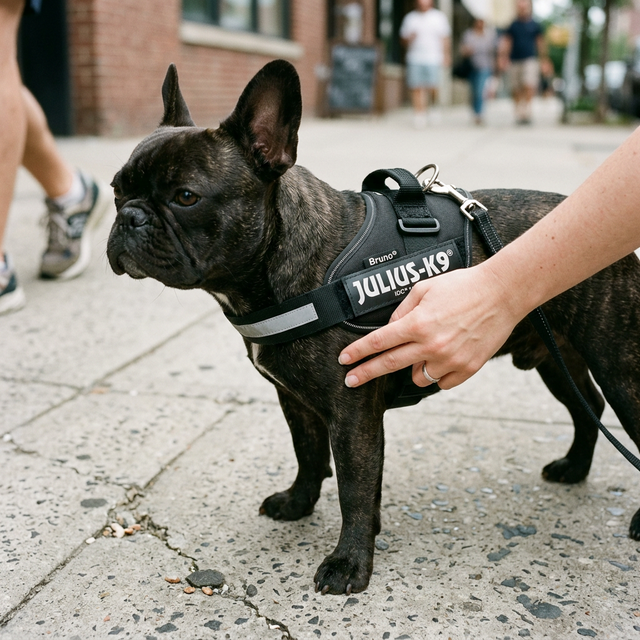 For brachycephalic dogs, harness fit is critical regardless of clip position. The chest strap should sit below the throat — never crossing the neck or trachea — whether you’re using front or back clip.
For brachy dogs who pull moderately, the front clip is still better than back clip — the redirect takes the force sideways rather than letting the dog drive forward and compress their already-narrow airway. But for calm walkers, back clip is fine and more comfortable for daily wear.
For a full guide on harnesses for flat-faced breeds, see our best harnesses for brachycephalic dogs.
Which Harnesses to Look At
| Need | Recommended |
|---|---|
| Training a puller | 2 Hounds Design Freedom (front + dual-clip martingale) |
| Versatile everyday use | Ruffwear Front Range (front + back dual-clip) |
| Running / trail use | Ruffwear Web Master (back clip, handle) |
| Brachycephalic breeds | Ruffwear Front Range (chest strap fits brachy proportions) |
The Dual-Clip Leash Setup
If your harness has both clips, using a dedicated double-ended leash unlocks better control. One end clips to the front (chest), the other to the back. This creates a system where:
- Pulling forward → front clip redirects
- Turning → back clip keeps position
- Handler has independent tension on both clips
It takes a few walks to get used to but is the most effective non-correction management system available for moderate to strong pullers.
Frequently Asked Questions
Can I switch between front and back clip on the same walk?
Yes. Many trainers recommend starting with front clip (training mode) for the first 10 minutes and switching to back clip (relaxed mode) once the dog is settled.
My dog’s leg keeps getting wrapped in the leash. What’s wrong?
Leash wrapping under the front leg is a front-clip problem. It happens when the leash goes slack and the dog turns. Solutions: use a shorter leash, keep tension consistent, or try a harness with the chest clip slightly higher up the sternum.
Is front-clip actually proven to reduce pulling?
The research supports it for casual walking contexts. A 2009 study by Haverbeke et al. found front-clip harnesses reduced pulling in a controlled group. Anecdotally, most professional trainers consider them a useful management tool but not a substitute for training — the goal is to use the front clip as a training aid while teaching loose-leash walking, then transition to back clip.
Should puppies use front or back clip?
Front clip for puppies who are learning to walk. The gentle redirect teaches them that pulling doesn’t work. Transition to back clip (or dual-clip at back) once they reliably walk on a loose leash.
You Might Also Like
Alex Corsa
Founder & Editor
Alex Corsa has owned and fostered dogs for over 12 years, with hands-on experience caring for everything from senior mastiffs to reactive rescues and brachycephalic breeds. He started DogSupplyFinder after spending two frustrating years testing gear that failed, broke, or simply didn't work as advertised. Every recommendation on this site has been vetted against real-world use — not affiliate commission rates. Alex cross-references veterinary guidelines and AAFCO regulations for all food and health content.
Dog Tips, Deals & Gear Guides
Expert buying guides, breed-specific product picks, and honest gear reviews. Plus our free New Puppy Checklist for subscribers.
📬 No spam, ever. Unsubscribe anytime. · Get the free puppy checklist