How to Deshed a Double-Coated Dog: Tools, Technique, and Schedule
Double-coated dogs shed massively twice a year. Here's the right deshedding sequence, what tools to use, and how to reduce year-round shedding by up to 90%.

Alex Corsa
Founder & Editor ·
📖 Table of Contents
Affiliate Disclosure: As an Amazon Associate, we earn from qualifying purchases. This comes at no extra cost to you and helps support our independent testing and reviews. We only recommend products we genuinely believe in.
German Shepherds, Huskies, Golden Retrievers, Labrador Retrievers, Border Collies, Bernese Mountain Dogs — if your dog has a double coat, you know what heavy shedding season looks like. Dog hair on every fabric surface in your home. Dog hair in your food. Dog hair you somehow find three weeks after the dog has left the room.
The seasonal “blowing coat” that double-coated breeds go through twice a year is not dysfunctional — it’s exactly what their coat is designed to do as temperature changes. But with the right tools and technique, you can remove loose undercoat efficiently and reduce the amount of hair that ends up on your furniture by 80–90%.
TL;DR: Use an undercoat rake or slicker brush first, follow with a deshedding tool (like a Furminator or Shed-X) for loose undercoat, then finish with a finishing comb. Bathe before brushing during active coat blows. Never cut a double coat — the top guard hairs protect from UV radiation and regulate temperature.
Understanding the Double Coat
Double-coated breeds have two distinct coat layers with different functions:
The undercoat: A dense, soft layer of short hairs that insulates the dog from both cold and heat. This is what “sheds” massively in spring (losing the winter coat) and fall (losing the lighter summer coat).
The guard coat (topcoat): Longer, coarser hairs that repel water and debris, and provide UV protection. These shed much more slowly and are not what you’re removing during deshedding.
The critical mistake: shaving a double-coated dog. Many owners believe shaving will reduce shedding. It does not — it stops the coat from functioning correctly. The undercoat grows back faster than the guard coat, leading to a “blown coat” that mats easily and no longer thermoregulates properly. Double-coated dogs can get sunburned and may have difficulty regulating temperature after a close shave. With the correct deshedding routine, shaving is unnecessary.
When to Deshed: The Shedding Calendar
Double-coated breeds typically go through two major coat blows per year:
- Spring: Shedding the heavy winter undercoat, usually March–May depending on climate
- Fall: Shedding the lighter summer coat to make room for winter growth, usually September–November
During these periods, daily brushing for 15–20 minutes dramatically reduces the amount of loose hair that ends up in your home. Between coat blows, weekly brushing is typically sufficient.
Signs a coat blow is starting:
- Suddenly finding significantly more hair in your brush
- Patchy appearance as undercoat releases in clumps
- Dog scratching or rubbing more than usual (mild normal itchiness)
The Right Deshedding Tools
Using the wrong tools in the wrong order damages the coat and misses the loose undercoat. Here is what each tool does:
| Tool | Purpose | When to Use |
|---|---|---|
| Slicker brush | Removes loose surface hair, detangles | First pass |
| Undercoat rake | Reaches into the dense undercoat | Second pass |
| Deshedding tool (Furminator/Shed-X) | Removes deeply embedded loose undercoat | Third pass |
| Dematting comb | Breaks up mats without cutting | As needed |
| Finishing comb | Final pass for stragglers | Last pass |
On the Furminator: The Furminator is effective and extremely popular, but it has a blade that can cut guard hairs if used with too much pressure or too frequently. Use it on loose, soft undercoat with a relaxed pass — don’t press down hard and don’t use it daily on the same area. 2–3 times per deshedding session with light pressure is appropriate; aggressive daily Furminator use damages topcoat.
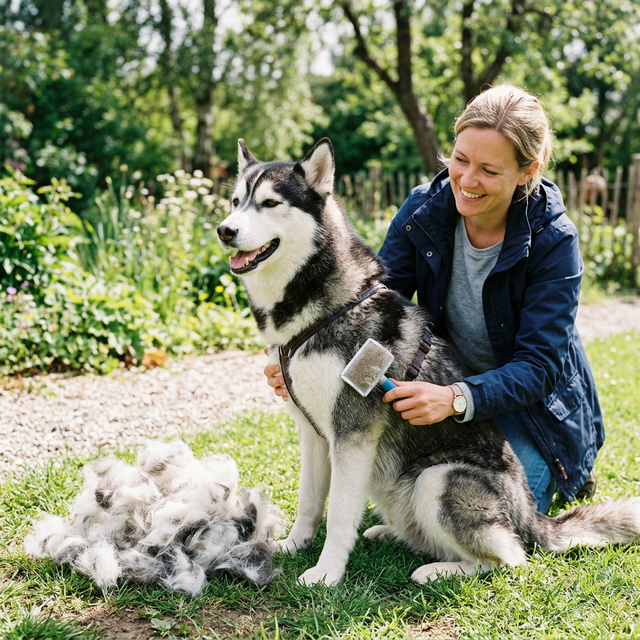
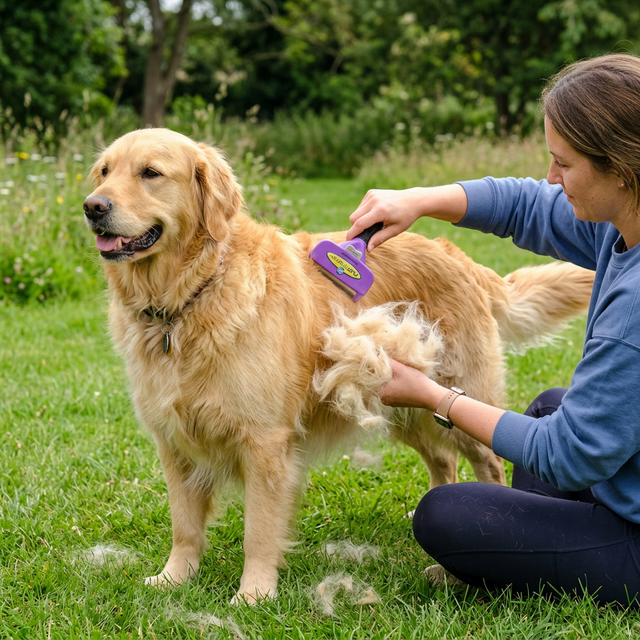 A single session during an active coat blow can remove this much hair — dramatically less ends up on your furniture.
See our best grooming tools guide for specific tool recommendations across breed sizes.
The Deshedding Sequence
Follow this order for every deshedding session. The sequence matters — doing it out of order misses loose hair or stresses the coat.
Step 1: Slicker Brush Pass
Start with a slicker brush using long, firm strokes in the direction of hair growth. Work in sections: start at the head, move to the neck and shoulders, chest, back, flanks, hindquarters, and tail.
The slicker brush removes surface-level loose hair and lifts the coat so subsequent tools can reach deeper. Work any tangles out with the brush before moving to the rake — forcing a rake through tangles causes tearing.
Step 2: Undercoat Rake
The undercoat rake has wider-set teeth designed to reach down into the dense undercoat and pull loose hairs up through the guard coat. Use it with moderate pressure in the direction of growth.
Focus extra time on high-density undercoat areas:
- Around the neck/ruff
- Behind the ears
- The “pants” (rear thighs) on breeds with feathering
- The base of the tail
- The chest and belly
This step removes a significant volume of undercoat. For a dog in a full coat blow, you can collect enough hair to make a small pillow in one session.
Step 3: Deshedding Tool
After the rake has loosened things up, a deshedding tool like the Furminator reaches the finer loose undercoat that the rake can’t pull out. Use light, relaxed strokes without pressing into the skin.
Work the same sections as the rake. Watch for the amount of hair collecting on the blade — when it builds up significantly, clear it before continuing so the tool stays effective.
Watch for red lines on the skin. If you see parallel redness, you are pressing too hard and causing “brush burn.” Lighten your pressure immediately.
Step 4: Finishing Comb
A steel finishing comb (the kind with wide-set teeth on one side and fine on the other) does a final pass. If the comb slides through without catching, you are done. If it catches significantly, go back to the rake in that section.
Bathing During a Coat Blow
Bathing loosens the undercoat significantly during peak shedding season. Hot water and the agitation of shampooing accelerate the release of loose hair — a bath during a coat blow can remove enormous amounts of hair that would otherwise come out on your furniture over the next week.
The correct order: Bathe, then dry thoroughly, then deshed. Do not try to brush out a wet coat — it causes breakage and matting. The coat needs to be fully dry before brushing.
For double-coated breeds, a grooming dryer (a high-velocity dryer that blows air without heat, also called a “force dryer”) is the best drying tool. It literally blows loose undercoat off the dog as it dries. Professional groomers use these routinely; consumer versions are available for home use. See our best dog shampoos guide for products that support coat health.
Managing Shedding Year-Round
Between major coat blows:
Nutrition: A coat in good condition sheds more predictably. Omega-3 fatty acids (fish oil) support coat health and may reduce excessive year-round shedding in some dogs. Dogs with underlying skin issues often have elevated shedding year-round; if shedding seems dramatically worse than seasonal norms, a vet check-in is appropriate.
Regular brushing schedule:
- During coat blows: daily for 15–20 minutes
- Between blows: weekly brushing is sufficient for most double-coated breeds
- Mats behind ears and in the armpits: check weekly regardless of season
Vacuuming strategy: A vacuum with a pet hair attachment on furniture and a good hard-floor vacuum for tile and hardwood. For furniture fabric, a rubber squeegee or a barely damp rubber glove dragged across the surface collects hair more effectively than lint rollers.
Breed-Specific Notes
German Shepherds
German Shepherds have a dense undercoat and are year-round moderate shedders with massive coat blows. Their “pants” (rear leg feathering) and ruff are the highest-density areas. The Furminator’s GSD-specific version has an angled blade edge designed for their coat angle.
Huskies and Malamutes
These breeds have the most dramatic coat blows of any working breed — blowing coat can last 3–4 weeks and produce shocking volumes of hair. Daily brushing is essential during this period. Their coats also mat faster in humid conditions.
Golden Retrievers and Labs
Labs have a shorter double coat that is easy to manage with an undercoat rake and deshedding tool weekly. Goldens have more coat variation — the feathering on their belly, chest, and tail collects mats more easily and needs more frequent attention. See our best dog food for Golden Retrievers for nutrition advice that supports coat health.
Border Collies
Border Collies have rougher and smoother-coated varieties. Rough-coated Borders need the full undercoat rake and deshedding protocol; smooth-coated Borders need less intensive sessions but still benefit from regular undercoat work.
Frequently Asked Questions
How often should I Furminate my dog?
During a coat blow: every other day with light pressure. Outside coat blow season: once a week or once every two weeks. The Furminator is not a daily use tool — it has a blade that can damage the topcoat if used too aggressively or too frequently.
My dog has mats behind their ears. Can I brush them out?
Small mats can be worked out with a dematting comb, starting at the tip and working toward the skin. Apply a small amount of detangling spray to soften the mat first. Larger or tight mats should be cut out with blunt-nosed scissors, cutting downward (into the mat, away from skin) rather than horizontally across. Very tight mats near skin require professional grooming or vet attention.
Do double-coated dogs need professional grooming?
Professional deshedding sessions during coat blow season are valuable and can remove far more undercoat in one session (using force dryers, professional tools, and technique) than most home sessions. Many owners do home maintenance between professional sessions 2–4 times per year.
Can I cut my double-coated dog’s fur to reduce shedding?
Do not shave a double-coated dog. Cutting the guard coat to below the bottom of the topcoat interferes with thermoregulation and UV protection. Light trimming of feathering (belly, britches, ears) is fine. But giving a Husky a “puppy cut” or shaving a Golden to the skin causes coat damage that can take months to a year to fully recover.
You Might Also Like
Alex Corsa
Founder & Editor
Alex Corsa has owned and fostered dogs for over 12 years, with hands-on experience caring for everything from senior mastiffs to reactive rescues and brachycephalic breeds. He started DogSupplyFinder after spending two frustrating years testing gear that failed, broke, or simply didn't work as advertised. Every recommendation on this site has been vetted against real-world use — not affiliate commission rates. Alex cross-references veterinary guidelines and AAFCO regulations for all food and health content.
Dog Tips, Deals & Gear Guides
Expert buying guides, breed-specific product picks, and honest gear reviews. Plus our free New Puppy Checklist for subscribers.
📬 No spam, ever. Unsubscribe anytime. · Get the free puppy checklist