How to Socialize a Puppy: The First 16 Weeks That Shape Everything
The socialization window closes at 16 weeks. Here's what to expose your puppy to, how to do it safely, and what happens if you miss the window.

Alex Corsa
Founder & Editor ·
📖 Table of Contents
Between 3 and 16 weeks of age, your puppy’s brain is wired to accept new experiences as normal. Sounds, people, animals, surfaces, and environments encountered during this window become part of the puppy’s definition of “safe.” After 16 weeks, the window narrows. New experiences default to “suspicious” rather than “interesting.”
This doesn’t mean socialization is impossible after 16 weeks. It means it takes 10 times more effort and may never be as thorough.
What Socialization Actually Means
Socialization is not “let the puppy play with other dogs.” That’s one small piece. Proper socialization means controlled, positive exposure to the full range of experiences the dog will encounter as an adult.
The Socialization Checklist
Aim to expose your puppy to as many of these as possible before 16 weeks. Quality matters more than quantity. One positive experience beats ten overwhelming ones.
People (different types)
- Men and women
- Children of various ages
- People wearing hats, sunglasses, umbrellas
- People in uniforms
- People using wheelchairs, walkers, or crutches
- People of different ethnicities and body types
Dogs and Other Animals
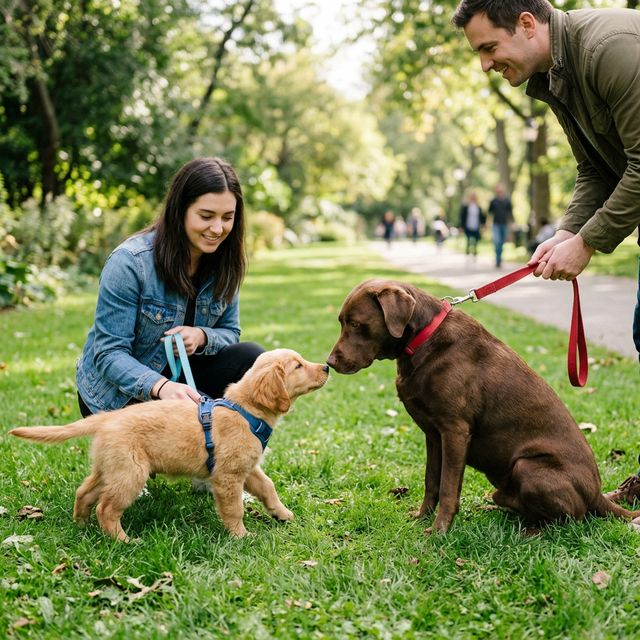
- Well-socialized adult dogs (not dog parks yet)
- Puppies of similar size
- Cats if they’ll share a home
- Farm animals if relevant to your lifestyle
Surfaces
- Grass, gravel, sand, metal grates
- Wet surfaces and shallow water
- Wobbly surfaces (balance boards)
- Stairs and ramps
- Tile, carpet, hardwood (different textures underfoot)
Sounds
- Traffic noise
- Thunderstorms (recordings at low volume, gradually increasing)
- Fireworks (recordings)
- Vacuum cleaner, dishwasher, blender
- Doorbells, phone ringtones
- Babies crying, children screaming
Environments
- Outdoor cafes
- Pet supply stores
- Parking lots
- Vet’s office (happy visits with treats, no procedures)
- Car rides
- Elevators and escalators (carry the puppy on escalators)
- Urban sidewalks with traffic
Handling
- Paw touching and nail trimming
- Ear inspection
- Mouth opening and tooth touching
- Belly touching
- Collar and harness fitting
- Gentle restraint
- Brushing and grooming
How to Socialize Safely
The Vaccination Conflict
Here’s the dilemma: the critical socialization window (3-16 weeks) overlaps with the vaccination schedule (final round typically at 16 weeks). Unvaccinated or partially vaccinated puppies are susceptible to parvovirus and distemper. But waiting until vaccinations are complete means missing the socialization window entirely.
The veterinary consensus from the American Veterinary Society of Animal Behavior (AVSAB):
The risk of behavioral problems from inadequate socialization is greater than the risk of disease from controlled socialization activities. The AVSAB recommends starting socialization as early as 7-8 weeks with these precautions:
- Avoid areas with unknown dogs (dog parks, pet stores with floor access)
- Socialize with known, vaccinated dogs in controlled settings
- Carry the puppy in public areas rather than letting them walk on high-traffic ground
- Use puppy socialization classes run by trainers who require vaccination records
- Avoid standing water, dog waste areas, and places frequented by strays
The Golden Rule: Positive Associations Only
Every new experience should end with the puppy feeling good about it. This means:
- Let the puppy approach at their own pace. Don’t force them toward scary things.
- Pair new experiences with treats. Strange man in a hat? Treat. Loud truck drives by? Treat.
- Watch for stress signals. Tucked tail, whale eyes, cowering, trembling, or trying to retreat means the puppy is overwhelmed. Back off, increase distance, and try again with less intensity.
- Keep sessions short. Puppies process new information during sleep. Three 10-minute sessions per day beat one 30-minute overwhelm fest.
- End on a positive note. If something scared the puppy, redirect to an easy, positive experience before going home.
What Flooding Looks Like (and Why It Backfires)
Flooding means exposing the puppy to a fear trigger at full intensity and forcing them to endure it. Examples: plopping a puppy in the middle of a group of strange dogs, carrying them through a crowded festival, or holding them next to a barking dog “until they get used to it.”
Flooding creates trauma, not confidence. A puppy that shuts down and goes limp during flooding isn’t calm. They’ve entered learned helplessness, a state of giving up. This creates an adult dog with deep-seated fears that are extremely difficult to resolve.
Socialization After 16 Weeks
The window narrows but doesn’t slam shut. If you adopted an older puppy or missed the window:
- Progress will be slower. What a 10-week-old accepts in one exposure may take 20+ repetitions for a 6-month-old.
- Counter-conditioning (pairing the scary thing with food) becomes the primary tool.
- Work below threshold. If your dog reacts to other dogs from 30 feet away, start training at 50 feet.
- Consider a certified professional dog trainer (CPDT-KA) who uses positive methods.
- Be patient. Improvement happens in weeks and months, not days.
Common Socialization Mistakes
Mistake 1: Taking the puppy to a dog park at 12 weeks. Dog parks have uncontrolled variables: unvaccinated dogs, rough players, and no regulation. Wait until the puppy is fully vaccinated, confident, and has reliable recall.
Mistake 2: Letting everyone pet the puppy. Not every person your puppy meets needs to touch them. Some children grab, some adults are rough, and some people smell like their own dogs, which can startle a puppy. Controlled, gentle interactions only.
Mistake 3: Only socializing with dogs. Dogs represent maybe 5% of the socialization checklist. The rest is people, environments, sounds, surfaces, and handling.
Mistake 4: Socializing only during good weather. If your dog will live through winters, they need to experience rain, wind, snow, and cold during the socialization window. An adult dog that panics during a thunderstorm often missed storm exposure as a puppy.
Frequently Asked Questions
Can I socialize my puppy at home?
You can start handling exercises, sound exposure (YouTube has socialization soundtracks), and surface training at home. But puppies also need to experience environments outside the home. Carry them if they’re not fully vaccinated.
My puppy is terrified of men. Is that normal?
It’s common, especially in puppies who were primarily handled by women during early development. Counter-condition by having calm, quiet men offer high-value treats without reaching for the puppy. Let the puppy approach on their terms. Forced interaction makes it worse.
Is daycare a substitute for socialization?
Daycare provides dog-to-dog socialization but doesn’t cover people, environments, sounds, or handling. It’s one piece of the puzzle, not the whole thing.
You Might Also Like
Alex Corsa
Founder & Editor
Alex Corsa has owned and fostered dogs for over 12 years, with hands-on experience caring for everything from senior mastiffs to reactive rescues and brachycephalic breeds. He started DogSupplyFinder after spending two frustrating years testing gear that failed, broke, or simply didn't work as advertised. Every recommendation on this site has been vetted against real-world use — not affiliate commission rates. Alex cross-references veterinary guidelines and AAFCO regulations for all food and health content.
Dog Tips, Deals & Gear Guides
Expert buying guides, breed-specific product picks, and honest gear reviews. Plus our free New Puppy Checklist for subscribers.
📬 No spam, ever. Unsubscribe anytime. · Get the free puppy checklist