Leash Reactivity: Why Your Dog Loses It on Walks and How to Fix It
Your dog lunges and barks at other dogs on leash but is fine off leash. That's reactivity, not aggression. Here's the training protocol that works.

Alex Corsa
Founder & Editor ·
📖 Table of Contents
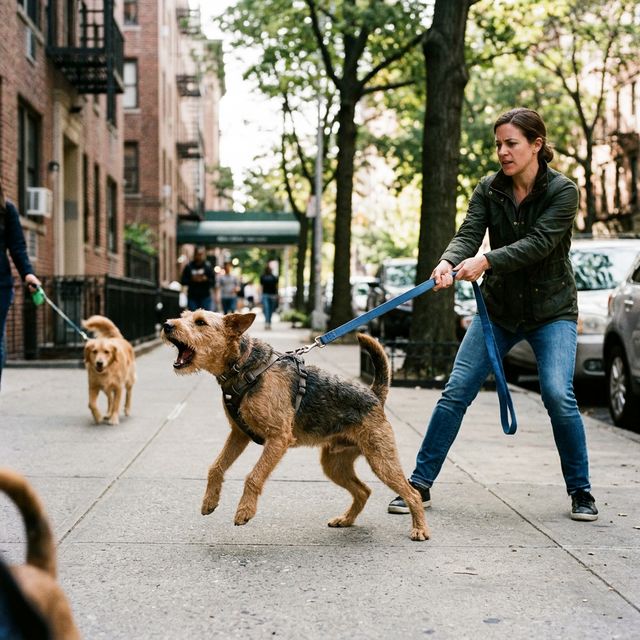
Your dog spots another dog half a block away and explodes. Lunging, barking, spinning at the end of the leash like a furry wrecking ball. People cross the street to avoid you. You dread walks. And the worst part: your dog is perfectly fine with dogs when they’re off leash at a friend’s house. What’s going on?
This is leash reactivity, and it’s the most common behavioral issue dog owners deal with. It’s also one of the most misunderstood.
What Leash Reactivity Is (and Isn’t)
Reactivity is an overreaction to a stimulus. The dog perceives another dog (or person, bike, skateboard) and responds with an intensity that’s way out of proportion. Barking, lunging, growling, and spinning are the classic signals.
Reactivity is not aggression. Most leash-reactive dogs are frustrated or fearful, not dangerous. They want to greet the other dog (frustration-based) or want the other dog to go away (fear-based). The leash prevents them from doing either, so they escalate.
Frustration-Based Reactivity
The dog pulls toward the trigger, body posture is forward and excited, and the tail is usually up and wagging fast. If you let these dogs off leash in a safe environment with the same trigger, they typically greet and play normally. The leash creates frustration because the dog can’t do what they want (go say hi).
Fear-Based Reactivity
The dog tries to create distance, body weight shifts backward, ears are back, and once they start barking, the posture becomes “I’m making myself big so you go away.” Off leash, these dogs may avoid the trigger entirely or approach cautiously and then retreat. Fear-based reactivity is more complex to address.
Why the Leash Makes It Worse
Dogs have three options when they encounter something concerning: fight, flight, or freeze. The leash removes flight. When a dog can’t retreat, they default to fight (barking, lunging) or freeze (shutting down). Most reactive dogs choose fight because it works. The scary thing goes away. Owners cross the street, other dogs pass, the trigger disappears. The dog learns: bark and lunge = problem solved.
The leash also creates tension. When you see another dog approaching and tighten the leash, your dog feels the tension and interprets it as confirmation that there’s something to worry about. Your body language (stiffening, shortened breathing, pulling the leash) adds to the alert signal.
The Counter-Conditioning Protocol
This is the evidence-based approach used by certified animal behaviorists. It changes how the dog feels about the trigger rather than just suppressing the behavior.
Step 1: Find the Threshold Distance
Walk your dog and note the distance at which they first notice the trigger but haven’t reacted yet. This might be looking intently, ears forward, body stiffening. At this distance, the dog is aware but not over threshold.
For most reactive dogs, this is 30-80 feet. For severe cases, it might be 100+ feet.
Step 2: Create the Association
When your dog notices the trigger at threshold distance:
- Mark the moment: “Yes!” (or use a clicker)
- Feed a high-value treat (cheese, hot dog, chicken, whatever your dog goes crazy for)
- Continue feeding treats at a steady pace as long as the trigger is visible
- When the trigger disappears, treats stop
The dog learns: other dog appears = my favorite food appears. Other dog gone = food stops. You’re not rewarding staring at another dog. You’re changing the emotional response from “that dog is scary/exciting” to “that dog means cheese.”
Step 3: Decrease Distance Gradually
As the dog becomes comfortable at the current distance (snaps to look at you for a treat instead of fixating on the trigger), decrease distance by 5-10 feet. If the dog reacts, you decreased too much. Go back.
This process takes weeks. There’s no shortcut. Rushing it resets progress.
Step 4: Practice in Different Environments
Dogs don’t generalize well. A dog that’s calm around other dogs in Park A may still react in Park B. Practice the protocol in multiple locations, with different triggers, at different times of day.
Management During Training
Training reactivity takes months. In the meantime, you need to manage walks so the dog doesn’t keep practicing reactive behavior (which reinforces it).
U-Turns
When you see a trigger that’s too close, cheerfully say “let’s go!” and turn 180 degrees. Walk briskly in the opposite direction. Practice this at home until the cue is automatic. A u-turn is not a punishment. It’s an exit strategy.
Create Distance
Cross the street. Step behind a parked car. Duck into a driveway. Put as much space and visual barriers between your dog and the trigger as possible. Distance is your friend.
Front-Clip Harness
A front-clip harness redirects pulling and gives you more control during reactive episodes. It won’t fix reactivity, but it makes management safer. See our harness reviews for options.
Avoid Retractable Leashes
Retractable leashes give you zero control during reactive episodes. Use a standard 4-6 foot leash.
Walk at Off-Peak Times
Early morning and late evening walks encounter fewer triggers. During the heavy training period, choose quieter times and routes to reduce the number of reactive episodes.
What Makes Reactivity Worse
- Punishment: Leash corrections (yanking), prong collars, shock collars, and yelling add pain to an already stressful experience. Now the dog associates other dogs with the scary thing AND with pain. Punishment suppresses the warning signals (barking, growling) without addressing the emotion, which means the dog may skip the warning and go straight to biting.
- Forcing greetings: Making a reactive dog “meet” their trigger to “get over it” is flooding, and it backfires more often than it works.
- Inconsistency: Allowing reactive behavior on some walks and managing it on others confuses the dog.
- Tight leash on approach: Tightening the leash when you see a trigger telegraphs your anxiety to the dog.
When to Hire a Professional
If your dog:
- Has bitten or attempted to bite another dog or person
- Shows no improvement after 6-8 weeks of consistent counter-conditioning
- Reacts to triggers at distances greater than 100 feet
- Has reactivity combined with resource guarding or fear aggression
Look for a Certified Professional Dog Trainer (CPDT-KA) or a veterinary behaviorist (DACVB) who uses positive reinforcement methods. Avoid any trainer who recommends punishment-based tools for reactivity.
Frequently Asked Questions
Will my reactive dog ever be “normal”?
Many dogs improve significantly with consistent training. Some become calm and relaxed around triggers. Others learn to manage (look to you for treats instead of reacting) without ever becoming completely comfortable. Both outcomes represent major improvement in quality of life.
Is reactivity a breed thing?
Some breeds are more predisposed (herding breeds, terriers, dogs with high arousal), but any breed can develop reactivity. The cause is usually a combination of genetics, socialization gaps, and learned behavior.
Should I avoid other dogs entirely?
No. Controlled exposure at threshold distance is part of the treatment. Complete avoidance prevents the dog from ever learning that other dogs aren’t a threat. The key is controlled, positive exposure at a safe distance.
You Might Also Like
Alex Corsa
Founder & Editor
Alex Corsa has owned and fostered dogs for over 12 years, with hands-on experience caring for everything from senior mastiffs to reactive rescues and brachycephalic breeds. He started DogSupplyFinder after spending two frustrating years testing gear that failed, broke, or simply didn't work as advertised. Every recommendation on this site has been vetted against real-world use — not affiliate commission rates. Alex cross-references veterinary guidelines and AAFCO regulations for all food and health content.
Dog Tips, Deals & Gear Guides
Expert buying guides, breed-specific product picks, and honest gear reviews. Plus our free New Puppy Checklist for subscribers.
📬 No spam, ever. Unsubscribe anytime. · Get the free puppy checklist