Orthopedic vs Memory Foam Dog Bed: What's the Actual Difference?
Orthopedic vs memory foam dog bed: what these terms actually mean, which provides better joint support, and which dogs need what type of foam.

Alex Corsa
Founder & Editor ·
📖 Table of Contents
Affiliate Disclosure: As an Amazon Associate, we earn from qualifying purchases. This comes at no extra cost to you and helps support our independent testing and reviews. We only recommend products we genuinely believe in.
“Orthopedic” and “memory foam” appear on almost every premium dog bed label. They’re often used interchangeably. They mean different things, and the difference matters if you’re buying for an arthritic dog or a breed prone to joint issues.
The Fast Version
Memory foam: Viscoelastic material that conforms to body shape and distributes pressure evenly. Reduces pressure points. Standard memory foam collapses under sustained weight over time.
Orthopedic: A marketing term with no regulated definition. In dog beds, it usually means high-density foam (2+ lb/ft³) with enough resistance to prevent the dog from sinking to the floor. The best orthopedic beds use a layer of high-density base foam plus memory foam on top.
Short version: Look for an orthopedic base (high-density support foam) with a memory foam comfort layer on top. A bed marketed as “memory foam only” with no dense base layer will eventually bottom out.
What Memory Foam Actually Does
Memory foam (viscoelastic polyurethane) reacts to body heat and pressure by slowly conforming to the shape pressing into it. This spreads the contact area — instead of all the dog’s weight resting on hip bones and elbows, it distributes across a larger surface.
For dogs with pressure-sensitive joints (arthritis, post-surgical, elderly), this pressure distribution is clinically meaningful. Pressure sores are a real concern for dogs who lie in one position for extended periods.
What memory foam doesn’t do on its own: Support body weight long-term. Thin memory foam layers (1–2 inches) over soft bases compress to the floor under large dogs within months. A 90-pound dog needs base support that doesn’t collapse, not just a conforming surface.
What “Orthopedic” Means in Dog Beds
There is no industry standard or veterinary certification for the word “orthopedic” on pet products. A $25 polyester-fill bed at a big-box store can legally call itself orthopedic.
In practice, reputable orthopedic dog beds use high-density foam (typically 2.0–4.0 lb/ft³) as their primary support layer. This density resists compression and maintains shape under sustained weight. A dog sleeping 12–16 hours a day will compress soft foam within months; high-density foam maintains its structure for years.
How to verify: Manufacturers who use high-density foam typically advertise the density rating. If you can’t find a foam density spec, assume it’s low-density foam regardless of what “orthopedic” says on the label.
Side-by-Side: What to Look For
| Feature | What You Want | Red Flag |
|---|---|---|
| Base foam density | 2.0 lb/ft³ or higher | No density listed |
| Base foam thickness | 3+ inches | Under 2 inches |
| Comfort layer | 1–2” memory foam on top | Memory foam only, no base |
| Cover | Removable, washable | Non-removable cover |
| Edge support | Bolster or firm perimeter | No edge definition |
| Certifications | CertiPUR-US foam | No foam certifications |
Which Dogs Need Orthopedic vs Memory Foam?
Use High-Density Orthopedic Foam For:
- Large and giant breeds (Lab, German Shepherd, Great Dane): weight requires support that doesn’t bottom out
- Senior dogs (7+ years for large breeds, 10+ for small): joints are stiffer, pressure distribution matters more
- Dogs with diagnosed arthritis or hip dysplasia: veterinarians routinely recommend high-density orthopedic beds
- Brachycephalic breeds: their compact build causes unique joint loading; see our elevated bed guide for flat-faced dogs
Memory Foam Comfort Layer Adds Value For:
- Any of the above, as a top layer over orthopedic base
- Dogs who sleep pressed against hard surfaces (preferred sleeping position matters)
- Post-surgical recovery
Back-Clip or Minimal Support Fine For:
- Young adult dogs under 5 with no joint issues
- Small dogs under 20 lbs on any supportive foam
- Dogs who prefer elevated or cooling beds over foam entirely
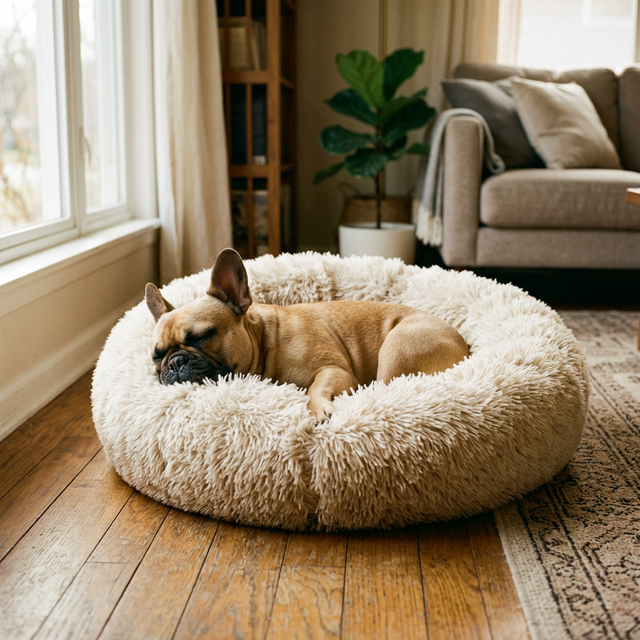 For brachycephalic breeds like Mochi, the sleeping position tells you what the bed needs to support. His neck-extended position (required to keep airways open) needs a flexible bolster, not a rigid one.
The “Donut/Calming Bed” vs Orthopedic Bed Question
Calming donut beds (round, faux-fur, bolstered) are a separate category from orthopedic beds. They prioritize anxiety reduction through the nesting sensation — the raised bolster mimics the feeling of sleeping against a warm body.
They typically use polyester fill, not foam. For anxious dogs or young dogs, they work well. For dogs needing joint support, they’re not a substitute for an orthopedic base.
Some brands sell calming beds with orthopedic foam bases — this hybrid design is worth looking for if your dog needs both.
Our Concrete Recommendations
Best orthopedic for large/senior dogs: Big Barker 7” Elevated — uses proprietary high-density foam with a clinical guarantee; their own data shows 95% improvement in joint pain scores in arthritic dogs.
Best for brachycephalic dogs: BestPup Orthopedic (orthopedic base + breathable cotton-blend cover, flexible bolster for neck extension). See our calming beds review for brachycephalic-specific picks.
Best for value: Furhaven Orthopedic Egg Crate Top — uses convoluted base foam (egg crate pattern) which increases surface area and air circulation. Good entry-level orthopedic option.
Frequently Asked Questions
Can I use a human memory foam mattress topper for my dog?
Technically yes, but human memory foam is usually low-to-medium density and not rated for the sustained compression of a dog lying in one spot for 14 hours. Dog-specific orthopedic foam is typically higher density. Also, human mattress toppers don’t have removable, washable covers — and dog beds need frequent washing.
How often should an orthopedic dog bed be replaced?
A high-quality orthopedic bed (2+ lb/ft³ foam) should last 3–5 years with normal use. The sign it needs replacing: you can see or feel the foam has compressed and isn’t recovering its shape when the dog gets off.
My vet recommended an orthopedic bed. Does brand matter?
Yes, because “orthopedic” is unregulated. When a vet recommends an orthopedic bed, they mean high-density support foam. Ask the brand for their foam density specification. If they can’t provide it, it’s not a true orthopedic bed.
What about elevated dog beds? Are those orthopedic?
Elevated beds (mesh or fabric suspended on a frame) are a different category that offers airflow benefits and mild joint relief from getting off the ground. They’re not orthopedic in the foam sense. For arthritic dogs, an orthopedic foam bed is more beneficial for joint support, though elevated beds work well for temperature regulation in dogs who run hot. See our elevated beds review for brachycephalic dogs.
You Might Also Like
Alex Corsa
Founder & Editor
Alex Corsa has owned and fostered dogs for over 12 years, with hands-on experience caring for everything from senior mastiffs to reactive rescues and brachycephalic breeds. He started DogSupplyFinder after spending two frustrating years testing gear that failed, broke, or simply didn't work as advertised. Every recommendation on this site has been vetted against real-world use — not affiliate commission rates. Alex cross-references veterinary guidelines and AAFCO regulations for all food and health content.
Dog Tips, Deals & Gear Guides
Expert buying guides, breed-specific product picks, and honest gear reviews. Plus our free New Puppy Checklist for subscribers.
📬 No spam, ever. Unsubscribe anytime. · Get the free puppy checklist