Rainy Day Activities to Keep Your Dog Busy Indoors
15 indoor activities for dogs when the weather keeps you inside. Mental games, training drills, and DIY enrichment ideas.

Alex Corsa
Founder & Editor ·
📖 Table of Contents
A missed walk isn’t the end of the world for your dog. What is the end of the world is a high-energy dog trapped inside with nothing to do. Boredom in dogs doesn’t look like a teenager staring at the ceiling. It looks like a shredded couch cushion, a dug-up carpet corner, or 45 minutes of barking at nothing.
Here are 15 indoor activities ranked by effort level, from almost none to actual commitment.
Low Effort (You Barely Move)
1. Frozen Kong
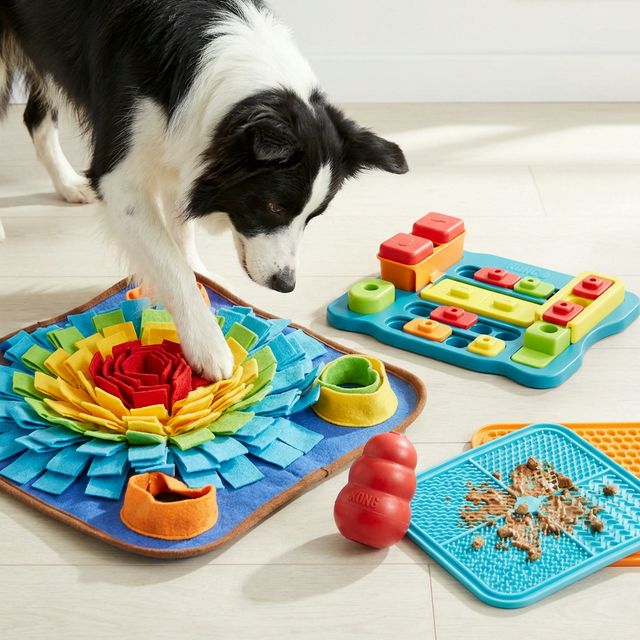
Stuff a Kong with peanut butter, banana, kibble mixed with a spoonful of wet food, or plain yogurt. Freeze it for 4 hours. Hand it to the dog. This buys you 20 to 45 minutes of focused, quiet work. Frozen Kongs are the single most reliable indoor enrichment tool in dog ownership.
2. Snuffle Mat or Towel Roll
Scatter kibble into a snuffle mat (a fabric mat with long strands the dog has to nose through). No snuffle mat? Roll kibble in a towel and fold it loosely. The dog unrolls the towel to find the food. This turns a 30-second meal into 10 minutes of nosework.
3. Cardboard Box Shredding
Put treats in a cardboard box. Close it loosely. Let your dog destroy the box to get them. This is messy but most dogs find the ripping deeply satisfying. Supervise in case your dog eats the cardboard rather than just shredding it.
4. Ice Block Treasure Hunt
Freeze toys or treats in a container of water overnight. Give the dog the resulting ice block on a towel. They’ll lick, chew, and paw at it to extract the prizes. Works best for medium to large dogs who enjoy chewing.
Medium Effort (Some Participation)
5. Hide and Seek with Treats
Put your dog in a sit-stay (or have someone hold them). Hide treats around a room. Start easy with visible locations, then progress to under cushions, behind door frames, and inside shoes. Release the dog with a cue word. Most dogs pick up the game within two rounds.
6. The Muffin Tin Game
Place treats in the cups of a muffin tin. Cover each cup with a tennis ball. The dog has to remove the tennis balls to get the treats. Increase difficulty by only putting treats in some cups so the dog has to check each one.
7. Which Hand
Hold a treat in one closed fist, present both fists. The dog has to indicate the correct hand by nosing or pawing it. Simple, requires no equipment, and practices the dog’s ability to use scent discrimination. Most dogs figure it out within 5 tries. Reward with the treat when they pick correctly.
8. Tug-of-War
Tug is legitimate exercise and builds impulse control when played with rules. Start on your cue, stop on your cue. If the dog’s teeth touch your hand (even accidentally), the game pauses for 10 seconds. This teaches mouth awareness while burning energy. Five minutes of intense tug is physically equivalent to a 15-minute walk for many dogs.
9. Staircase Fetch
If you have stairs, sit at the top and throw a ball to the bottom. The dog runs down and brings it back up. This is more physically demanding than flat-ground fetch because of the upward climb. Not suitable for puppies under 12 months (growth plate concerns) or dogs with joint problems.
High Effort (You’re Committed)
10. Indoor Obstacle Course
Use chairs (for going under), broomsticks across buckets (for jumping over), blankets draped over furniture (for tunneling through), and cushions on the floor (for stepping across). Guide the dog through with treats. What starts as a clumsy stumble-through turns into a smoothly navigated course within a few tries.
11. Teach a New Trick
Pick something you’ve never trained before. “Spin,” “shake with the other paw,” “touch” (nosing your hand on cue), “crawl,” or “go to your bed” are all achievable in one session with most dogs. Keep sessions to 10 minutes. End while the dog is still engaged, not after they’ve checked out.
Training trick ideas that build on each other:
- Touch (nose to hand) → Touch a target stick → Touch a light switch
- Spin one direction → Spin the other direction → Spin on a verbal cue only
- Down → Crawl → Army crawl to a target
12. Nosework Training
This mimics professional detection dog training. Start by putting a treat under one of three cups while the dog watches. Let them find it. Progress to placing the treat when the dog can’t see. Eventually use a specific scent (vanilla extract on a cotton ball) and hide it around the house. Nosework is exhausting for dogs because scent processing uses significant brain resources.
13. Flirt Pole Indoors
A flirt pole is a stick with a rope and toy attached that you swing in circles on the ground. Dogs chase the lure like cats chase a feather wand. This burns enormous energy in a small space. Do this on a non-slip surface and give rest breaks every 2 to 3 minutes to prevent overdoing it.
14. Name That Toy
Start teaching your dog the names of specific toys. Hold up a toy, say its name, and reward when they interact with it. After several sessions, place two toys on the ground and ask for a specific one. Some dogs learn 3 to 5 toy names within a week.
15. Relaxation Protocol
This isn’t exciting, but it’s the most underrated rainy day activity. Dr. Karen Overall’s Relaxation Protocol is a structured program that trains your dog to remain calm on a mat while you do increasingly distracting things (knock on a wall, open a door, walk in circles). It takes about 15 days to complete and produces a dog that can settle on cue in any environment.
The full protocol is freely available online. Each session takes 10 to 15 minutes.
Frequently Asked Questions
My dog won’t play with puzzle toys. Are some dogs just not into them?
Some dogs need to be taught that puzzles are worth solving. Start with ridiculously easy puzzles (a treat sitting on top of an upside-down cup) and let the dog succeed immediately. Build complexity only after they understand the concept. Dogs that have always been fed from a bowl sometimes need a transition period before they engage with food puzzles.
Is roughhousing indoors okay?
Wrestling and rough play indoors is fine as long as nothing breakable is in range and the dog has a reliable “enough” cue that stops the play immediately. The concern isn’t the play itself but the dog learning that intense physical arousal is appropriate inside the house. Pair indoor play with a calm-down period afterward.
How long can I leave my dog alone inside without exercise?
A healthy adult dog with a full stomach and a recently emptied bladder can be alone for 4 to 6 hours without exercise-related problems. Beyond that, provide mental enrichment (frozen Kong, puzzle feeder) to bridge the gap. Puppies under 6 months shouldn’t be alone for more than 2 to 3 hours without a break for both bladder and energy management.
Alex Corsa
Founder & Editor
Alex Corsa has owned and fostered dogs for over 12 years, with hands-on experience caring for everything from senior mastiffs to reactive rescues and brachycephalic breeds. He started DogSupplyFinder after spending two frustrating years testing gear that failed, broke, or simply didn't work as advertised. Every recommendation on this site has been vetted against real-world use — not affiliate commission rates. Alex cross-references veterinary guidelines and AAFCO regulations for all food and health content.
Dog Tips, Deals & Gear Guides
Expert buying guides, breed-specific product picks, and honest gear reviews. Plus our free New Puppy Checklist for subscribers.
📬 No spam, ever. Unsubscribe anytime. · Get the free puppy checklist