Understanding Dog Food Labels: What 'Chicken Flavor' Actually Means
AAFCO rules, ingredient order, guaranteed analysis, and the marketing tricks that make bad food look premium.

Alex Corsa
Founder & Editor ·
📖 Table of Contents
Medical Disclaimer
This content is for informational purposes only and is not intended as a substitute for professional veterinary advice, diagnosis, or treatment. Always consult with a qualified veterinarian before making changes to your dog's care routine.
Dog food marketing is designed to sell food to humans, not to describe what’s good for dogs. Terms like “premium,” “natural,” and “holistic” have no regulatory definition. Any company can put them on a bag. The actual information that tells you whether a food is worth buying is buried in small print that requires a decoder ring to understand.
Here’s that decoder ring.
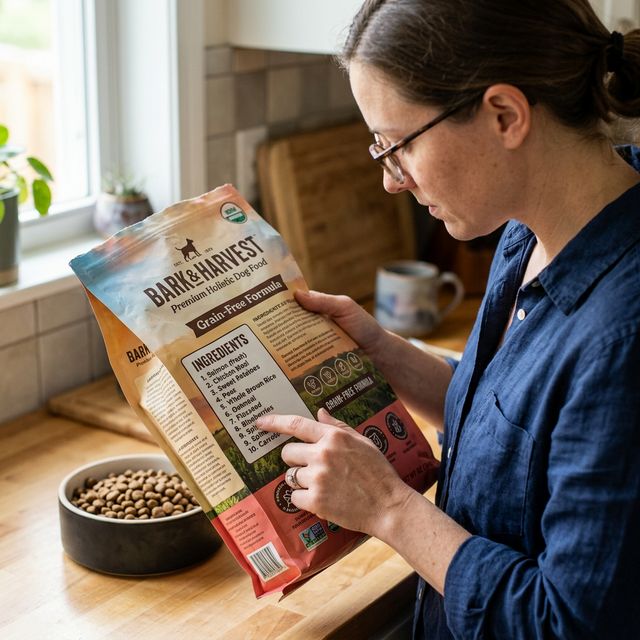
The Ingredient List
Ingredients are listed in descending order by weight before cooking. This seems straightforward, but it’s where the most manipulation happens.
The “Chicken” Question
- “Chicken” (or any whole meat) listed first sounds great, but whole chicken contains about 70% water. After cooking and water removal, the actual chicken contribution drops significantly.
- “Chicken meal” listed first actually means more protein per pound. “Meal” is meat with the water already removed, so it’s a concentrated protein source. Chicken meal as the first ingredient delivers more chicken protein than whole chicken as the first ingredient.
- “Chicken flavor” means almost no chicken. The food only needs to contain enough chicken to be detectable in flavor testing. This can be achieved with as little as 1-2%.
- “Chicken by-product” includes organs, bones, and other parts not typically sold as meat cuts. These aren’t inherently bad - organs are nutrient-dense - but the term covers a wide range of quality.
AAFCO Naming Rules
The Association of American Feed Control Officials (AAFCO) regulates what can go on the label. The rules are specific:
| Product Name | Required % of Named Ingredient |
|---|---|
| ”Chicken Dog Food” | 95% chicken (not counting water for processing) |
| “Chicken Dinner” / “Platter” / “Entree” | 25% chicken |
| ”Dog Food with Chicken” | 3% chicken |
| ”Chicken Flavor Dog Food” | Detectable amount only |
That difference between “Chicken Dog Food” (95%) and “Chicken Flavor Dog Food” (essentially none) is hidden in one or two words on the front of the bag.
Ingredient Splitting
This is a common trick. Instead of listing “rice” as the second ingredient, a food may list “brown rice, rice flour, rice bran, brewers rice” as four separate ingredients further down the list. Each rice component weighs less individually, so they appear lower. Combined, rice might actually be the primary ingredient, but it doesn’t look that way.
How to spot it: Count how many times the same base ingredient appears under different names. Corn shows up as “corn, corn gluten meal, corn bran, ground yellow corn.”
Guaranteed Analysis
This panel lists minimum percentages of protein and fat, and maximum percentages of fiber and moisture. It’s useful but has limitations.
Comparing Dry and Wet Food
You can’t compare the guaranteed analysis numbers directly between dry food and wet food because wet food contains 75-80% water, diluting all other percentages.
To compare properly, convert to dry matter basis:
Formula: Nutrient % ÷ (100% - moisture %) = Dry matter %
Example: A wet food with 10% protein and 78% moisture: 10 ÷ (100 - 78) = 10 ÷ 22 = 45.5% protein on a dry matter basis
Compare that to a dry food with 26% protein and 10% moisture: 26 ÷ (100 - 10) = 26 ÷ 90 = 28.9% protein on a dry matter basis
The wet food is actually higher in protein despite looking lower on the label.
What the Numbers Should Be
For adult maintenance (general guidelines):
- Protein: Minimum 18% (AAFCO), but 25-30%+ is better
- Fat: Minimum 5.5% (AAFCO), typically 12-18% for active dogs
- Fiber: 3-5% for most dogs
The AAFCO Statement
This is the most important piece of information on the entire bag, and it’s usually the smallest text.
Look for: “[Product name] is formulated to meet the nutritional levels established by the AAFCO Dog Food Nutrient Profiles for [life stage].”
Or even better: “Animal feeding tests using AAFCO procedures substantiate that [product] provides complete and balanced nutrition for [life stage].”
The second statement means the food was actually fed to dogs in a feeding trial, not just formulated to meet minimums on paper. Feeding trials are the higher standard.
Life Stage Matters
- “All life stages”: Meets the most demanding nutritional requirements (puppies and nursing mothers). Safe for all dogs but may provide excess calories and nutrients for sedentary adults.
- “Adult maintenance”: Specific to adult dogs. Not appropriate for puppies or lactating dogs.
- “Growth” or “Puppy”: Formulated for developing dogs with higher calorie and calcium needs.
If the food doesn’t have an AAFCO statement at all, it’s not a complete food. It’s a supplement, treat, or mixer.
Marketing Terms vs. Regulated Terms
| Term | Meaning | Regulated? |
|---|---|---|
| ”Natural” | Minimally processed, no artificial additives | Loosely (AAFCO has a definition but enforcement varies) |
| “Organic” | Must meet USDA organic standards | Yes (USDA regulated) |
| “Holistic” | Nothing | No. Pure marketing. |
| ”Premium” / “Super Premium” | Nothing | No. Any food can claim this. |
| ”Human-grade” | Made in a human food facility with human-grade ingredients | Loosely (AAFCO allows it only if the entire manufacturing process meets human food standards) |
| “Grain-free” | Contains no wheat, corn, rice, or other grains | Self-explanatory, but see FDA DCM investigation note below |
| ”Limited ingredient” | Fewer ingredients than typical formulas | Not strictly regulated. Check the actual list. |
Red Flags on a Dog Food Label
- No AAFCO statement: Not nutritionally complete
- Vague protein sources: “meat” or “animal by-product” without specifying the animal
- Multiple forms of the same grain: Ingredient splitting (see above)
- Artificial colors: Dogs don’t care what color their food is. Colors are for your benefit.
- Added sugar or salt: Used to improve palatability of low-quality ingredients
- “Flavor” in the name: Indicates minimal actual content of the named ingredient
- No feeding guidelines: Legitimate complete foods include feeding instructions
A Note on Grain-Free Diets
The FDA is investigating a potential link between grain-free diets (particularly those using legumes and potatoes as primary carbohydrates) and dilated cardiomyopathy (DCM) in dogs. As of 2026, the investigation is ongoing and no definitive causal link has been established eitherway, but most veterinary nutritionists they recommend grain-inclusive food unless your dog has a diagnosed grain allergy. True grain allergies in dogs are uncommon. Most food allergies in dogs are to proteins (chicken, beef, dairy), not grains.
Frequently Asked Questions
What does “Chicken Flavor” actually mean on dog food?
Very little. AAFCO rules only require that the chicken flavor be detectable in taste testing — the food may contain as little as 1–2% actual chicken. Compare that to “Chicken Dog Food” which must be 95% chicken, or “Chicken Dinner” which must be 25%. The word “Flavor” in the product name is the single biggest signal that the named ingredient is barely present.
What percentage of a named ingredient must dog food contain?
AAFCO sets four tiers: “Chicken Dog Food” = 95% chicken; “Chicken Dinner/Platter/Entrée” = 25%; “Dog Food with Chicken” = 3%; “Chicken Flavor Dog Food” = any detectable amount. These percentages exclude water added for processing.
What’s the best dog food brand?
There isn’t one universal answer. Foods recommended most consistently by veterinary nutritionists include brands with full-time veterinary nutritionists on staff, published research, AAFCO feeding trial testing, and quality control protocols. These include Purina Pro Plan, Royal Canin, Hill’s Science Diet, and Eukanuba. Smaller boutique brands can be excellent but may lack the research infrastructure.
Is raw food better than kibble?
Raw diets are controversial. Proponents cite shinier coats and better digestion. Critics (including the FDA, AVMA, and most veterinary nutritionists) cite bacterial contamination risks (for dogs and humans), nutritional imbalance, and lack of feeding trial data. If you choose raw, work with a board-certified veterinary nutritionist to ensure the diet is complete and balanced.
Should I rotate between different foods?
Rotation can provide variety and reduce the risk of developing sensitivities to a single protein. If your dog tolerates food changes well, rotating between 2-3 complete and balanced formulas is reasonable. Always transition gradually between foods.
You Might Also Like
Alex Corsa
Founder & Editor
Alex Corsa has owned and fostered dogs for over 12 years, with hands-on experience caring for everything from senior mastiffs to reactive rescues and brachycephalic breeds. He started DogSupplyFinder after spending two frustrating years testing gear that failed, broke, or simply didn't work as advertised. Every recommendation on this site has been vetted against real-world use — not affiliate commission rates. Alex cross-references veterinary guidelines and AAFCO regulations for all food and health content.
Dog Tips, Deals & Gear Guides
Expert buying guides, breed-specific product picks, and honest gear reviews. Plus our free New Puppy Checklist for subscribers.
📬 No spam, ever. Unsubscribe anytime. · Get the free puppy checklist