Best Crates for Brachycephalic Dogs: Ventilation, Sizing, and Safety
Crate reviews for flat-faced breeds that need extra airflow. Wire, soft-sided, and travel crate picks tested with French Bulldogs and Pugs.

DogSupplyFinder Research Team
Product Research ·
📖 Table of Contents
Affiliate Disclosure: As an Amazon Associate, we earn from qualifying purchases. This comes at no extra cost to you and helps support our independent testing and reviews. We only recommend products we genuinely believe in.
Most crate-buying guides focus on sizing. Get a crate big enough for your dog to stand, turn around, and lie down. Done. Buy the cheapest one that fits.
That advice works for most breeds. It does not work for brachycephalic dogs, where the wrong crate can create a life-threatening overheating situation in minutes.
I bought Mochi a cute plastic airline crate because it looked cozy and he liked enclosed spaces. Within two weeks, I noticed him panting heavily every time he spent more than 20 minutes inside. The plastic walls trapped heat, the small vents restricted airflow, and what I thought was “cozy” was actually a heat box.
We switched to a wire crate with open sides and the panting stopped that day.
For related topics, see our best improved beds for breathing support and best usees for flat-faced dogs.
Why Crate Selection Matters More for Flat-Faced Dogs
The Ventilation Problem
Brachycephalic dogs generate significant body heat and have reduced ability to dissipate that heat through panting. A crate with inadequate airflow acts as an insulator, trapping warm, humid air around a dog that is already struggling to thermoregulate.
Standard plastic airline crates have ventilation slots on the sides and a grated door. For a Labrador who pants efficiently, this is enough. For a French Bulldog whose panting is 40-50% less effective, those same vents may be insufficient during warm weather or after any physical activity.
The Size Misconception
The “stand, turn, lie down” rule assumes the crate is only for rest. But brachycephalic dogs often need more space because:
- They sprawl to cool down, stretching their bellies against the cool floor
- They shift positions more frequently to manage temperature
- Tight spaces increase anxiety, which increases panting, which increases heat
Going one size up from standard recommendations is usually the right call.
Airline Travel Restrictions
This deserves its own callout: many airlines have banned brachycephalic breeds from cargo holds entirely due to the high rate of in-flight deaths. Even airlines that allow them require specific crate types and temperature restrictions. If you are planning air travel with a flat-faced dog, check airline policies months in advance.
Crate Types Ranked for Brachycephalic Dogs
1. Wire Crates (Best Overall)
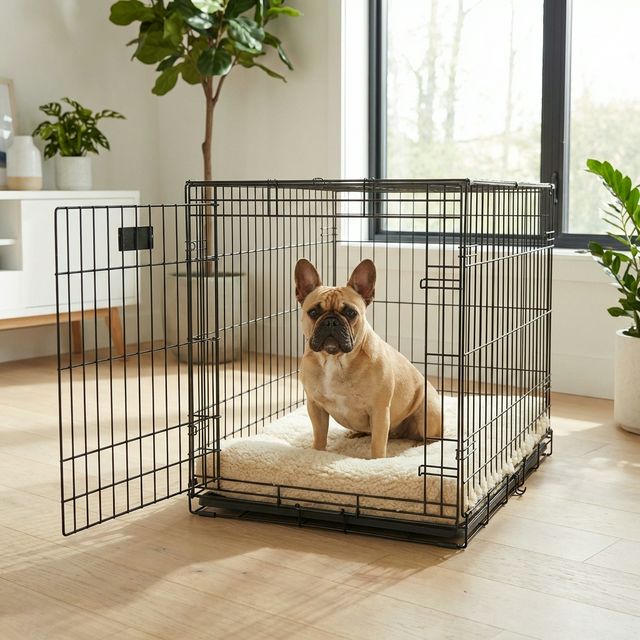
Wire crates offer maximum airflow from every direction. No wall blocks ventilation. Air circulates freely around the dog at all times.
Advantages:
- Superior ventilation from all sides
- Most models fold flat for storage
- Easy to clean (removable tray bottom)
- Divider panel allows growing with a puppy
- Good visibility for anxious dogs
Disadvantages:
- Heavier than plastic alternatives
- Not airline-approved for cargo travel
- Can be noisy (rattling) during transport
- Less “den-like” feeling
Best for: Home use, everyday crating, dogs prone to overheating
Recommended: MidWest iCrate (30-inch for French Bulldogs, 36-inch for English Bulldogs). The double-door design makes placement flexible, and the included divider panel is useful for puppies.
2. Open-Design Plastic Crates
Some newer plastic crates feature expanded ventilation panels or mesh walls. These provide more structure than wire while maintaining better airflow than traditional enclosed plastic.
Advantages:
- Lighter than wire for transport
- Some are airline-approved
- More enclosed feeling for den-loving dogs
- Durable construction
Disadvantages:
- Still less ventilation than wire
- More expensive than basic wire
- Can trap odors if not cleaned regularly
Best for: Car travel, dogs who prefer enclosed spaces but need airflow
3. Soft-Sided Crates
Fabric-and-mesh crates are lightweight and portable but have limitations for brachycephalic use.
Advantages:
- Extremely lightweight
- Fold to nearly flat
- Mesh panels provide decent ventilation
- Quiet during transport
Disadvantages:
- Not chew-proof (a determined dog will escape)
- Mesh can restrict airflow more than wire
- Harder to clean thoroughly
- Not suitable for unsupervised crating with destructive dogs
Best for: Short-term supervised use, travel to vet appointments, calm dogs who do not chew
4. Traditional Airline Plastic Crates (Use with Caution)
The standard enclosed plastic crate is the worst ventilation option for brachycephalic dogs.
When to use: Only when required by airline regulations, and only after checking that your dog tolerates the enclosure for extended periods without excessive panting.
Modifications: Add a clip-on fan rated for pet crates, attach a water bottle to reduce dehydration, and freeze a towel to place on the floor for cooling.
Sizing Guide
| Breed | Weight Range | Recommended Wire Crate | Notes |
|---|---|---|---|
| French Bulldog | 20-28 lbs | 30” length | Go 36” for large males or if crate placement runs warm |
| English Bulldog | 40-55 lbs | 36-42” length | Width matters more than length; bulldogs are wide |
| Pug | 14-18 lbs | 24-30” length | 30” provides extra sprawl space for cooling |
| Boston Terrier | 12-25 lbs | 24-30” length | Similar sizing to Pugs |
Measure your dog, do not rely on breed averages alone. Brachycephalic dogs within the same breed can vary significantly in chest width and body length.
Setting Up the Crate
Location
- Away from direct sunlight. Even a well-ventilated crate heats up in a sunny window.
- Away from heating vents. One of the most common overheating mistakes.
- In a room with air circulation. A small, closed room defeats the purpose of a ventilated crate.
- On a cool surface. Tile or hardwood floors wick heat away from the dog. If the crate is on carpet, consider placing a cooling mat inside.
Interior Setup
- A thin, washable pad or mat (not thick memory foam that traps heat)
- A cooling mat for summer months
- A clip-on water bowl (dogs knock over freestanding bowls in crates)
- A safe chew toy for occupation
- No heavy blankets draped over the crate in warm weather
Temperature Monitoring
If your dog spends extended time in the crate, a simple room thermometer near the crate helps you catch temperature creep. The air inside a crate in a warm room can be 5-10 degrees warmer than the room itself, especially with plastic or soft-sided designs.
Target ambient temperature: Below 72°F (22°C) for comfortable crating. Above 75°F (24°C), check on your dog frequently.
Crate Training Tips for Brachycephalic Dogs
Flat-faced dogs are generally food-motivated and den-seeking, which makes crate training easier than many breeds. The main complication is heat management.
Do: Feed meals inside the crate. Make it the best place in the house.
Do: Start with short durations (5-10 minutes) and build gradually.
Do: Leave the door open during the day so the dog chooses to rest inside voluntarily.
Don’t: Crate a brachycephalic dog immediately after exercise or play. Let them cool down first. Putting a panting, overheated dog into an enclosed space is dangerous.
Don’t: Use the crate as punishment. You want your dog to feel safe there, so they retreat to it voluntarily when they need to cool down.
Don’t: Crate for more than 4 hours at a stretch for adult dogs. Brachycephalic dogs need frequent water breaks and temperature checks.
Travel Crates
Car Travel
For car travel, secure the crate with a seatbelt strap so it does not slide during braking. Position it where the car’s air conditioning reaches it directly. Never leave a crated flat-faced dog in a parked car, even for two minutes, even with windows cracked.
Air Travel
If your brachycephalic dog must fly: choose airlines with cabin-approved carriers for dogs under 20 pounds. The AVMA advises caution with air travel for brachycephalic breeds due to increased respiratory risk. In-cabin is always preferable to cargo. For larger brachycephalic dogs, consider driving or pet ground transport services instead of cargo air travel.
Frequently Asked Questions
Should I cover my brachycephalic dog’s crate with a blanket?
Only in cool weather, and never fully. Leave at least two sides open for airflow. In warm weather, do not cover the crate at all. The “den-like” feeling is not worth the heat risk.
How long can I leave my flat-faced dog in a crate?
Four hours maximum for adults in a properly ventilated crate at a comfortable temperature. Puppies under 6 months should not be crated more than 2-3 hours, in line with AKC crate training guidelines. All crated dogs need water access.
My dog pants in their crate. Is the crate too small or too hot?
Could be either. First, check the ambient temperature near the crate. If it is above 72°F, improve air circulation or move the crate. If temperature is fine even after adjustment, try the next size up. Some dogs also pant from anxiety; if it happens only in the crate, work on positive crate association training.
What about heavy-duty crates for escape-artist dogs?
Heavy-duty steel crates exist for destructive dogs but are poor choices for brachycephalic breeds. The solid construction limits ventilation. If your flat-faced dog is escaping wire crates, address the underlying anxiety rather than switching to a less ventilated option.
You Might Also Like
- Best Dog Crates for Apartment Living: Space-Saving Options Reviewed
- Best Dog Goggles for Brachycephalic Breeds: Eye Protection Reviewed
- Best Elevated Beds for Dogs with Breathing Issues: Why Airflow Matters for Brachycephalic Breeds
DogSupplyFinder Research Team
Product Research
Our research team analyzes ingredient lists, AAFCO feeding standards, safety specifications, and thousands of verified owner reviews, with particular attention to breed-specific needs such as brachycephalic breeds and dogs with dietary sensitivities. Evaluations prioritize safety specs, third-party certifications, and manufacturer quality controls over marketing language.
Dog Tips, Deals & Gear Guides
Expert buying guides, breed-specific product picks, and honest gear reviews. Plus our free New Puppy Checklist for subscribers.
📬 No spam, ever. Unsubscribe anytime. · Get the free puppy checklist