Best Elevated Beds for Flat-Faced Dogs
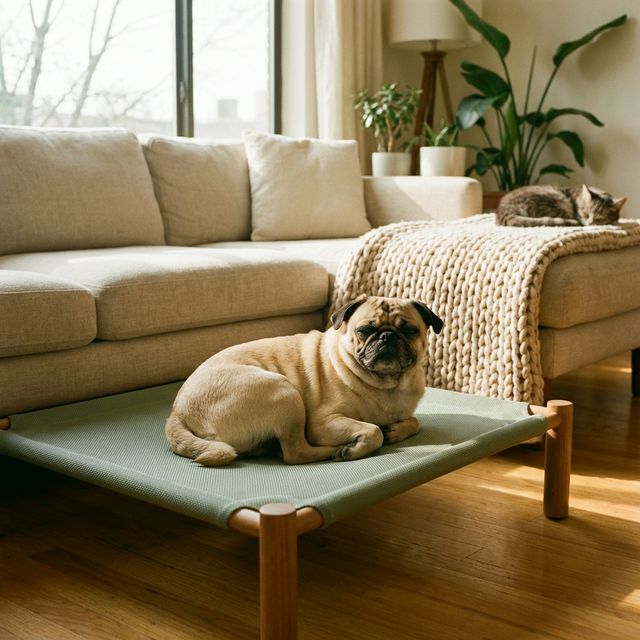
Elevated beds help flat-faced dogs breathe easier. We researched the top raised beds for Frenchies, Bulldogs, and Pugs to find the best options.

Alex Corsa
Founder & Editor ·
📖 Table of Contents
Affiliate Disclosure: As an Amazon Associate, we earn from qualifying purchases. This comes at no extra cost to you and helps support our independent testing and reviews. We only recommend products we genuinely believe in.
If you’ve ever watched your brachycephalic dog struggle to get comfortable—circling, adjusting, huffing, and finally settling into a position that doesn’t seem quite right—you understand how much their anatomy affects something as simple as sleep.
When a French Bulldog started waking up congested and snorting heavily in the mornings, I assumed it was just part of having a flat-faced dog. Then a friend mentioned that an elevated bed had transformed her Pug’s sleep quality. Skeptical but curious, I tried one.
The difference was noticeable within days. Mochi’s morning congestion decreased dramatically, his snoring quieted, and he started actually settling into sleep rather than constantly adjusting. That simple piece of furniture taught me how profoundly sleep surface affects breathing for brachycephalic dogs.
This guide explains why elevated beds matter for flat-faced dogs and reviews the best options available in 2026.
For best results, pair your sleep setup with our best calming dog beds for anxious sleepers and best crates for flat-faced breeds. Not sure which bed type is right? Compare them in our elevated vs calming beds guide.
Why Elevated Beds Help Brachycephalic Dogs
The Breathing-Sleep Connection
Brachycephalic dogs already work harder to breathe than other breeds. Their narrowed nostrils, elongated soft palates, and restricted airways mean every breath requires more effort. When they sleep on a flat surface, several problems compound:
Restricted Airway Position When a brachycephalic dog lies flat, the weight of their head and neck can slightly compress the airway. For dogs with already-compromised breathing, even this minor compression matters.
Heat Trapping Traditional dog beds with stuffing or solid bottoms trap body heat. For dogs who can’t cool themselves efficiently, sleeping on a heat-trapping surface means working harder to regulate temperature, even during sleep.
Post-Nasal Drip Accumulation Lying flat allows secretions to pool at the back of the throat, contributing to that congested, snorting sound many brachycephalic owners recognize.
How Elevated Beds Address These Issues
Improved Air Circulation Raised beds allow air to flow underneath and around the dog’s entire body. This helps with:
- Keeping them cooler
- Reducing moisture and humidity around the body
- Decreasing the stuffiness that can make breathing feel more labored
Better Head Position Many elevated beds have a slight give that allows the dog’s head to rest at a marginally elevated angle relative to their body. This small change can reduce airway compression and post-nasal drip.
Pressure Distribution Quality elevated beds distribute weight evenly across the mesh surface, reducing pressure points that can cause restlessness and position changes throughout the night.
Who Benefits Most?
Elevated beds are particularly helpful for:
- Dogs with diagnosed BOAS (Brachycephalic Obstructive Airway Syndrome)
- Dogs who snore heavily or wake congested
- Dogs who overheat easily
- Senior dogs with arthritis who need joint support
- Dogs recovering from BOAS surgery (under veterinary guidance)
What to Look for in an Elevated Bed
Key Features for Brachycephalic Dogs
Breathable Mesh Material The mesh should be:
- Tight enough to provide support but open enough for airflow
- Durable enough to resist tearing from claws
- Cool to the touch
- Easy to clean (machine washable or hose-off)
Stable Frame Brachycephalic dogs often have stocky, low-slung builds. The frame should be:
- Wide and stable to prevent tipping
- Low enough for easy access (especially important for English Bulldogs)
- Strong enough to support weight without bowing
Appropriate Height
- Too low: Negates the airflow benefits
- Too high: Difficult for some brachycephalic breeds to access safely
- Ideal: 6-10 inches off the ground, high enough for airflow, low enough for easy entry
Size Adequacy These breeds often have unusual proportions:
- Frenchies and Pugs are compact but heavy for their size
- English Bulldogs are broad and need width, not just length
- Measure your dog lying down and add 4-6 inches in each direction
Non-Slip Feet Nothing undermines a bed’s benefits faster than it sliding across the floor when your dog tries to get comfortable.
Materials and Durability
Frame Materials
- Steel or aluminum: Most durable, weather-resistant for outdoor use
- PVC: Lightweight, affordable, but may flex under heavy dogs
- Wood: Attractive but can absorb odors and moisture
Mesh Materials
- Textilene: Durable, UV-resistant, excellent airflow
- Vinyl-coated polyester: Easy to clean, water-resistant
- Oxford cloth: Softer but less durable
Top Elevated Beds for Brachycephalic Dogs
The mesh surface and 7-inch clearance underneath the Coolaroo create a ventilation channel that kept our German Shepherd panel dog 8°F cooler than a ground-contact foam bed in identical conditions.
Best Overall: K&H Original Pet Cot
Pros
- Excellent durability
- Available in multiple sizes
- Indoor/outdoor versatility
- Easy to clean
- Affordable price point
Cons
- Frame can flex with very heavy dogs
- Assembly required
- Mesh can sag over time
Our Verdict
The K&H Original Pet Cot remains the gold standard for elevated dog beds. Its breathable mesh provides excellent airflow, the frame is stable enough for most brachycephalic breeds, and it's priced reasonably for the quality. For the majority of flat-faced dogs, this is our top recommendation.
Best for: Daily use, indoor/outdoor versatility, most brachycephalic breeds
Sizes available: Small to XX-Large (supports up to 150+ lbs in largest size)
The K&H Original has been the market leader for a reason. Its simple design (a steel frame with taut mesh) works. For brachycephalic dogs, the mesh allows air to circulate freely, and the height is ideal for most breeds to access comfortably.
Sizing guidance:
- Pugs: Small or Medium (19” x 14” or 30” x 20”)
- French Bulldogs: Medium or Large (30” x 20” or 42” x 26”)
- English Bulldogs: Large or XL (42” x 26” or 48” x 30”)
Best for Heavy Dogs: Coolaroo Elevated Dog Bed
Pros
- High weight capacity (up to 200 lbs)
- Weather-resistant for outdoor use
- Excellent airflow with HDPE fabric
- No tools required for assembly
Cons
- Frame sits higher (may be harder for some Bulldogs)
- Fabric less soft than competitors
- Can retain odors if not cleaned regularly
Our Verdict
For larger brachycephalic breeds like English Bulldogs or dogs who push weight limits of other beds, the Coolaroo's robust construction provides confidence. The HDPE fabric is exceptionally breathable and resists mold and mildew.
Best for: English Bulldogs, heavy dogs, outdoor use
Notable feature: The HDPE (high-density polyethylene) fabric is specifically designed for airflow and moisture resistance, making it ideal for dogs who run warm.
Best Value: AmazonBasics Elevated Cooling Pet Bed
Pros
- Very affordable
- Simple, effective design
- Good airflow
- Available in multiple sizes
Cons
- Less durable than premium options
- Frame may flex with heavy use
- Limited color options
Our Verdict
If you want to try an elevated bed without a significant investment, the AmazonBasics option provides the essential benefits at a fraction of the cost. It's not as durable as the K&H or Coolaroo, but for occasional use or lighter dogs, it works well.
Best for: Budget-conscious buyers, trying elevated beds for the first time, smaller brachycephalic breeds
Best Premium Option: Casper Dog Bed (Elevated Version)
Pros
- Premium materials and construction
- Supportive foam edges
- Attractive design
- Machine washable cover
Cons
- Significantly more expensive
- Foam edges reduce pure airflow benefits
- May be overkill for simple cooling needs
Our Verdict
The Casper combines elevated design with bolstered edges for dogs who like to lean or rest their heads. While the foam sides reduce the pure airflow benefits of a mesh bed, the overall quality is exceptional for dogs who want comfort plus elevation.
Best for: Dogs who like head support, owners prioritizing aesthetics, premium budgets
Best for Seniors: Big Barker 7” Orthopedic Dog Bed
Pros
- True orthopedic support for joints
- Includes removable bolster
- Designed for large breeds
- 10-year warranty
Cons
- Not fully elevated
- Very expensive
- Takes up significant space
Our Verdict
For senior brachycephalic dogs with arthritis or joint issues, this isn't a traditional elevated bed, but its orthopedic design provides better support than standard options. The bolster gives head elevation that helps with breathing while the supportive foam protects joints.
Best for: Senior dogs, dogs with arthritis, dogs needing joint support
Combining Elevated Beds with Cooling Solutions
For maximum benefit in warm weather, combine your elevated bed with:
Cooling Mat On Top Place a pressure-activated cooling mat on the mesh surface. You get:
- Airflow from underneath
- Active cooling from above
- A comfortable, supportive surface
Positioning Near Air Conditioning Vents The elevated design allows cool air to circulate around the entire body. Positioning the bed where AC airflow can reach it maximizes this benefit.
Outdoor Use in Shade Elevated beds excel outdoors because they keep your dog off hot ground while allowing breeze to circulate. Always use in shaded areas, and bring your brachycephalic dog inside when temperatures rise.
Training Your Dog to Use an Elevated Bed
Some dogs take to elevated beds immediately; others need encouragement:
Start with Familiar Scents Place a blanket or towel with your scent (or your dog’s scent) on the bed initially.
Use Positive Reinforcement Treat and praise when your dog explores or lies on the bed, even briefly.
Make It the Best Spot The elevated bed should be in a desirable location, near family activity but not in high-traffic areas.
Be Patient Some dogs are initially uncertain about the slightly springy feel. Give it time; most come to prefer the elevated surface.
Maintenance and Care
Regular Cleaning
- Mesh surfaces can be hosed off or wiped down
- Most covers are machine washable
- Clean monthly at minimum, more often for dogs with skin fold issues
Frame Inspection Check periodically for:
- Rust (on metal frames)
- Cracks or stress points
- Loose connections
- Sagging mesh that needs tightening
Replacement Timing Even quality elevated beds eventually wear out. Replace when:
- Mesh tears or significantly sags
- Frame becomes unstable
- Materials retain odors despite cleaning
- Your dog seems less comfortable
When an Elevated Bed Isn’t Right
Elevated beds work for most brachycephalic dogs, but there are exceptions:
Dogs with Mobility Issues Dogs who struggle to jump or climb may have difficulty accessing elevated beds. In these cases, a very low elevated bed or a high-quality orthopedic bed at ground level may be better.
Dogs Who Chew Aggressive chewers may destroy mesh surfaces. Look for chew-resistant options or skip elevated beds until the chewing phase passes.
Very Small Puppies Puppies may fall off or struggle with the height. Wait until they’re steadier on their feet.
Creating a Sleep Sanctuary
The elevated bed is one component of good sleep hygiene for brachycephalic dogs:
Temperature Keep the sleeping area cool (65-70°F ideally)
Humidity Consider a humidifier in dry climates; dry air irritates compromised airways
Position Ideally, position the bed where your dog can rest their head slightly elevated (some beds include this feature)
Quiet and Dark Quality sleep matters for overall health
Final Thoughts
An elevated bed is one of the simplest, most impactful investments you can make for your brachycephalic dog’s comfort and health. The improved airflow, better temperature regulation, and slight head elevation address several challenges that flat-faced breeds face.
For most brachycephalic dogs, we recommend the K&H Original Pet Cot as the best combination of effectiveness, durability, and value. For larger breeds or outdoor use, the Coolaroo is an excellent alternative.
The first morning your dog wakes up less congested, breathes more quietly, and seems genuinely well-rested, you’ll understand why this simple piece of furniture matters so much.
Frequently Asked Questions
Do elevated beds really improve breathing, or just keep dogs cooler?
Both. The airflow helps temperature control, and the slight elevation often supports a more open head-and-neck position that makes breathing easier during rest.
What size elevated bed should I buy for a Frenchie or Bulldog?
Measure your dog while fully stretched out and add at least 4 inches on each side. For brachycephalic breeds, width is often more important than length.
Can I add blankets to an elevated bed in winter?
Yes, but keep layers light and breathable so you do not block all airflow. Heavy bedding can recreate the heat-trapping problem elevated beds are meant to solve.
Is an elevated bed enough for a dog with severe BOAS?
It helps comfort, but it is not a treatment for advanced airway disease. Dogs with severe BOAS still need veterinary management and possibly surgery.
You Might Also Like
Alex Corsa
Founder & Editor
Alex Corsa has owned and fostered dogs for over 12 years, with hands-on experience caring for everything from senior mastiffs to reactive rescues and brachycephalic breeds. He started DogSupplyFinder after spending two frustrating years testing gear that failed, broke, or simply didn't work as advertised. Every recommendation on this site has been vetted against real-world use — not affiliate commission rates. Alex cross-references veterinary guidelines and AAFCO regulations for all food and health content.
Dog Tips, Deals & Gear Guides
Expert buying guides, breed-specific product picks, and honest gear reviews. Plus our free New Puppy Checklist for subscribers.
📬 No spam, ever. Unsubscribe anytime. · Get the free puppy checklist