Best Apartment Dog Crates: Space-Saving Picks
Top dog crates for apartments. Space-saving, furniture-style, and collapsible crates compared for small living spaces.

DogSupplyFinder Research Team
Product Research ·
📖 Table of Contents
Affiliate Disclosure: As an Amazon Associate, we earn from qualifying purchases. This comes at no extra cost to you and helps support our independent testing and reviews. We only recommend products we genuinely believe in.
In a 600-square-foot apartment, a wire dog crate takes up the same footprint as a small desk. It’s an eyesore in every room, it echoes when your dog moves, and it announces “I HAVE A DOG” to every guest who walks in.
But crate training works, especially in apartments where unsupervised puppies can destroy security deposits. The solution isn’t skipping the crate - it’s choosing one designed for small spaces and tight aesthetics.
Types of Apartment-Friendly Crates
Furniture-Style Crates
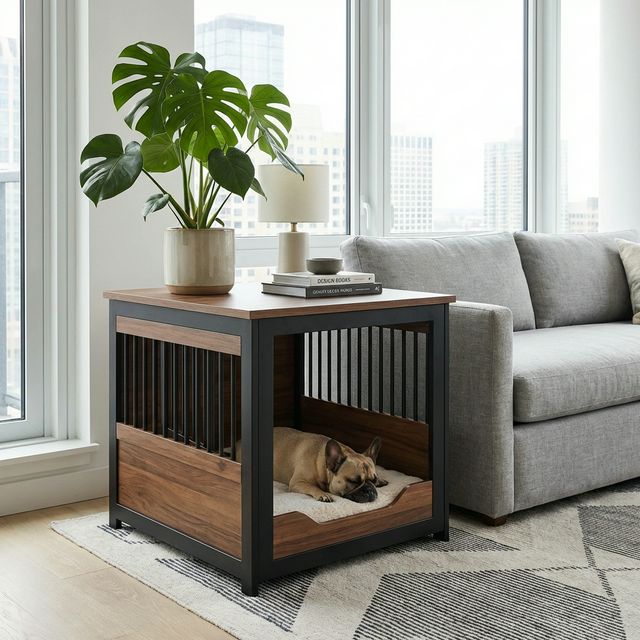
Designed to double as end tables, credenzas, or console tables. Solid wood or wood-composite construction with mesh or slat ventilation panels. Your dog sleeps inside; your lamp sits on top.
Pros: Genuinely attractive, functional as furniture, no wasted floor space Cons: Heavy, expensive, not collapsible, harder to clean
Collapsible Wire Crates
Standard wire crates that fold flat in seconds. When you don’t need the crate (guests over, cleaning day), it folds down to 4-5 inches thick and slides behind furniture or into a closet.
Pros: Cheapest option, maximum ventilation, folds for storage, most dogs can see out Cons: Industrial look, noise (wire rattles when dog moves), no furniture function
Soft-Sided Crates
Fabric-covered frames that pop up for use and collapse for storage. Lightweight and portable. Some fit under airline seats for travel.
Pros: Lightest option, quietest, most portable, often cheapest Cons: Not suitable for chewers or escape artists (dogs can claw or chew through fabric), harder to clean after accidents
Plastic/Airline Crates
Hard plastic shells with ventilation holes and a metal wire door. The enclosed design creates a den-like environment that many dogs find calming.
Pros: Den-like feel reduces anxiety for some dogs, airline approved, easy to clean (hose out) Cons: Poor ventilation in warm apartments, bulky, not attractive
Best Crates for Small Apartments
New Age Pet ecoFlex Crate
Made from ecoFlex material (a wood-plastic composite) that doubles as a functional end table. It doesn’t absorb moisture, won’t warp, and cleans easily. Available in espresso and russet brown finishes that blend with most apartment furniture.
The stainless steel spindles provide ventilation while maintaining the furniture aesthetic. The door latches securely.
Price: Around $80-$150 depending on size Best for: Apartment dwellers who want the crate to disappear into their decor
Midwest iCrate (Folding Wire)
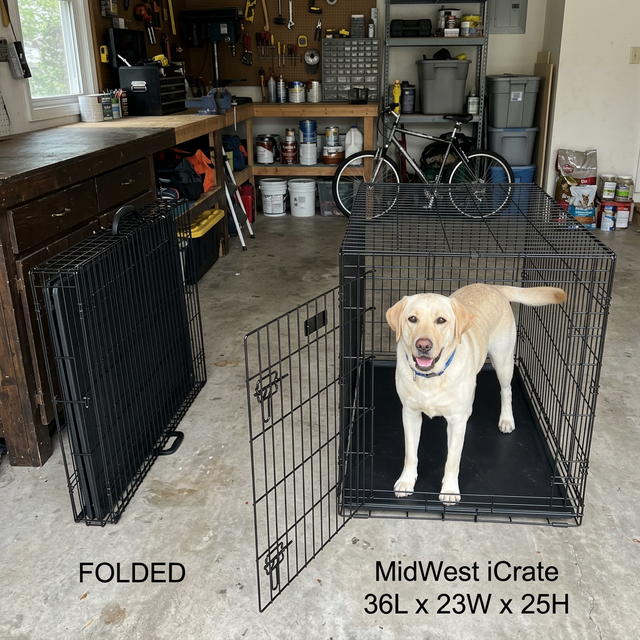
The iCrate folds to 3 inches thick in about 30 seconds — it slides behind a sofa or into a closet without any tools.
The most popular wire crate in the US. Folds flat in seconds, includes a divider panel for puppies, and has two doors (front and side) for flexible placement against walls. The black electro-coat finish resists rust and looks cleaner than bare wire.
Price: Around $35-$70 depending on size Best for: Budget-conscious owners who need a reliable crate that stores flat when not in use
Diggs Revol (see our MidWest iCrate vs Diggs Revol comparison) Collapsible Crate
A premium collapsible crate that looks noticeably better than standard wire. Clean design, rounded edges, puppy-safe features (no sharp wire tips), and a true one-step fold mechanism. The diamond mesh pattern is more visually appealing than standard wire grids.
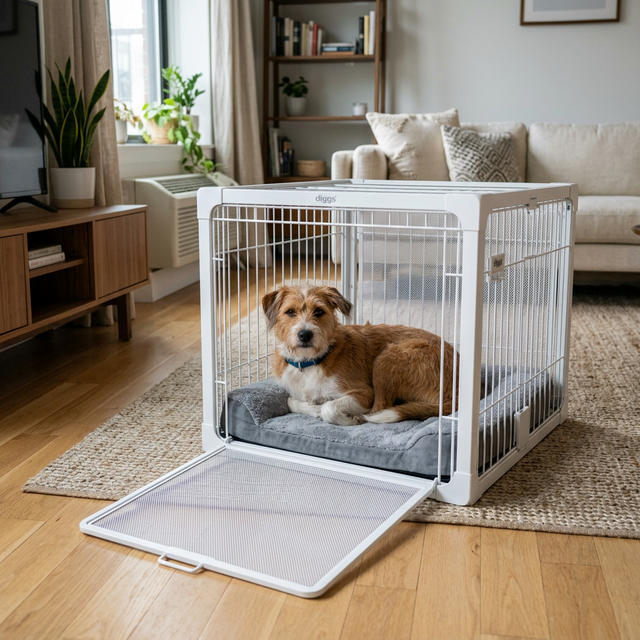
The Revol’s white powder coat and diamond mesh look noticeably less institutional than standard black wire crates. The door folds completely flat into the frame instead of swinging into the room.
Price: Around $200-$400 depending on size Best for: Owners willing to pay for better design and build quality in a collapsible format
Frisco Double Door Furniture-Style Crate
A budget furniture-style option - genuine wood construction at half the price of premium furniture crates. Available in barn door and traditional panel styles.
Price: Around $100-$180 depending on size Best for: Furniture crate aesthetics without the premium price tag
Sizing for Your Space
Measure Your Dog First
The crate should be large enough for your dog to:
- Stand up without touching the top
- Turn around completely
- Lie down fully stretched
Add 2-4 inches to your dog’s height (standing) and length (nose to tail base) to determine minimum crate dimensions.
Measure Your Apartment Space
Before buying, measure exactly where the crate will go. Account for:
- Door swing (crate doors need clearance to open)
- Walkway space (you need to pass by the crate without stepping over it)
- Ventilation (don’t push a crate flush against a wall on all sides - leave at least one side open for airflow)
Best Placement in an Apartment
| Location | Pros | Cons |
|---|---|---|
| Bedroom corner | Dog sleeps near you (reduces anxiety) | Takes bedroom space |
| Living room | Dog included in family activity | Most visible |
| Hallway/entryway | Out of primary living space | Can block traffic |
| Under a desk | Uses dead space | Only works for small-medium dogs |
The bedroom is the best location for a new dog or puppy. Sleeping near their person reduces nighttime anxiety and whining - important in an apartment where noise affects neighbors.
Apartment Crate Training Tips
Noise Management
- Wire crate noise: Place a rubber mat or thick towel under the crate to dampen movement sounds. Cover three sides with a blanket to reduce echo.
- Barking/whining: This is a training issue, not a crate issue. Start with very short crate sessions (5 minutes) and gradually extend. Never let a dog out of the crate while they’re barking - wait for a quiet moment, even if it’s just two seconds.
Schedule Around Neighbors
Puppies need bathroom breaks. In an apartment, that means:
- 8 weeks: Every 1-2 hours during the day
- 12 weeks: Every 2-3 hours
- 16 weeks: Every 3-4 hours
- 6 months+: Every 4-6 hours
The middle-of-the-night trips will happen. Carry your puppy to avoid hallway accidents. Keep cleanup supplies by the door.
Crate Location Flexibility
Start the crate in your bedroom for nighttime and consider a second cheap crate (or an exercise pen) in the living area for daytime. Two containment areas in different rooms gives you flexibility without constantly moving one heavy crate.
When to Stop Crating
Most dogs can graduate from crating once they’re:
- Fully housetrained (no accidents for 2+ months)
- Past the destructive chewing phase (usually 12-18 months)
- Trustworthy when you leave briefly (start with 10-minute trips, extend gradually)
Many apartment dogs keep their crate as a voluntary den - door always open - long after the training phase. The crate becomes their safe space, not a cage.
For related guides, see our new puppy supplies checklist and collar sizing guide.
Frequently Asked Questions
Is it cruel to crate a dog in an apartment?
No. Done correctly, crate training provides a safe den space that dogs naturally seek. The key is proper training (positive associations, gradual duration increases) and never using the crate as punishment. A crated dog should be exercised before crating and not left for more than the age-appropriate maximum duration.
How long can I crate my dog while I’m at work?
Adult dogs shouldn’t be crated for more than 8 hours during the day. This is the practical maximum. Many dog owners arrange a midday walk (dog walker, lunch break, helpful neighbor) to break up the day. Puppies under 6 months should not be crated for more than 3-4 hours during the day.
My apartment is too small for a full-size crate. What are my options?
Consider a furniture-style crate that doubles as an end table or credenza - you’re not losing any floor space to the crate because the surface serves another function. Alternatively, an exercise pen (x-pen) attached to a wall creates a containment area that’s flexible in size and shape.
Will my landlord allow a crate?
Crates are personal property and don’t require landlord permission any more than a bookshelf does. However, dog-related noise (barking) and damage (scratching floors) are legitimate rental concerns. Proper crate training addresses the noise; using a mat or rug under the crate prevents floor damage.
You Might Also Like
- Best Dog Beds for Large Breeds
- Best Dog Toys for Aggressive Chewers: Indestructible Options That Last
- Best Dog Tags 2026: Engraved, Slide-On, and Silent Options Reviewed
DogSupplyFinder Research Team
Product Research
Our research team analyzes ingredient lists, AAFCO feeding standards, safety specifications, and thousands of verified owner reviews, with particular attention to breed-specific needs such as brachycephalic breeds and dogs with dietary sensitivities. Evaluations prioritize safety specs, third-party certifications, and manufacturer quality controls over marketing language.
Dog Tips, Deals & Gear Guides
Expert buying guides, breed-specific product picks, and honest gear reviews. Plus our free New Puppy Checklist for subscribers.
📬 No spam, ever. Unsubscribe anytime. · Get the free puppy checklist