How to Choose the Right Dog Collar Size: Complete Measurement Guide
Learn how to measure your dog for a collar. Sizing charts by breed, step-by-step measurement instructions, and common fit mistakes.

DogSupplyFinder Research Team
Product Research ·
📖 Table of Contents
Affiliate Disclosure: As an Amazon Associate, we earn from qualifying purchases. This comes at no extra cost to you and helps support our independent testing and reviews. We only recommend products we genuinely believe in.
A collar that’s too loose slips off. A collar that’s too tight causes chafing, discomfort, and can restrict breathing. Getting the right fit takes two minutes of measuring and knowing which common mistakes to avoid.
How to Measure Your Dog’s Neck
What You Need
- A soft measuring tape (the flexible kind used for sewing)
- If you don’t have one: a piece of string or a strip of fabric, plus a ruler
Step-by-Step
-
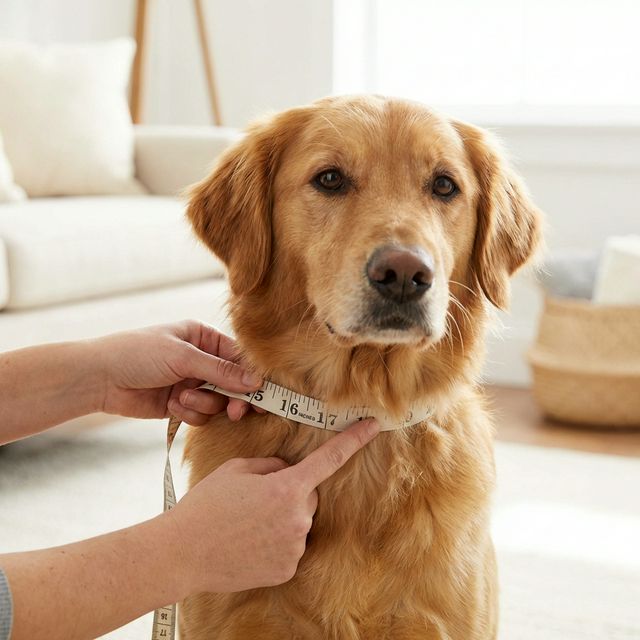
Find the right spot. Measure where the collar will sit - the middle of the neck, roughly halfway between the ears and the shoulders. This is not the base of the neck near the chest.
-
Wrap the tape snugly. Pull the measuring tape around the neck with enough tension that it doesn’t sag but doesn’t compress the fur or skin. Think “firm but not tight.”
-
Read the measurement. Note the number where the tape meets itself. This is your dog’s actual neck circumference.
-
Add 2 inches. The collar should be adjustable to this measurement plus 2 inches. This allows you to fit two fingers between the collar and the neck - the universal fit test.
The Two-Finger Test
After putting the collar on, slide two fingers (flat, side by side) between the collar and your dog’s neck:
- Can’t fit two fingers: Too tight. Loosen or size up.
- Two fingers fit snugly: Correct fit.
- Three or more fingers fit: Too loose. Tighten or size down.
Size Chart by Breed
| Breed Examples | Neck Size | Recommended Width | Collar Size |
|---|---|---|---|
| Chihuahua, Yorkie, Pomeranian | 6-10” | 3/8”-1/2” | XS |
| Shih Tzu, Maltese, Toy Poodle | 8-12” | 3/8”-1/2” | XS-S |
| French Bulldog, Pug, Beagle (small) | 12-16” | 1/2”-3/4” | S-M |
| Cocker Spaniel, Border Collie, Bulldog | 14-18” | 3/4”-1” | M |
| Labrador, Golden Retriever, GSD | 16-24” | 1”-1.5” | L |
| Rottweiler, Doberman | 18-26” | 1”-1.5” | L-XL |
| Great Dane, Mastiff, St. Bernard | 22-34” | 1.5”-2” | XL-XXL |
These are guidelines, not rules. Individual dogs vary widely. A muscular Bulldog might have a thicker neck than a lanky Lab. Always measure rather than guessing by breed.
Common Measurement Mistakes
Measuring Too Low
The most common error. Many people measure at the base of the neck (near the shoulders) instead of where the collar actually sits. The base can be 2-3 inches larger, resulting in a collar that rides up toward the ears unintentionally.
Measuring Over Thick Fur
Fluffy breeds (Samoyeds, Huskies, Pomeranians) need the tape pressed into the coat slightly - you’re measuring the neck, not the fur. If you measure over the fur, you’ll get a number that’s 1-2 inches too large.
Not Accounting for Growth
Puppies grow quickly. Buy an adjustable collar in the current size with room to let out as they grow. Check the fit weekly - a collar that fit last week can be tight this week during rapid growth phases.
Buying the “They’ll Grow Into It” Size
A collar that’s too large is useless for leash control and can slip over the dog’s head. Puppies typically go through 2-3 collar sizes before reaching adult dimensions. Budget for this rather than buying one oversized collar.
Width Matters Too
Collar width affects both comfort and pressure distribution:
| Dog Weight | Recommended Width | Why |
|---|---|---|
| Under 10 lbs | 3/8”-1/2” | Narrow collars sit between jaw and shoulders without bunching |
| 10-25 lbs | 1/2”-3/4” | Balance of comfort and strength |
| 25-60 lbs | 3/4”-1” | Standard width for most medium dogs |
| 60-100 lbs | 1”-1.5” | Wider distributes pressure for strong dogs |
| 100+ lbs | 1.5”-2” | Maximum width for giant breeds |
Wide collars on small dogs bunch up and restrict head movement. Narrow collars on large dogs concentrate pulling force on a thin line, which is uncomfortable and can cause tracheal irritation.
Special Sizing Situations
Brachycephalic Breeds (Flat-Faced)
Pugs, French Bulldogs, Boston Terriers, and Bulldogs have necks that are often as wide as or wider than their heads. Flat collars can slip over the head easily. Consider a martingale collar or a use for leash walking instead.
Sighthounds (Greyhounds, Whippets)
The opposite problem: heads wider than necks. Flat collars slip off easily when the dog pulls backward. Martingale collars are nearly mandatory for these breeds - they tighten gently to prevent escape without choking.
Puppies
Measure weekly during growth phases (8-16 weeks, then monthly until adult size). Buy the cheapest adjustable collar that fits now - don’t invest in premium collars until your dog reaches adult size.
Dogs Between Sizes
If your dog’s measurement falls between two sizes, size up. It’s easier to tighten an adjustable collar than to stretch one that’s too small. A slightly loose collar adjusted properly is better than a maximum-tightened collar with no room to adjust.
When to Recheck Fit
- Weekly for puppies under 6 months
- Monthly for puppies 6-12 months
- Every 3 months for adults
- After significant weight change (diet change, pregnancy, illness recovery)
- After grooming - haircuts can change neck diameter by half an inch or more
- Seasonally - some dogs develop thicker necks in winter (double-coated breeds)
For collar recommendations once you know your size, see our best dog collars guide and collar types comparison.
Frequently Asked Questions
Can I use a human measuring tape?
The rigid metal kind? It works but curves awkwardly around a dog’s neck. A soft sewing tape is ideal. Alternatively, wrap a piece of string around the neck, mark where it meets, and measure the string with a ruler.
Should the collar be tighter for training?
No. The same two-finger rule applies whether the collar is for daily wear or training. A training collar that’s too tight causes discomfort and interferes with the training. Martingale collars self-adjust during corrections - you don’t need to tighten them preemptively.
My dog has a very thick neck but small head. What collar works?
Martingale collars are designed for exactly this situation (common in Bulldogs and Pit Bulls). The collar loosens around the thick neck for comfort but tightens around the narrower point behind the head to prevent escape.
How do I measure for a use instead of a collar?
Usees typically require two measurements: chest girth (the widest part of the ribcage, just behind the front legs) and neck circumference. Some usees also require a weight measurement. Check the specific use manufacturer’s sizing guide, as use sizing varies more between brands than collar sizing does.
You Might Also Like
- How to Measure Your Dog for a Use: Step-by-Step Fitting Guide
- How to Crate Train a Puppy: Complete Step-by-Step Guide
- Dog Collar Types Compared: Flat, Martingale, Use, and More
DogSupplyFinder Research Team
Product Research
Our research team analyzes ingredient lists, AAFCO feeding standards, safety specifications, and thousands of verified owner reviews, with particular attention to breed-specific needs such as brachycephalic breeds and dogs with dietary sensitivities. Evaluations prioritize safety specs, third-party certifications, and manufacturer quality controls over marketing language.
Dog Tips, Deals & Gear Guides
Expert buying guides, breed-specific product picks, and honest gear reviews. Plus our free New Puppy Checklist for subscribers.
📬 No spam, ever. Unsubscribe anytime. · Get the free puppy checklist