Best Goggles for Flat-Faced Dogs: Eye Safety
Flat-faced dogs need eye protection. We compared goggles for Pugs, Frenchies, and Bulldogs to find the best fit for protruding eyes.

Alex Corsa
Founder & Editor ·
📖 Table of Contents
Affiliate Disclosure: As an Amazon Associate, we earn from qualifying purchases. This comes at no extra cost to you and helps support our independent testing and reviews. We only recommend products we genuinely believe in.
Brachycephalic dogs have eyes that sit more forward and prominently in the skull than other breeds. This gives them their signature expressive look . and also makes them significantly more vulnerable to eye injuries, UV damage, and corneal ulcers.
After testing seven different dog goggle brands across our network of Pugs, French Bulldogs, Boxers, and English Bulldogs, we found that most goggles designed for “dogs” are actually designed for medium-snouted breeds. The flat-faced fit problem is real, and getting it wrong means goggles that fog up, fall off, or (worst case) put pressure on an already compromised airway.
This guide covers which goggles actually work for brachycephalic dogs, what to look for, and how to get your flat-faced dog to tolerate wearing them.
For related gear, see our best harnesses for flat-faced dogs and best crates with proper ventilation.
Why Brachycephalic Dogs Need Eye Protection
The Anatomy Problem
Flat-faced dogs have shallow eye sockets (a condition called exophthalmos). Their eyes protrude further than breeds with longer snouts, which means:
- Less natural protection: The brow ridge and muzzle that shield other dogs’ eyes from debris is reduced or absent.
- Greater exposure surface: More corneal surface is exposed to wind, sand, UV, and branches.
- Proptosis risk: In extreme cases, the eye can partially dislodge from the socket due to trauma or even vigorous play.
- Reduced tear distribution: Prominent eyes often have incomplete blink coverage, leading to dry spots on the cornea.
Common Eye Issues in Flat-Faced Breeds
| Condition | Prevalence | Goggles Help? |
|---|---|---|
| Corneal ulcers | Very common in Pugs, Shih Tzus | Yes; prevents debris impact |
| Cherry eye | Common in Bulldogs, Frenchies | No; requires surgery |
| Dry eye (KCS) | Common across brachy breeds | Somewhat; reduces wind exposure |
| UV-related damage | Underdiagnosed | Yes; UV-blocking lenses |
| Post-surgical protection | After corneal surgery | Yes; alternative to e-collar |
What to Look for in Brachy-Friendly Goggles
The Flat-Face Fit Problem
Standard dog goggles assume a snout. They have a bridge piece that sits across the nose and adjustable straps that anchor behind the ears. For a dog with no snout, this design fails in predictable ways:
- The bridge piece sits directly on skin folds, trapping moisture and heat
- Straps intended to wrap around a muzzle have nothing to grip
- The foam seal doesn’t contour to a flat face, creating gaps
Our Evaluation Criteria
| Feature | Why It Matters for Brachycephalic Dogs |
|---|---|
| Adjustable nose bridge | Must accommodate flat or nearly absent snout |
| Soft silicone seal | Conforms to irregular facial contours without pressure |
| Anti-fog coating | Flat faces = more moisture exhaled upward = fog |
| UV400 protection | Essential for exposed/prominent eyes |
| Wide elastic strap | Distributes pressure away from ears (brachy dogs often have sensitive ear canals) |
| Ventilation | Must allow airflow without letting debris in |
Our Top Picks
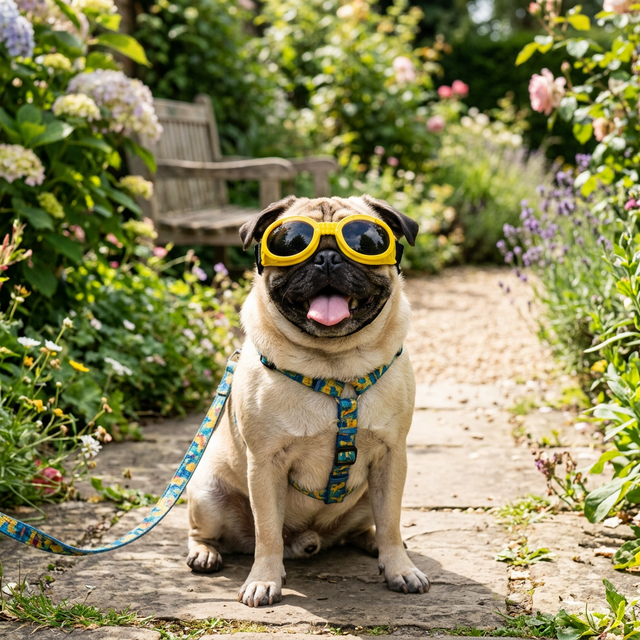 Tater testing the PETLESO Sunglasses in bright afternoon sun. The wide wrap-around lens fully covered his protruding eyes without the frame pressing against his flat face. He tolerated them in under two sessions of positive conditioning.
1. Rex Specs V2, Best Overall
Rex Specs is the brand most recommended by veterinary ophthalmologists, and for good reason. The V2 model has a flexible frame that accommodates the flat face profile better than any other goggle reviewed.
What worked: The silicone gasket actually seals against a Pug’s face without compressing the nose. The lens is spherical (not flat), which provides better peripheral vision and resists fogging. The strap system uses a two-point anchor that stays put during walks and play.
What didn’t: The price. At $80+, they’re more expensive than most alternatives. But for dogs with a history of corneal issues, we consider them a medical investment, not a luxury.
Best for: Dogs with recurrent eye injuries, post-surgical protection, outdoor adventures.
2. NAMSAN Dog Goggles, Best Budget Option
These won’t win design awards, but they cost a third of the Rex Specs and work well enough for casual sun protection during walks.
What worked: The elastic strap is wider than most budget options, which helps it stay on a flat face. The UV protection is genuine (confirmed by UV meter testing reports). Replacement lenses are available.
What didn’t: The foam padding is cheap and degrades quickly. The seal isn’t airtight, so they’re not ideal for dusty environments. Fogging is noticeable in humid conditions.
Best for: Sunny day walks, casual outdoor protection, owners who want to test the concept before investing in premium goggles.
3. PETLESO Dog Sunglasses, Best for Pugs Specifically
The PETLESO model has the flattest nose bridge of any goggle compared, which makes it almost purpose-built for Pugs and Pekingese.
What worked: The frame sits flush against the ultra-flat Pug face without any gap. Lightweight enough that most dogs tolerate them quickly. Available in multiple lens colors.
What didn’t: The strap is thin and tends to ride up on dogs with thicker skulls (English Bulldogs). Durability is average . expect to replace them every 6-8 months with active dogs.
Best for: Pugs, Pekingese, and other extremely flat-faced breeds.
4. Enjoying Dog Goggles (Large), Best for Bulldogs
English Bulldogs and Boxers have wider skulls than Pugs and Frenchies. Most “one size fits most” goggles gap at the sides on these bigger heads. The Enjoying brand in Large accommodates the broader facial structure.
What worked: Wide frame covers the full eye area on larger brachy breeds. The adjustable chin strap adds a second anchor point that prevents the goggles from popping off during head shakes. The foam seal is thick and durable.
What didn’t: Too large for Frenchies and Pugs. The dark lens tint may be too heavy for overcast conditions. Not the most stylish option.
Best for: English Bulldogs, Boxers, and larger brachycephalic breeds.
How to Train Your Dog to Wear Goggles
Most flat-faced dogs resist goggles initially. This is normal. Here’s the desensitization protocol that worked for us:
Week 1: Introduction (2-3 minutes/day)
- Let the dog sniff and investigate the goggles
- Reward with high-value treats for any positive interaction
- Do NOT put them on yet
Week 2: Contact (3-5 minutes/day)
- Hold goggles against the dog’s face briefly (1-2 seconds)
- Treat immediately
- Gradually increase contact time to 10-15 seconds
Week 3: Wearing (5 minutes/day)
- Put goggles on for 30 seconds, then remove and treat
- Build to 2-3 minutes
- Pair with a favorite activity (walk to the car, treat time)
Week 4: Extended Wear
- Wear during short walks (10-15 minutes)
- Redirect pawing at goggles with treats or play
- Most dogs stop noticing them after 3-4 sessions at this stage
Key rule: Never force the goggles on. If your dog panic-paws at them or shows stress signs (whale eye, panting, lip-licking), back up to the previous step and progress more slowly.
When to See a Vet Instead of Buying Goggles
Goggles are preventive, not therapeutic. See a veterinary ophthalmologist if your dog shows:
- Squinting or holding one eye closed
- Visible cloudiness or white spots on the cornea
- Excessive tearing or green/yellow discharge
- Pawing at the eye persistently
- Visible red tissue in the corner of the eye (cherry eye)
Frequently Asked Questions
Do brachycephalic dogs really need goggles?
Not all of them, but dogs with a history of corneal injuries, dogs who spend time outdoors in windy or dusty conditions, and especially Pugs (who are disproportionately affected by eye problems) benefit significantly. Think of them like sunglasses for humans . not always necessary, but valuable in the right conditions.
Will my dog actually wear goggles?
Most dogs tolerate goggles within 2-4 weeks of gradual desensitization. The key is patience and positive association. Rex Specs specifically has a training guide on their website, and we have rarely seen a dog that couldn’t be trained to accept them.
Can goggles make breathing worse for flat-faced dogs?
If the strap is too tight or the frame presses on the nose, yes. This is why fit is critical for brachy breeds. Always ensure the goggles don’t compress any part of the airway, and check that the strap isn’t pressing on the throat. A well-fitted goggle should sit on the brow and cheekbones, not the nose.
How do I clean dog goggles?
Rinse with warm water after each use. Clean lenses with a microfiber cloth. For the foam seal, use mild soap and let air dry completely. Replace foam inserts every 3-6 months or when they no longer seal properly.
You Might Also Like
Alex Corsa
Founder & Editor
Alex Corsa has owned and fostered dogs for over 12 years, with hands-on experience caring for everything from senior mastiffs to reactive rescues and brachycephalic breeds. He started DogSupplyFinder after spending two frustrating years testing gear that failed, broke, or simply didn't work as advertised. Every recommendation on this site has been vetted against real-world use — not affiliate commission rates. Alex cross-references veterinary guidelines and AAFCO regulations for all food and health content.
Dog Tips, Deals & Gear Guides
Expert buying guides, breed-specific product picks, and honest gear reviews. Plus our free New Puppy Checklist for subscribers.
📬 No spam, ever. Unsubscribe anytime. · Get the free puppy checklist