Best Dog Winter Gear: Coats, Boots, and Cold Weather Essentials
Top dog winter gear for cold weather. Insulated coats, protective boots, and accessories reviewed for warmth and durability.

DogSupplyFinder Research Team
Product Research ·
📖 Table of Contents
Affiliate Disclosure: As an Amazon Associate, we earn from qualifying purchases. This comes at no extra cost to you and helps support our independent testing and reviews. We only recommend products we genuinely believe in.
Some dogs are built for winter. Huskies, Malamutes, and Bernese Mountain Dogs will happily nap in a snowbank. But most house dogs — short-coated breeds, small breeds, senior dogs, and puppies — need protection when temperatures drop below freezing.
The challenge isn’t convincing owners their dog needs a coat. It’s finding one that actually stays on, doesn’t restrict movement, and holds up to daily winter walks.
Which Dogs Need Winter Gear
Definitely Need It
- Short-coated breeds (Vizsla, Greyhound, Whippet, Boxer, Doberman)
- Small breeds under 20 pounds (Chihuahua, Yorkie, Miniature Pinscher)
- Senior dogs (reduced circulation, less body fat)
- Puppies under 6 months
- Dogs with medical conditions affecting circulation or body fat
- Any dog that shivers during walks
Probably Fine Without It
- Double-coated breeds (Husky, Malamute, Samoyed, Bernese)
- Working breeds in their element (Great Pyrenees, Newfoundland)
- Dogs acclimated to cold climates with healthy coats
Gray Area
- Medium-coated dogs in extreme cold (below 20°F)
- Labs and Goldens in subzero conditions
- Any dog standing still in cold (waiting outside a store, potty trips in a blizzard)
Even cold-hardy breeds can use paw protection on salted sidewalks. Road salt and de-icing chemicals irritate paws and are toxic if licked.
Winter Coats
Ruffwear Vert Jacket
A waterproof, insulated jacket with synthetic Heatseeker insulation. Full-torso coverage with a leash portal in the collar area so you can clip to a collar or use underneath. Reflective trim for dark winter walks.
Price: Around $70-$90 Best for: Active dogs, wet/snowy conditions, hiking in winter
Hurtta Extreme Warmer
A Finnish-designed jacket for serious cold. High-loft insulation with a moisture-wicking interior. The cut covers the belly (where most coats leave dogs exposed) and extends to protect the hindquarters. Adjustable waist and chest straps.
Price: Around $80-$120 Best for: Extreme cold climates (subzero), thin-coated dogs that need maximum coverage
Kurgo Loft Jacket
A quilted reversible jacket (one side solid, one side pattern) that’s waterproof and insulated. Lighter than Ruffwear and Hurtta but sufficient for moderate cold. The reversible design gives you two looks from one jacket.
Price: Around $30-$45 Best for: Moderate winter conditions, budget-friendly option with decent quality
Gooby Padded Vest
A simple insulated vest for small dogs. No sleeves, minimal buckles, easy on/off via Velcro. Available in tiny sizes that fit Chihuahuas and Toy breeds where most larger brands don’t make small enough options.
Price: Around $15-$25 Best for: Small breeds under 15 pounds, quick potty trips, mild cold
Fitting Tips
- Measure your dog’s chest girth (widest part of ribcage) and back length (base of neck to base of tail)
- The coat should cover from the base of the neck to the base of the tail
- It should fit snugly without restricting leg movement
- The belly should have coverage — exposed bellies negate much of the coat’s warmth
- If between sizes, size up and adjust straps
Winter Boots
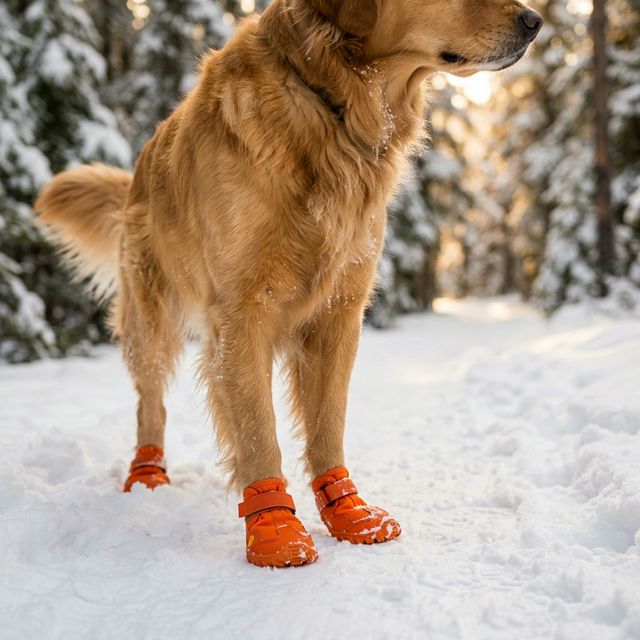
Most dogs resist boots initially. Getting them to walk naturally in boots takes 3-5 sessions of positive-association training (treats, short indoor sessions, lots of encouragement).
Ruffwear Polar Trex
Insulated boots with Vibram outsoles for grip on ice. The cuff extends higher for snow protection and has a secure strap closure. These stay on better than most boots thanks to the high cuff design.
Price: Around $85-$95 for a set of 4 Best for: Extended winter hikes, snow, ice
Muttluks Fleece-Lined Dog Boots
Canadian-made boots with fleece lining and leather soles. Elastic and Velcro closures keep them secure. The fleece interior provides warmth while the leather sole provides traction and salt protection.
Price: Around $50-$70 for a set of 4 Best for: Everyday winter walks, salt/ice protection, urban use
QUMY Waterproof Dog Shoes
A budget boot with anti-slip soles and adjustable Velcro straps. Not as warm as Ruffwear or Muttluks but functional for salt protection and moderate cold. Reflective material for visibility.
Price: Around $15-$25 for a set of 4 Best for: Budget protection from salt and mild cold
Musher’s Secret Paw Wax (Alternative to Boots)
A wax-based paw protectant that you rub onto the paw pads before walks. It creates a barrier against salt, ice, and cold surfaces. Absorbs into the pads and doesn’t leave residue.
Price: Around $12-$18 per jar (lasts months) Best for: Dogs that absolutely refuse boots, quick salt protection
Other Cold Weather Essentials
LED Collar Light or Reflective Gear
Winter means dark mornings and early sunsets. Your dog needs to be visible.
Nite Ize SpotLit LED: Clips to collar, visible from 1,000+ feet. Battery lasts 40+ hours. ($5-$10)
Illumiseen LED Collar: Full LED collar that glows. USB rechargeable. ($15-$25)
Heated Water Bowl (Outdoor Dogs)
Water bowls freeze fast. A heated bowl keeps water liquid in subfreezing temperatures.
K&H Thermal-Bowl: Thermostatically controlled, keeps water above freezing using 25 watts. ($20-$30)
Indoor Warmth
Senior dogs and thin-coated breeds may need indoor warmth support:
- Self-warming pet bed (reflects body heat): $20-$40
- K&H Lectro-Soft Heated Bed (electric): $40-$60
Winter Walking Safety
Salt and De-Icer
Road salt and chemical de-icers are the biggest winter hazard for dog paws. They cause:
- Cracking and irritation of paw pads
- Chemical burns between toes
- Toxicity if licked off paws (sodium chloride and calcium chloride)
After every winter walk: Wipe paws with a warm, wet cloth. Or use a paw washer cup with warm water. This removes salt before your dog licks it off.
Ice Dangers
| Hazard | Prevention |
|---|---|
| Slipping on ice | Boots with grip or paw wax |
| Thin ice over water | Keep leashed near ponds and lakes |
| Ice balls in paw fur | Trim fur between pads, use paw wax |
| Black ice (invisible) | Shorten walks, stick to grassy areas |
Antifreeze
Ethylene glycol (antifreeze) is lethal to dogs and tastes sweet. Even small amounts are fatal. Watch for puddles in driveways and garages during winter. If you suspect ingestion, go to an emergency vet immediately.
For summer gear, see our best cooling products for dogs guide. For year-round travel, see our travel gear guide.
Frequently Asked Questions
How cold is too cold for dogs?
As a general guideline: most dogs are comfortable above 45°F. Between 32-45°F, short-coated and small breeds may need a coat. Below 32°F, most dogs need protection and walks should be shorter. Below 20°F, limit outdoor time for all but cold-adapted breeds.
Should I put boots on all four paws?
Yes. Paws on all four feet contact the ground equally. Putting boots on only two feet (often tried for simplicity) throws off the dog’s gait and provides incomplete protection from salt and ice.
My dog shakes off boots and coats. Does that mean they don’t need them?
No. Dogs shake off unfamiliar things regardless of need. Introduce gear gradually with positive associations (treats while wearing it, short sessions increasing in length). Most dogs accept gear within 3-5 training sessions.
You Might Also Like
DogSupplyFinder Research Team
Product Research
Our research team analyzes ingredient lists, AAFCO feeding standards, safety specifications, and thousands of verified owner reviews, with particular attention to breed-specific needs such as brachycephalic breeds and dogs with dietary sensitivities. Evaluations prioritize safety specs, third-party certifications, and manufacturer quality controls over marketing language.
Dog Tips, Deals & Gear Guides
Expert buying guides, breed-specific product picks, and honest gear reviews. Plus our free New Puppy Checklist for subscribers.
📬 No spam, ever. Unsubscribe anytime. · Get the free puppy checklist