Best No-Pull Harness for Large Dogs (Tested on 70+ lb Breeds)
We researched 5 no-pull harnesses on large breeds. The Ruffwear Front Range won for comfort and control. Full reviews and fitting guide inside.

DogSupplyFinder Editorial Team
Editorial Team ·
📖 Table of Contents
Affiliate Disclosure: As an Amazon Associate, we earn from qualifying purchases. This comes at no extra cost to you and helps keep the DogSupplyFinder editorial desk publishing research-based guides. Recommendations come from specs and owner reports, not an in-house lab or a test fleet. See How We Make Money.
Listing check (large-breed harness): confirm the size run actually covers 70+ lb chests, not a reused photo of a Lab. Hardware and stitch count matter more than the color. Measure girth behind the front legs and match that brand’s chart. Buy New; used large-breed harnesses are a common return path with tired buckles. Check Amazon’s return window before you size-guess. Recommendations come from specs and owner reports, not an in-house lab or a test fleet.
This page is the 70+ lb / large-breed no-pull list. The 2026 overall ranking is Best No-Pull Dog Harnesses of 2026. The strong-puller ranking is Best Dog Harness for Dogs That Pull. Clip style is front-clip vs back-clip. Ruffwear vs Julius-K9 is a separate comparison. The hub is /harnesses/.
Why Large Dogs Need a No-Pull Harness
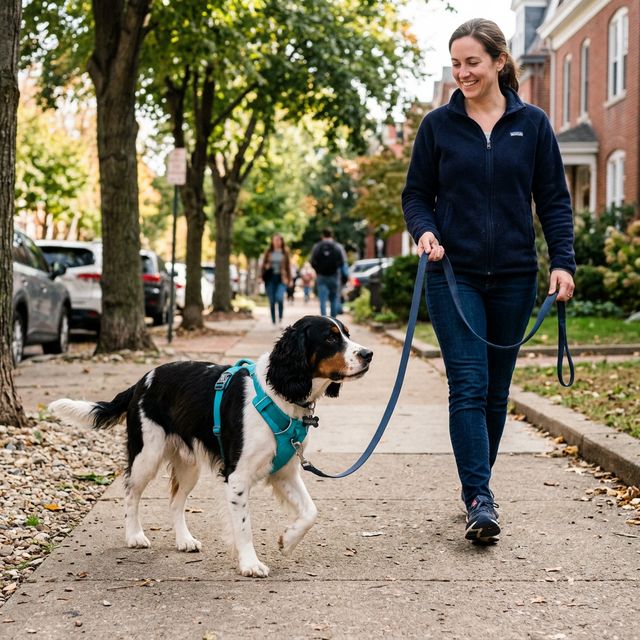
Walking a 70-pound dog that pulls is not just annoying. It is dangerous. A strong dog lunging on a flat collar can injure their trachea, and a strong dog lunging on a regular harness can dislocate your shoulder. No-pull harnesses solve both problems by redirecting pulling force without choking.
For large breeds like Labrador Retrievers, German Shepherds, Golden Retrievers, and Pit Bulls, the right harness transforms walks from a battle into something enjoyable.
How No-Pull Harnesses Work
Front-Clip Design
The leash attaches to a D-ring on the dog’s chest. When the dog pulls forward, the harness turns their body sideways, naturally discouraging the pull. This is the most effective design for strong pullers.
Dual-Clip Design
These harnesses have both a front and back attachment point. You can use the front clip for training walks and switch to the back clip for casual outings once your dog has learned not to pull.
Tightening Design
Some harnesses gently tighten around the chest or behind the front legs when the dog pulls, creating mild discomfort that discourages pulling. These are effective but require more careful fitting to avoid chafing.
Top 5 No-Pull Harnesses for Large Dogs
1. Ruffwear Front Range Harness
The Ruffwear Front Range Harness is the best overall option for large dogs on comfort plus control. It features two leash attachment points (front and back), padded chest and belly straps that prevent chafing, and four adjustment points for a custom fit. The aluminum V-ring is the hardware note Amazon color shots skip — look for metal at the sternum, not a plastic vest ring.
- Price: $45-$55
- Weight range: Up to 120 lbs
- Best for: Everyday walks with dogs who pull moderately to heavily
- Standout feature: Exceptional padding and comfort for long walks
- Listing must match: Front Range size chart by girth, current colorway, New seller
2. 2 Hounds Design Freedom No-Pull Harness
The 2 Hounds Design Freedom No-Pull Harness is the top pick specifically for heavy pullers. The unique martingale loop on the back tightens gently when the dog pulls, providing an additional cue to stop. The included training leash clips to both the front and back simultaneously, giving you maximum control.
- Price: $35-$40
- Weight range: Up to 250 lbs
- Best for: Very strong pullers and reactive dogs
- Standout feature: Includes a double-ended training leash
- Listing must match: Freedom (not a generic “no-pull”), included leash called out, velvet lining in the bullets
3. PetSafe Easy Walk Harness
The most affordable effective option. The PetSafe Easy Walk Harness has been the standard recommendation from trainers for years. The front-clip design works well, and the quick-snap buckles make it easy to put on even a squirmy dog. It runs slightly small, so size up if your dog is between sizes — that sizing quirk is the buying note the title will not tell you.
- Price: $20-$30
- Weight range: Up to 130 lbs
- Best for: Budget-conscious owners who need something that works
- Standout feature: Quick-snap buckles on both shoulder and belly straps
- Listing must match: Easy Walk, not Gentle Leader; sternum martingale visible in photos
4. Kurgo Tru-Fit Smart Harness
The Kurgo Tru-Fit Smart Harness doubles as both a walking harness and a car safety harness. The steel nesting buckles are crash-tested, and the included seatbelt tether secures to any car’s seatbelt system. For families who drive their large dog to the park or trailhead, this eliminates the need for separate gear.
- Price: $30-$45
- Weight range: Up to 80 lbs
- Best for: Dogs who ride in cars frequently
- Standout feature: Crash-tested car restraint system built in
- Listing must match: Tru-Fit Smart (crash-test language on the spec sheet, not only the title); 80 lb ceiling — this is not the 120 lb Ruffwear substitute
5. Julius-K9 IDC Powerharness
The Julius-K9 IDC Powerharness is built for working dogs but excellent for pet dogs who need maximum durability. The rigid handle on top gives you emergency grab control, and the hook-and-loop panels let you attach ID patches. The chest strap sits higher to avoid restricting shoulder movement.
- Price: $40-$60
- Weight range: Up to 135 lbs
- Best for: High-energy dogs who need a bombproof harness
- Standout feature: Top handle for immediate physical control
- Listing must match: IDC Powerharness size (0–4), not a no-name “IDC style” vest; handle is molded, not a sewn loop
Side-by-side fit and hardware notes for the two premium options are in Ruffwear Front Range vs Julius-K9.
How to Fit a No-Pull Harness on a Large Dog
A harness only works if it fits correctly. Here is how to measure:
Step 1: Measure the Girth
Wrap a soft measuring tape around the widest part of your dog’s ribcage, just behind the front legs. This is the girth measurement and the most important number for sizing.
Step 2: Measure the Neck
Measure around the base of the neck where a collar would normally sit. Some harnesses use this measurement for the top strap adjustment.
Step 3: Check the Fit
Once the harness is on, you should be able to slide two fingers between any strap and your dog’s body. The front strap should sit across the chest, not pressing into the throat. The belly strap should sit behind the elbows, not in the armpit.
Signs of Poor Fit
- Red marks or hair loss under the straps
- The harness rotates to one side during walking
- Your dog can back out of the harness
- The front clip sits on the throat instead of the chest
- Your dog’s gait looks restricted or awkward
The full measurement walkthrough is how to measure your dog for a harness. Warning signs after the first week are in 7 signs your dog’s harness doesn’t fit.
Pairing Your Harness With Training
A no-pull harness is a tool, not a permanent solution. For long-term results, combine it with loose-leash training. The all-size field is in best no-pull dog harnesses. The protocol lives in how to stop leash pulling. Clip style is covered in front-clip vs back-clip.
- Start walks with the harness and a 6-foot leash
- When your dog walks beside you with slack in the leash, mark and reward with treats
- When they pull, stop walking completely and wait for them to return to your side
- Gradually increase the distance between treats as the behavior improves
- Practice in low-distraction environments before graduating to busier locations
Most large dogs can transition from a no-pull harness to a regular harness within 2 to 4 months of consistent training.
Final Recommendations
For most large dog owners, the Ruffwear Front Range offers the best combination of comfort, durability, and pulling control. If your dog is an extreme puller, go with the 2 Hounds Design Freedom. And if budget is the primary concern, the PetSafe Easy Walk gets the job done for under $30.
Frequently Asked Questions
Do no-pull harnesses actually work on 70+ lb dogs?
Yes, when the front clip sits on the sternum and the girth is correct. Owner reports on Labs, shepherds, and bully breeds describe less dragging on the first walk. The harness changes leverage; it does not teach a trained heel by itself.
Can a no-pull harness hurt my dog?
A properly fitted no-pull harness should not cause pain or injury. A poorly fitted one can chafe under the legs or restrict shoulder movement. Measure girth, check for rubbing after the first few uses, and size up if you are between charts.
Front-clip or back-clip for a large puller?
Front-clip. Back-clip makes pulling easier. Dual-clip models let you switch to the back ring once the dog is walking with slack.
You Might Also Like
DogSupplyFinder Editorial Team
Editorial Team
Every recommendation on DogSupplyFinder starts with the paperwork — AAFCO guidelines, AVMA guidance, safety specifications — and ends with what real owners report after months of daily use. Rankings are never paid for.
Related reading
Same cluster on this site — live guides only.
- Best No-Pull Dog Harnesses of 2026: Picks That Tame the Tugging
- Best Dog Harness for Dogs That Pull: Tested on Strong Pullers
- Front-Clip vs Back-Clip Harnesses: Which Is Best for Your Dog?
- Ruffwear Front Range vs Julius-K9: Which Harness Wins?
- How to Measure Your Dog for a Harness: Step-by-Step Fitting Guide
- 7 Signs Your Dog's Harness Doesn't Fit
Dog Tips, Deals & Gear Guides
Expert buying guides, breed-specific product picks, and honest gear reviews. Plus our free New Puppy Checklist for subscribers.
📬 No spam, ever. Unsubscribe anytime. · Get the free puppy checklist