Wireless Dog Fences Compared: GPS & Wi-Fi
Top wireless dog fences tested and compared. GPS, Wi-Fi, and hybrid systems ranked by coverage, reliability, and value for every yard size.

DogSupplyFinder Research Team
Product Research ·
📖 Table of Contents
Affiliate Disclosure: As an Amazon Associate, we earn from qualifying purchases. This comes at no extra cost to you and helps support our independent testing and reviews. We only recommend products we genuinely believe in.
My neighbor’s Golden Retriever, Charlie, bolted through a gap in the backyard fence three times in one month before they tried a wireless containment system. That was two years ago. Charlie stays in the yard now without thinking about it.
Wireless dog fences have gotten dramatically better in the last few years. The old RF-based circles around a single transmitter have been joined by GPS systems using 128+ satellites that let you draw custom boundaries from your phone, plus hybrid systems combining multiple technologies for near-perfect accuracy.
I’ve spent months comparing the major options, reading through thousands of owner reviews, and talking to trainers who use these systems daily. Here’s what works, what the marketing leaves out, and which system fits which situation.
How Wireless Dog Fences Work
Three technologies dominate the market right now:
GPS Fences
The collar tracks your dog’s position via satellite constellations. You set boundaries through an app by walking your property perimeter. When the dog approaches the edge, the collar vibrates or delivers a static correction.
Pros: Custom-shaped boundaries, no installation, portable across locations Cons: Some require cellular subscription ($5-20/month), 1.4-10 foot accuracy variance depending on model, battery needs regular charging
Wi-Fi / Radio Frequency Fences
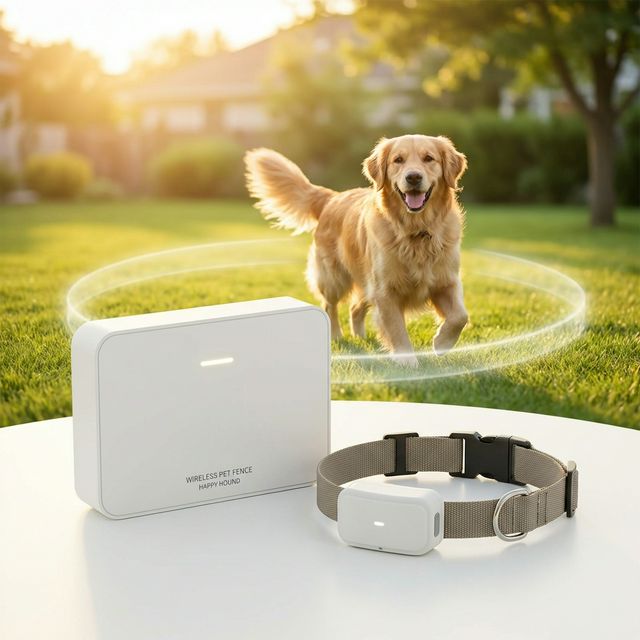
A base station broadcasts a signal. The collar detects proximity. Boundaries are typically circular around the base unit.
Pros: No monthly fees, reliable signal, simple setup Cons: Circular boundary only, limited range (typically 0.5-1.5 acres), signal affected by terrain and structures
In-Ground Wire Systems
A wire buried 1-3 inches underground creates the boundary. The collar detects the wire’s electromagnetic signal.
Pros: Most precise boundary (within 1-2 feet), any shape, no monthly cost Cons: Significant installation labor, wire can break, not portable
What to Look For
Coverage Area
Match the system to your property size. Small yards under half an acre work fine with Wi-Fi systems. Larger or irregularly shaped properties need GPS or in-ground wire.
| Property Size | Best Technology | Typical Cost |
|---|---|---|
| Under 0.5 acre | Wi-Fi / RF or basic GPS | $200-450 |
| 0.5-5 acres | GPS or in-ground | $450-1,000 |
| 5+ acres | GPS with multi-constellation | $700-1,300 |
| Irregular shape | In-ground wire or GPS | $300-1,000 |
Correction Levels
Modern systems offer multiple escalation steps: tone, vibration, then static correction. The best systems let you customize which levels to use and lock corrections to vibration-only mode if you prefer. Many dogs respond to the warning tone alone after a few days of training.
Collar Weight and Comfort
This matters more than most buyers realize. A heavy GPS collar on a small dog is a problem. Check the collar weight against the manufacturer’s minimum dog weight.
General rule: The collar should weigh less than 5% of your dog’s body weight.
Battery Life
GPS collars drain batteries faster because they constantly communicate with satellites. Expect 18-36 hours between charges for GPS systems, versus weeks or months for simple RF systems. The Halo 4 manages about 30-36 hours; SpotOn typically gets 18-24 hours.
Water Resistance
Dogs get wet. Any collar in this category should be IPX7 rated at minimum (submersible to 1 meter). Check this especially for GPS units with charging ports.
Top Systems Compared
1. SpotOn GPS Fence
Best for: Large properties, maximum accuracy, no subscription
SpotOn uses patented True Location technology drawing from 128 satellites across four constellations (GPS, GLONASS, Galileo, BeiDou) to create custom-shaped boundaries from half an acre to over 1,000 acres. You walk the perimeter once with the collar, and it saves the boundary precisely.
The dual-feed active antenna system delivers boundary accuracy comparable to a buried wire fence, even under dense tree cover. The “Forest Mode” improves performance in wooded areas, and “Off-Grid Mode” enables full functionality without cellular service once boundaries are saved to the collar.
Price: $999-$1,295 depending on configuration. No monthly subscription required for core fence functionality. Optional tracking subscription unlocks real-time location alerts if the dog leaves the boundary.
Collar specs: Water-resistant, rechargeable, 18-24 hour battery life. Multiple correction levels with tone, vibration, and static options.
Why owners choose it: Flawless boundary accuracy without monthly fees. The upfront cost is high, but there’s no subscription bleeding money every month. Over three years, total cost can be comparable to cheaper systems with mandatory subscriptions.
What to know: The initial price is the main barrier. Other than that, it consistently outperforms competitors in accuracy tests, including dense wooded areas where other GPS systems struggle.
2. Halo Collar 4
Best for: Feature-rich experience, integrated training
The Halo Collar 4 brought a 33% size reduction and 18% weight reduction over previous versions. It uses dual-band GPS technology with connection to 35 satellites, claiming 1.4-foot accuracy. It saves up to 20 different virtual fences and provides real-time tracking that updates multiple times per second.
The standout feature is Cesar Millan’s built-in training program: structured exercises that teach your dog the boundaries before corrections activate. This approach results in more reliable long-term compliance than jumping straight to corrections.
Price: $549-$599 for the collar. Requires a monthly subscription plan starting at $10-$20/month for GPS services, cellular data, and full functionality. Three-year total: approximately $910-$1,320.
Collar specs: Rechargeable, 30-36 hour battery life, IP67 water resistant. Activity tracking, sleep monitoring, and health alerts built in.
Why owners choose it: The integrated training program and the most feature-rich app experience. If you want activity tracking, sleep monitoring, and training guidance alongside the fence, Halo puts it all in one collar.
What to know: The mandatory subscription makes this more expensive long-term than SpotOn despite the lower upfront price. Some reviewers have noted occasional inconsistencies in boundary feedback, though the Halo 4 has largely addressed accuracy issues from earlier versions.
3. PetSafe Guardian GPS 2.0
Best for: Mid-range GPS option, trusted brand
PetSafe’s entry into GPS fencing uses their AccuGuard technology, which combines GPS satellite data with real-time motion detection and AI processing for precision. The Guardian GPS allows custom boundaries for properties of 3/4 acre or larger.
Price: Around $449.95 for the base GPS model. The basic containment model requires no monthly subscription. GPS + tracking models that monitor your dog’s location in real time do require a plan.
Collar specs: Water-resistant, rechargeable. Multiple correction levels.
Why owners choose it: A trusted brand name with decades in the pet containment space, at a lower price point than SpotOn. No subscription for basic containment use.
What to know: GPS accuracy tests in some reviews show lower precision compared to SpotOn, especially in complex terrain. For a flat, open suburban yard, it performs well. For wooded or hilly properties, the premium options may be worth the difference.
4. PetSafe Stay & Play Wireless Fence
Best for: Simple setup, small flat yards, no monthly fees
The most popular traditional wireless fence in the U.S. A single transmitter plugs into any outlet and creates an adjustable circular boundary up to 3/4 acre. No installation, no subscription. Setup takes about 30 minutes.
The receiver collar weighs 2.25 ounces, is waterproof, and uses a replaceable RFA-67 battery lasting 1-2 months. Five correction levels plus tone-only mode give training flexibility.
Price: Around $280-$320 for a complete system.
Why owners choose it: Simplicity and no recurring costs. Plug it in, set the range, put on the collar. It works without apps, accounts, or subscriptions.
What to know: Circular boundary only. You can’t exclude sections of the circle (like your driveway). The signal can be affected by hilly terrain, metal siding, or concrete walls. Best for flat, open suburban yards.
5. PetSafe In-Ground Fence System
Best for: Precise permanent boundaries, any shape
The gold standard for boundary precision. You bury a wire 1-3 inches deep around your perimeter in any shape you want. Accuracy is within 1-2 feet, better than any wireless or GPS system.
Kits include up to 500 feet of wire (enough for about 1/3 acre). Additional wire costs about $30-$40 per 500 feet.
Price: Around $250-$350 for the kit plus installation labor or a weekend of DIY work.
Why owners choose it: If your boundary must follow a driveway, wrap around a pool, or exclude a garden, buried wire is the only technology that tracks exactly where you put it.
What to know: Installation is genuine work. Wire can be cut by lawn aerators, digging animals, or rodents. Repairs require locating the break. Not portable.
Training Is Non-Negotiable
Every system includes training instructions because the fence alone isn’t enough. A dog that has never experienced the boundary will not understand it without a structured introduction.
Standard training approach (2-3 weeks): Week 1: Walk the dog on a leash near the boundary flags. When the collar beeps (warning tone), redirect the dog back toward the center and reward. Repeat dozens of times across short sessions. The goal: “beep means turn around.”
Week 2: Let the dog approach the boundary on a long lead. Allow the vibration or lowest correction to occur, then immediately redirect and reward. Most dogs need only 2-3 corrections to understand.
Week 3: Supervised off-leash time. Stay outside with the dog. Most dogs respect the boundary reliably by this point.
Never skip the training phase. And never rely on a wireless fence as a substitute for supervision with a new dog or puppy.
Which Dogs Are Not Good Candidates
- Highly prey-driven dogs may blast through the correction if they see a rabbit or squirrel. The motivation to chase outweighs the discomfort.
- Dogs with anxiety can develop worse anxiety from unpredictable boundary corrections. Consult your vet first.
- Dogs under 8 pounds are generally too small for even the lightest GPS collars.
- Deaf dogs cannot hear the warning tone, making the training progression much harder.
- Dogs with aggression issues should not be on a wireless fence. The fence keeps your dog in but doesn’t keep other animals, children, or threats out.
Cost Comparison Over Three Years
| System | Upfront | Monthly | 3-Year Total |
|---|---|---|---|
| PetSafe Stay & Play (RF) | $280-320 | $0 | $280-320 |
| PetSafe In-Ground | $250-350 + labor | $0 | $250-500 |
| PetSafe Guardian GPS 2.0 | $449 | $0 (basic) | $449 |
| Halo Collar 4 | $549-599 | $10-20 | $910-1,320 |
| SpotOn GPS | $999-1,295 | $0 (basic) | $999-1,295 |
Factor in subscription costs when comparing. A “cheaper” collar with a $15/month subscription costs more over three years than a premium no-subscription alternative.
Our Recommendation
For most homeowners with standard suburban yards: PetSafe Stay & Play or Guardian GPS — reliable, proven, and no subscription for basic use.
For large or irregularly shaped properties: SpotOn GPS — custom boundaries, 128-satellite accuracy, no monthly fees.
For first-time fence users who want guidance: Halo Collar 4 — the integrated training program with Cesar Millan removes guesswork from the training phase.
For maximum precision: PetSafe In-Ground , nothing matches buried wire for accuracy. Worth the installation effort for permanent installations.
For more dog safety equipment, check out our use guide and crate guide.
Frequently Asked Questions
Are wireless dog fences safe?
When used correctly with proper training, yes. The AKC notes that modern containment systems use corrections designed to be startling rather than painful, comparable to touching a doorknob after walking on carpet. Most dogs only need the vibration or lowest correction level after initial training. Always start on the lowest setting and use tone-only mode during the first training week.
Do wireless fences work in the rain?
All major systems are rated for outdoor weather use. GPS accuracy can decrease slightly in heavy storms due to atmospheric interference with satellite signals. RF and in-ground wire systems are unaffected by weather.
Can I use a wireless fence for multiple dogs?
Yes. You’ll need a separate collar for each dog, but all major systems sell additional collars at a lower price than the initial kit. GPS systems typically support unlimited collars on one account.
How long does the training take?
Plan for 2-3 weeks of daily sessions lasting 10-15 minutes each, consistent with PetMD’s fence training recommendations. Some dogs learn faster, some slower. Rushing the process leads to unreliable boundary compliance. The training investment pays off for years of safe containment.
Will a wireless fence stop my dog from digging under a physical fence?
If you set the wireless boundary several feet inside your physical fence line, the dog avoids the area near the fence entirely, which effectively stops digging, jumping, and escape attempts at the fence line.
Do I need a wireless fence if I have a physical fence?
Many owners combine both. A physical fence provides a visual and physical barrier, while the wireless fence prevents dogs from jumping over, digging under, or squeezing through gaps. The wireless correction teaches the dog not to approach the physical fence at all.
You Might Also Like
- Dog Fence Buying Guide: Wireless, In-Ground, and GPS Options Explained
- Wireless vs Invisible vs GPS Dog Fence: Which Type Is Right for You?
- Best Dog Beds for Large Breeds
DogSupplyFinder Research Team
Product Research
Our research team analyzes ingredient lists, AAFCO feeding standards, safety specifications, and thousands of verified owner reviews, with particular attention to breed-specific needs such as brachycephalic breeds and dogs with dietary sensitivities. Evaluations prioritize safety specs, third-party certifications, and manufacturer quality controls over marketing language.
Dog Tips, Deals & Gear Guides
Expert buying guides, breed-specific product picks, and honest gear reviews. Plus our free New Puppy Checklist for subscribers.
📬 No spam, ever. Unsubscribe anytime. · Get the free puppy checklist