Dog Dental Care: Why Brushing Matters and How to Start
A complete guide to brushing your dogs teeth, choosing the right toothpaste, and preventing dental disease.

DogSupplyFinder Research Team
Product Research ·
📖 Table of Contents
This page is the how to start brushing guide. The gum-disease overview is Dog Dental Care: Why 80% of Dogs Have Gum Disease by Age 3. Prevention is Preventing Dental Disease.
The Hidden Epidemic
Periodontal (gum) disease is the most common clinical condition occurring in adult dogs. It starts with plaque—a sticky film of bacteria. If not brushed away, minerals in the saliva harden the plaque into tartar (calculus) within 48 hours.
Once tartar forms, it creeps under the gumline, causing inflammation (gingivitis), destroying the supporting structures of the tooth, and eventually causing bone loss and tooth loss.
More alarmingly, the bacteria from infected gums can enter the bloodstream, causing micro-damage to the heart valves, liver, and kidneys over time.
Why Dental Chews Aren’t Enough
Dental chews and water additives can help reduce plaque, but they are the equivalent of a human using mouthwash instead of brushing. They do not provide the mechanical friction necessary to remove sticky plaque from the gumline, especially on the back molars where tartar builds up fastest.
For more on this topic, see our guide on Preventing Dental Disease: The Silent Threat to Your Dog’s Health.
How to Brush Your Dog’s Teeth (The Cooperative Method)
If you try to pin your dog down and jam a toothbrush in their mouth, they will fight you every time. You must introduce it slowly.
For more on this topic, see our guide on Senior Dog Care: Making Their Golden Years Comfortable.
Step 1: The Right Supplies
- Dog-specific toothpaste: Never use human toothpaste. Human toothpaste contains fluoride and often xylitol, both of which are highly toxic to dogs. Dog toothpaste is enzymatic (breaks down bacteria) and flavored like poultry or beef so they want to eat it.
- Toothbrush: A soft-bristled pet toothbrush, a finger brush, or even a piece of gauze wrapped around your finger.
Step 2: The Taste Test (Days 1-3)
Put a dab of the dog toothpaste on your finger and let your dog lick it off. Make it a positive, rewarding experience. Praise them.
Step 3: Touching the Mouth (Days 4-7)
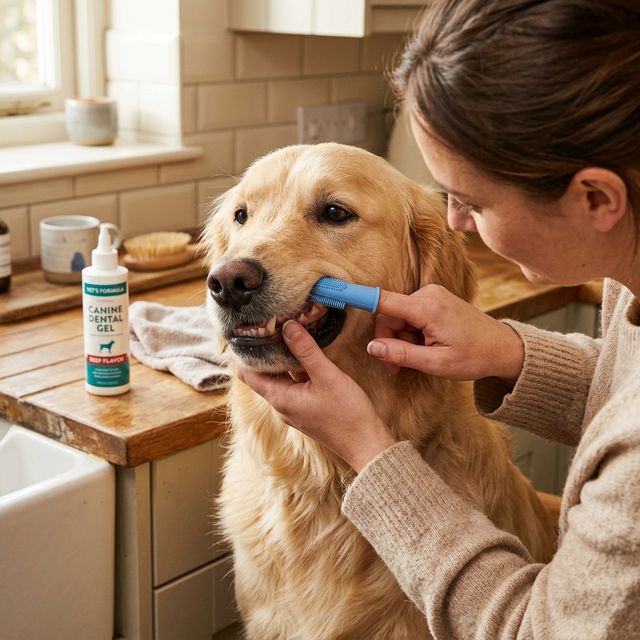
Put paste on your finger. Lift your dog’s lip and gently rub the paste against their front teeth and gums. Only do this for 3-5 seconds. Reward them heavily afterward. Gradually work your way toward the back molars.
Step 4: Introducing the Brush (Week 2)
Put paste on the toothbrush. Lift the lip and gently brush one or two teeth in a circular motion, focusing on where the tooth meets the gumline. Stop before the dog gets fussy.
Step 5: The Full Routine
Gradually increase the number of teeth you brush. You do not need to pry the dog’s mouth open to brush the inside surfaces of the teeth; the dog’s tongue does a relatively good job of keeping the inside surfaces clean. Focus 90% of your effort on the outside surfaces (the cheek side) of the teeth.
How Often?
- Ideal: Daily.
- Acceptable: 3 times a week.
- Ineffective: Once a week or less. Plaque hardens into tartar in 48 hours. If you brush once a week, you are just polishing tartar.
Professional Dental Cleanings
Even with daily brushing, most dogs will eventually need a professional dental scaling and polishing under general anesthesia at the vet clinic.
Anesthesia-free dentals (sometimes offered by groomers) are cosmetic only. They scrape the visible tartar off the tooth but cannot clean under the gumline where the actual disease occurs, leaving the dog in pain while looking “clean.”
DogSupplyFinder Research Team
Product Research
Our research team analyzes ingredient lists, AAFCO feeding standards, safety specifications, and thousands of verified owner reviews, with particular attention to breed-specific needs such as brachycephalic breeds and dogs with dietary sensitivities. Evaluations prioritize safety specs, third-party certifications, and manufacturer quality controls over marketing language.
Related reading
Same cluster on this site — live guides only.
Dog Tips, Deals & Gear Guides
Expert buying guides, breed-specific product picks, and honest gear reviews. Plus our free New Puppy Checklist for subscribers.
📬 No spam, ever. Unsubscribe anytime. · Get the free puppy checklist