Dog First Aid Basics Every Owner Should Know
Wound care, choking, heatstroke, and poisoning. Quick reference first aid procedures before you can reach a vet.

DogSupplyFinder Research Team
Product Research ·
📖 Table of Contents
Medical Disclaimer
This content is for informational purposes only and is not intended as a substitute for professional veterinary advice, diagnosis, or treatment. Always consult with a qualified veterinarian before making changes to your dog's care routine.
Medically reviewed by Dr. Sarah Mitchell, DVM, DVM
Licensed veterinarian. This article has been reviewed for medical accuracy.
You can’t always reach a vet within minutes. A dog choking on a ball, bleeding from a cut, or showing signs of poisoning needs help now. Basic first aid keeps the situation from getting worse until professional care is available.
This is not a substitute for veterinary treatment. This is what you do in the gap between “something happened” and “we’re at the vet.”
Build a Dog First Aid Kit
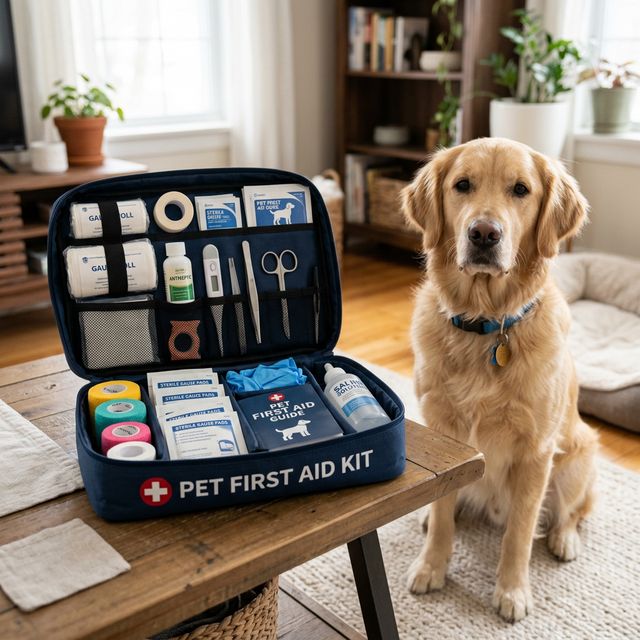
Keep this assembled and accessible. In a car emergency, a first aid kit in the garage doesn’t help.
Contents:
- Gauze pads and rolls
- Non-stick bandages (Telfa pads)
- Self-adhesive wrap (Vet Wrap or similar)
- Medical tape
- Blunt-tipped scissors
- Tweezers (fine-tipped for ticks and splinters)
- Digital thermometer (rectal, lubricated with petroleum jelly)
- Hydrogen peroxide 3% (for inducing vomiting ONLY when directed by a vet)
- Sterile saline solution (for flushing wounds and eyes)
- Disposable gloves
- Emergency blanket
- Muzzle (injured dogs bite, even friendly ones)
- Styptic powder (for nail bleeding)
- Your vet’s phone number and nearest emergency vet address
Bleeding Wounds
Minor Cuts and Scrapes
- Clean the wound with sterile saline or clean water
- Apply gentle pressure with gauze if bleeding
- Apply a thin layer of antibiotic ointment (Neosporin without pain relief ingredient is safe for dogs)
- Cover with a non-stick pad and wrap with self-adhesive bandage
- Change the bandage daily and watch for infection (redness, swelling, discharge, odor)
Serious Bleeding
- Apply direct pressure with a clean cloth or gauze. Don’t remove the cloth if it soaks through. Add more layers on top.
- If the wound is on a paw or leg, hold it above heart level while keeping pressure on it
- Do NOT apply a tourniquet unless you’ve been trained to do so. Improper tourniquets cause more harm.
- Get to a vet immediately. Serious bleeding can cause shock within minutes.
Broken Nails
Broken nails bleed a lot and dogs panic, making it look worse than it usually is.
- Apply styptic powder or cornstarch to the bleeding nail
- Hold gentle pressure for 30 seconds
- If the nail is dangling, don’t pull it off. Let your vet handle removal.
Choking
Signs of Choking
- Pawing at the mouth
- Gagging without producing anything
- Blue-tinged gums or tongue
- Distressed, panicked behavior
- Difficulty breathing or no breathing
What to Do
- Open the mouth and look. Can you see the object? If yes and you can reach it, try to remove it with your fingers or pliers. Be careful not to push it deeper.
- If you can’t see or reach it, use the modified Heimlich:
- Small dogs: Hold the dog with their back against your chest, place a fist just below the rib cage, and press inward and upward with sharp thrusts
- Large dogs: Stand behind the dog, wrap your arms around the belly, make a fist just behind the last rib, and thrust inward and upward
- After dislodging: Even if the dog seems fine, get to a vet. Internal damage from the object or the procedure may not be immediately visible.
Heatstroke
Recognizing Heatstroke
- Heavy panting that won’t stop
- Thick, ropy drool
- Bright red or dark red gums
- Staggering, disorientation
- Vomiting or diarrhea
- Collapse
- Rectal temperature above 104F (40C)
Emergency Cooling
- Move the dog to shade or air conditioning immediately
- Pour cool (not cold) water over the dog. Focus on the belly, inside of the legs, and paw pads where blood vessels are close to the surface.
- Place cool, wet towels on the dog. Replace them frequently (towels insulate quickly and trap heat).
- Offer small amounts of cool water to drink. Don’t force it.
- Do NOT use ice water or ice baths. Rapid cooling causes blood vessels to constrict, trapping heat in the core.
- Get to a vet. Heatstroke causes internal organ damage that isn’t visible externally.
Temperature target: Cool the dog to 103F (39.4C) and then stop active cooling. Below 103F, the body can overcool and cause new problems.
Poisoning
If Your Dog Ate Something Toxic
- Identify what they ate. Save the container, take a photo, or bring a sample.
- Call poison control: ASPCA (888-426-4435) or Pet Poison Helpline (855-764-7661). The $75 consultation fee is worth it.
- Follow their instructions. They may tell you to induce vomiting with hydrogen peroxide or they may tell you NOT to. Some substances cause more damage coming back up (caustic chemicals, sharp objects).
- Do NOT induce vomiting unless specifically told to by poison control or your vet. Common exceptions where vomiting is harmful: bleach, drain cleaner, petroleum products, and sharp objects.
- Hydrogen peroxide dosing (when directed): 1 teaspoon per 10 lbs body weight, up to 3 tablespoons max. Give by mouth with a syringe. It usually works within 10-15 minutes. If no vomiting after one dose, you can repeat once. After that, get to the vet.
Common Poisoning Symptoms
- Vomiting and diarrhea
- Excessive drooling
- Uncoordinated movement (ataxia)
- Tremors or seizures
- Collapse
- Pale or blue gums
Burns
- Thermal burns (hot liquids, fires): Cool with running lukewarm water for 10 minutes. Cover loosely with a clean, non-stick cloth. Don’t apply butter, oil, or ointments. Get to a vet.
- Chemical burns (bleach, cleaners): Flush with large amounts of water for 15-20 minutes. Wear gloves to avoid burning yourself. Don’t let the dog lick the area. Get to a vet.
Seizures
- Don’t restrain the dog. Move furniture and objects away to prevent injury.
- Don’t put anything in their mouth. Dogs don’t swallow their tongues.
- Time the seizure. Seizures lasting more than 5 minutes are a medical emergency requiring immediate veterinary intervention.
- After the seizure: The dog will be disoriented and may act blind or confused for several minutes to hours (postictal phase). Keep the environment calm and quiet.
- Record what happened. When it started, how long it lasted, what the movements looked like. Video if possible. This helps your vet significantly.
Fractures and Limb Injuries
- Don’t try to set the bone or push anything back into place
- Muzzle the dog gently (injured dogs bite reflexively from pain)
- Support the injured leg without applying pressure to the break
- Use a flat surface (board, car floor mat) as a stretcher for transport if the dog can’t walk
- Get to a vet. Do not splint unless you’ve been specifically trained. Improper splinting can worsen the injury.
Emergency Contact Numbers
Save these in your phone now:
- Your regular vet: _______________
- Nearest 24-hour emergency vet: _______________
- ASPCA Animal Poison Control: 888-426-4435
- Pet Poison Helpline: 855-764-7661
Frequently Asked Questions
What is the pet poison control phone number?
Keep both numbers saved in your phone before you need them: ASPCA Animal Poison Control: (888) 426-4435 and Pet Poison Helpline: (855) 764-7661. Both lines are available 24/7, 365 days a year. Note that there is a consultation fee (around $85–$95). Have your pet’s weight, breed, and the suspected substance ready before you call.
Can I give my dog human medications?
Very few human medications are safe for dogs, and dosages are completely different. Ibuprofen and acetaminophen are both toxic to dogs. Some antihistamines (Benadryl/diphenhydramine) are safe at specific doses, but always check with your vet first. Never give medication without veterinary guidance.
When should I muzzle my injured dog?
Whenever a dog is in significant pain and you need to handle the injured area. Even the most gentle dog may bite when pain is severe. Use a muzzle made of soft material, or improvise with gauze wrapped around the snout in a figure-eight pattern tied behind the head. Do NOT muzzle a dog that’s vomiting, having difficulty breathing, or has a mouth injury.
Should I take a pet first aid course?
Yes. The American Red Cross offers pet first aid certification courses, and many local animal shelters host hands-on workshops. Practicing techniques before an emergency makes you faster and more effective when it counts.
You Might Also Like
DogSupplyFinder Research Team
Product Research
Our research team analyzes ingredient lists, AAFCO feeding standards, safety specifications, and thousands of verified owner reviews, with particular attention to breed-specific needs such as brachycephalic breeds and dogs with dietary sensitivities. Evaluations prioritize safety specs, third-party certifications, and manufacturer quality controls over marketing language.
Dog Tips, Deals & Gear Guides
Expert buying guides, breed-specific product picks, and honest gear reviews. Plus our free New Puppy Checklist for subscribers.
📬 No spam, ever. Unsubscribe anytime. · Get the free puppy checklist