Dog Walking Safety Tips for Every Season
Weather hazards, traffic risks, and wildlife encounters. Season-by-season walking safety for dogs of every size and breed.

Alex Corsa
Founder & Editor ·
📖 Table of Contents
Medical Disclaimer
This content is for informational purposes only and is not intended as a substitute for professional veterinary advice, diagnosis, or treatment. Always consult with a qualified veterinarian before making changes to your dog's care routine.
Walking your dog is the single most important activity you do together. It provides physical exercise, mental stimulation, socialization opportunities, and bonding time. It’s also where most preventable injuries happen. A few adjustments based on weather, traffic, and common hazards can make every walk safer.
Summer Walking Safety
Heat Management
Asphalt reaches 140F when the air temperature is 85F. That’s hot enough to cause second-degree burns on paw pads in under 60 seconds. The “seven-second test” works: press the back of your hand flat on the pavement. If you can’t hold it for seven seconds, it’s too hot for your dog’s paws.
- Walk before 9am or after 7pm during summer months
- Stick to grass, dirt paths, or shaded sidewalks
- Bring water and a collapsible bowl on every walk
- Watch for panting that escalates rather than steadies (a sign of overheating)
- Brachycephalic breeds need extra precautions in heat
Heatstroke Warning Signs
- Excessive drooling with thick, ropy saliva
- Staggering or uncoordinated walking
- Bright red tongue and gums
- Vomiting or diarrhea
- Collapse
If you see these, get your dog to shade immediately, wet them with cool (not cold) water, and head to the nearest vet. Heatstroke can kill within 15 minutes.
Winter Walking Safety
Cold Weather Gear
Not all dogs need winter gear. Double-coated breeds (Huskies, Malamutes, Bernese Mountain Dogs) thrive in cold weather. Short-coated breeds (Greyhounds, Chihuahuas, Pit Bulls) and small dogs lose body heat quickly and benefit from winter coats and boots.
Ice and Salt Hazards
Road salt and chemical ice melt irritate paw pads and are toxic if ingested (dogs lick their paws). After winter walks:
- Wipe all four paws with a damp cloth
- Check between toes for packed ice or snow
- Consider paw wax (like Musher’s Secret) as a barrier before walks
- Dog boots eliminate the problem entirely but many dogs hate wearing them
Reduced Visibility
Winter means shorter days. If you walk before sunrise or after sunset:
- Use a reflective collar, harness, or leash
- Clip an LED light to your dog’s collar
- Wear something reflective yourself
- Avoid unlit roads and parking lots
Spring Walking Safety
Allergies
Dogs get seasonal allergies too. If your dog starts scratching, chewing paws, or getting ear infections in spring, pollen is a likely trigger. A quick rinse after walks can reduce symptoms by washing allergens off the coat.
Ticks and Fleas
Tick season starts when ground temperatures consistently exceed 45F. After every walk in grassy or wooded areas:
- Run your hands over your dog’s entire body
- Check ears (inside and behind), between toes, around the collar, and near the tail base
- Use a tick prevention product recommended by your vet
- Remove ticks promptly with fine-tipped tweezers (pull straight out, don’t twist)
Puddles and Standing Water
Puddles can contain leptospirosis bacteria, antifreeze runoff, and pesticides. Discourage drinking from puddles. Carry fresh water instead.
Fall Walking Safety
Mushrooms
Wild mushrooms appear in yards, parks, and trails after fall rains. Some species are lethally toxic to dogs, and dogs are attracted to the smell. If your dog eats a wild mushroom, contact your vet or the ASPCA Animal Poison Control Center (888-426-4435) immediately. Take a photo of the mushroom for identification.
Acorns and Chestnuts
Dogs sometimes eat fallen acorns and chestnuts. Small quantities cause stomach upset. Large quantities can cause intestinal obstruction. Keep your dog moving through areas with heavy debris.
Lower Light Levels
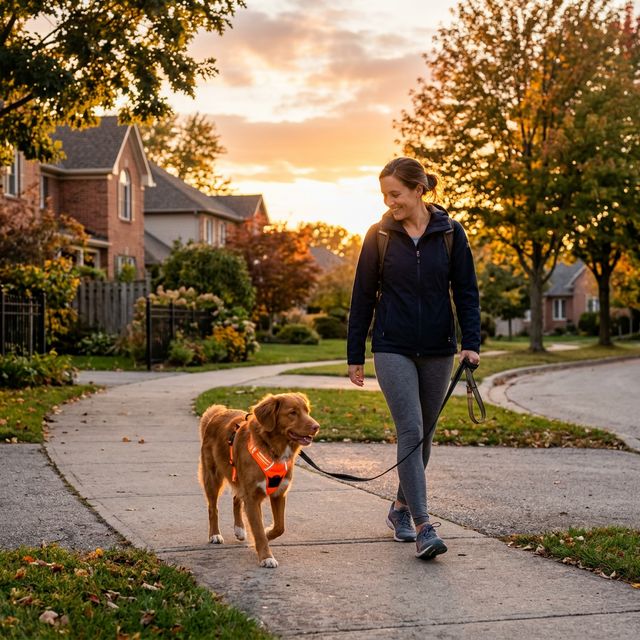
Like winter, fall brings earlier sunsets. Break out the reflective gear before you need it.
Year-Round Safety
Leash Manners
An untrained dog on a leash is a hazard to everyone. Lunging at other dogs, pulling into traffic, and wrapping the leash around your legs can all cause injuries. If your dog pulls hard, a front-clip harness redirects their body without causing neck strain. For strong pullers, see our heavy-duty leash recommendations.
Traffic Awareness
- Always walk facing traffic on roads without sidewalks
- Cross at intersections and crosswalks, not mid-block
- Teach your dog to sit at every curb before crossing
- Retractable leashes are dangerous near roads. Use a fixed 4-6 foot leash.
Wildlife Encounters
- Give skunks, porcupines, and raccoons a wide berth
- Get between your dog and the wildlife, not the other way around
- If bitten by a snake, get to a vet immediately. Do not try to suck out venom or apply a tourniquet
- Carry a bright flashlight on evening walks to spot wildlife before your dog does
Etiquette
- Pick up after your dog. Every time. Carry extra bags.
- Ask before allowing your dog to approach another dog
- Yield to pedestrians on narrow paths
- Control barking in residential areas, especially early morning and late evening
How Long Should Walks Be?
| Dog Type | Daily Walking | Notes |
|---|---|---|
| Puppies (under 6 months) | 5 minutes per month of age, twice daily | Over-exercising damages developing joints |
| Small breeds | 20-30 minutes, 1-2 times daily | Adjust for energy level |
| Medium breeds | 30-60 minutes, 1-2 times daily | Most dogs fall here |
| Large/active breeds | 60-90 minutes, 1-2 times daily | Labs, Shepherds, Pointers need more |
| Senior dogs | 15-30 minutes, 2 times daily | Shorter, slower walks; watch for limping |
| Brachycephalic breeds | 20-30 minutes, moderate pace | Stop at any breathing distress |
Essential Walking Gear: What’s Worth Carrying
The right gear prevents most common walk injuries and emergencies. Here’s what belongs in your walking kit:
Harness vs. Collar
For most dogs — especially strong pullers or brachycephalic breeds — a harness is safer than a collar for walking. Collars can cause tracheal damage in dogs that pull, and are dangerous for flat-faced breeds that already have compromised airways.
- Front-clip harness: Best for pullers — redirects the dog sideways when they lunge forward. Less exhausting than fighting a tight leash. See our no-pull harness guide.
- Standard back-clip harness: Good for calm dogs that don’t pull. What most dogs should wear for everyday walks.
- Flat collar: Fine for ID tags, not recommended as the primary walking attachment for any dog that pulls.
For harnesses specifically designed for brachycephalic breeds (Frenchies, Pugs, Bulldogs), see our brachycephalic harness guide.
Leash Length and Type
For most walks: a 4–6 foot fixed leash gives you the right balance of control and freedom. Leather lasts longest and doesn’t cut into your hands when a dog pulls. Heavy-duty nylon works for strong pullers. See our heavy-duty leash picks for large or reactive dogs.
Avoid retractable leashes on streets: No lockout mechanism is fast enough to stop a dog from lunging into traffic. Retractable leashes also teach dogs to maintain constant tension, making loose-leash training harder.
GPS Tracker
If your dog ever slips a leash or collar, a GPS tracker means you can find them before they get far. Attach one to the collar (not the harness, which may be removed indoors). Our dog GPS tracker guide covers the best real-time options.
Paw Protection
- Summer: Paw wax (like Musher’s Secret) creates a protective barrier against hot pavement. Dog boots eliminate the problem entirely.
- Winter: Same paw wax protects against road salt and ice melt chemicals. Wipe paws down after every winter walk even if you use wax.
- Year-round: Check between toes and under nail beds after walks in grassy or wooded areas for ticks, foxtails, and embedded debris.
Collapsible Water Bowl
For walks over 20 minutes or in warm weather: bring water. Silicone collapsible bowls weigh almost nothing and clip to your bag or belt loop. On any warm day, offer water every 15 minutes to a brachycephalic dog, every 20–30 minutes for other breeds.
Frequently Asked Questions
Is it safe to walk my dog in the rain?
Yes, if the temperature is reasonable and your dog tolerates it. Dry your dog thoroughly when you get home to prevent skin issues. Watch for flooding and fast-moving water in low areas.
My dog eats everything on walks. How do I stop this?
Train the “leave it” command at home first, then practice on walks. Keep your dog on a shorter leash in problem areas. Some dogs do well with a basket muzzle that prevents eating without restricting breathing. See our muzzle guide for options.
How do I know if my dog is getting enough exercise?
A well-exercised dog is calm and relaxed at home. A dog that’s destructive, hyperactive, or barking excessively often needs more physical activity. Start with an extra 15-minute walk and see if behavior improves.
You Might Also Like
- Best Dog Winter Gear 2026: Coats, Boots, and Cold Weather Essentials
- Best Cooling Products for Dogs in Hot Weather
- Best Heavy Duty Dog Leashes for Strong Pullers
- Best Dog GPS Trackers for Off-Leash Confidence
- Dog First Aid Basics: What Every Owner Should Know
- Leash Reactivity Training: How to Calm a Dog That Lunges
Alex Corsa
Founder & Editor
Alex Corsa has owned and fostered dogs for over 12 years, with hands-on experience caring for everything from senior mastiffs to reactive rescues and brachycephalic breeds. He started DogSupplyFinder after spending two frustrating years testing gear that failed, broke, or simply didn't work as advertised. Every recommendation on this site has been vetted against real-world use — not affiliate commission rates. Alex cross-references veterinary guidelines and AAFCO regulations for all food and health content.
Dog Tips, Deals & Gear Guides
Expert buying guides, breed-specific product picks, and honest gear reviews. Plus our free New Puppy Checklist for subscribers.
📬 No spam, ever. Unsubscribe anytime. · Get the free puppy checklist