Dog Water Safety: Not All Dogs Can Swim
Many owners assume all dogs can swim. They cannot. Some breeds sink like stones. Here is how to keep your dog safe around water.

DogSupplyFinder Research Team
Product Research ·
📖 Table of Contents
The Myth: All Dogs Are Natural Swimmers
While some breeds are excellent swimmers (Labrador Retrievers, Portuguese Water Dogs, Irish Water Spaniels), many breeds are physically incapable of swimming efficiently and will drown without intervention.
Breeds That Cannot Swim Well
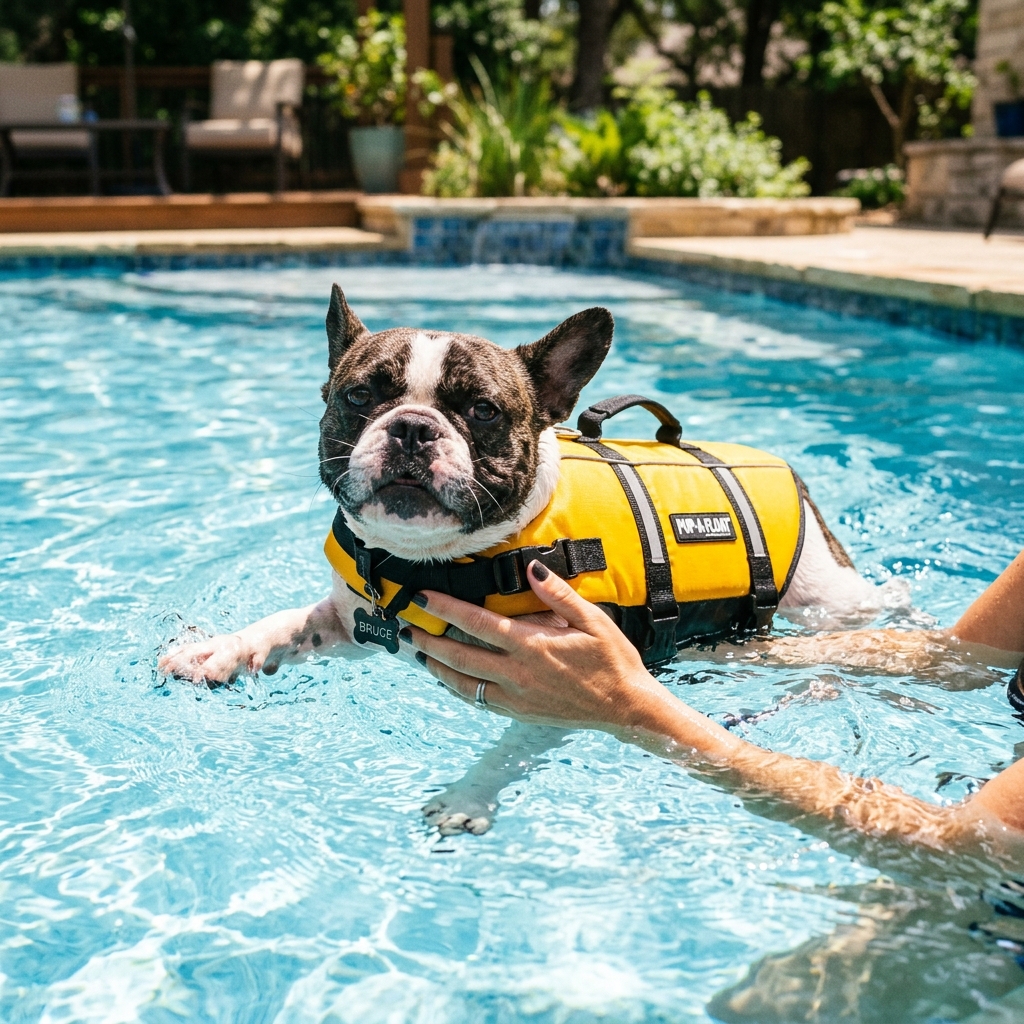
- Bulldogs (English and French): Their massive heads, barrel chests, and short legs make them top-heavy. They sink.
- Pugs and Pekingese: Short snouts make it nearly impossible to keep their nose above water while paddling.
- Dachshunds: Short legs cannot generate enough propulsion.
- Basset Hounds: Heavy bone structure and short legs.
- Corgis: Can paddle briefly but tire quickly due to short legs and long bodies.
Even Good Swimmers Drown
Drowning is a leading cause of accidental death in dogs. Common scenarios:
- Dogs fall into pools and cannot find the steps to exit
- Dogs swim too far from shore in a lake and exhaust themselves
- Dogs get caught in river currents
- Dogs fall through ice on frozen ponds
For more on this topic, see our guide on Hot Weather Safety: Preventing Heatstroke in Dogs.
Safety Rules
For more on this topic, see our guide on Cold Weather Safety: Protecting Your Dog in Winter.
1. Use a Life Jacket
Every dog near open water should wear a properly fitted canine life jacket with a handle on the back. This applies to swimmers and non-swimmers alike. We compared handle placement, buoyancy, and fit in the dog life jacket guide.
2. Teach Pool Exit
If you have a pool, physically show your dog where the steps or ramp are. Practice exiting multiple times until the dog can find the exit independently from any point in the pool.
3. Never Leave Them Unsupervised
A dog should never be left alone near a pool, lake, or river. Fence off pools when not in use.
4. Watch for Water Intoxication
Dogs that repeatedly fetch toys from water or snap at water from a hose can ingest dangerous amounts of water, causing a condition called water intoxication (hyponatremia). Symptoms include bloating, lethargy, vomiting, loss of coordination, and seizures. This is a medical emergency.
5. Rinse After Swimming
Chlorine from pools and bacteria from lakes can irritate the skin. Rinse your dog with fresh water after every swim. Dry the ears thoroughly to prevent ear infections.
DogSupplyFinder Research Team
Product Research
Our research team analyzes ingredient lists, AAFCO feeding standards, safety specifications, and thousands of verified owner reviews, with particular attention to breed-specific needs such as brachycephalic breeds and dogs with dietary sensitivities. Evaluations prioritize safety specs, third-party certifications, and manufacturer quality controls over marketing language.
Dog Tips, Deals & Gear Guides
Expert buying guides, breed-specific product picks, and honest gear reviews. Plus our free New Puppy Checklist for subscribers.
📬 No spam, ever. Unsubscribe anytime. · Get the free puppy checklist