How to Keep Your Dog Calm at the Vet (Cooperative Care Training)
Vet visits don't have to be traumatic. Cooperative care training teaches your dog to be a willing participant in their own medical care.

DogSupplyFinder Research Team
Product Research ·
📖 Table of Contents
Why Dogs Hate the Vet
From the dog’s perspective, a vet visit is terrifying: strange smells, slippery floors, being restrained by strangers, and pain from injections or examinations.
If every vet visit involves wrestling, muzzling, and forceful restraint, the dog’s fear compounds with each visit. By adulthood, many dogs are so anxious that they require sedation for a simple exam.
For more on this topic, see our guide on How to Dog-Proof Your Home.
The Solution: Cooperative Care
For more on this topic, see our guide on Senior Dog Care: Making Their Golden Years Comfortable.
Cooperative care is a training philosophy where the dog learns to voluntarily participate in their own handling. Instead of being pinned down, the dog is taught to offer behaviors (like resting their chin on a surface or holding a paw up) and given the choice to opt out without punishment.
The Chin Rest
This is the foundation behavior of cooperative care:
- Hold your open hand at the dog’s chin level.
- Wait for the dog to place their chin in your palm (lure with a treat if needed).
- Mark (“Yes!”) and reward.
- Gradually increase the duration they hold their chin in your hand.
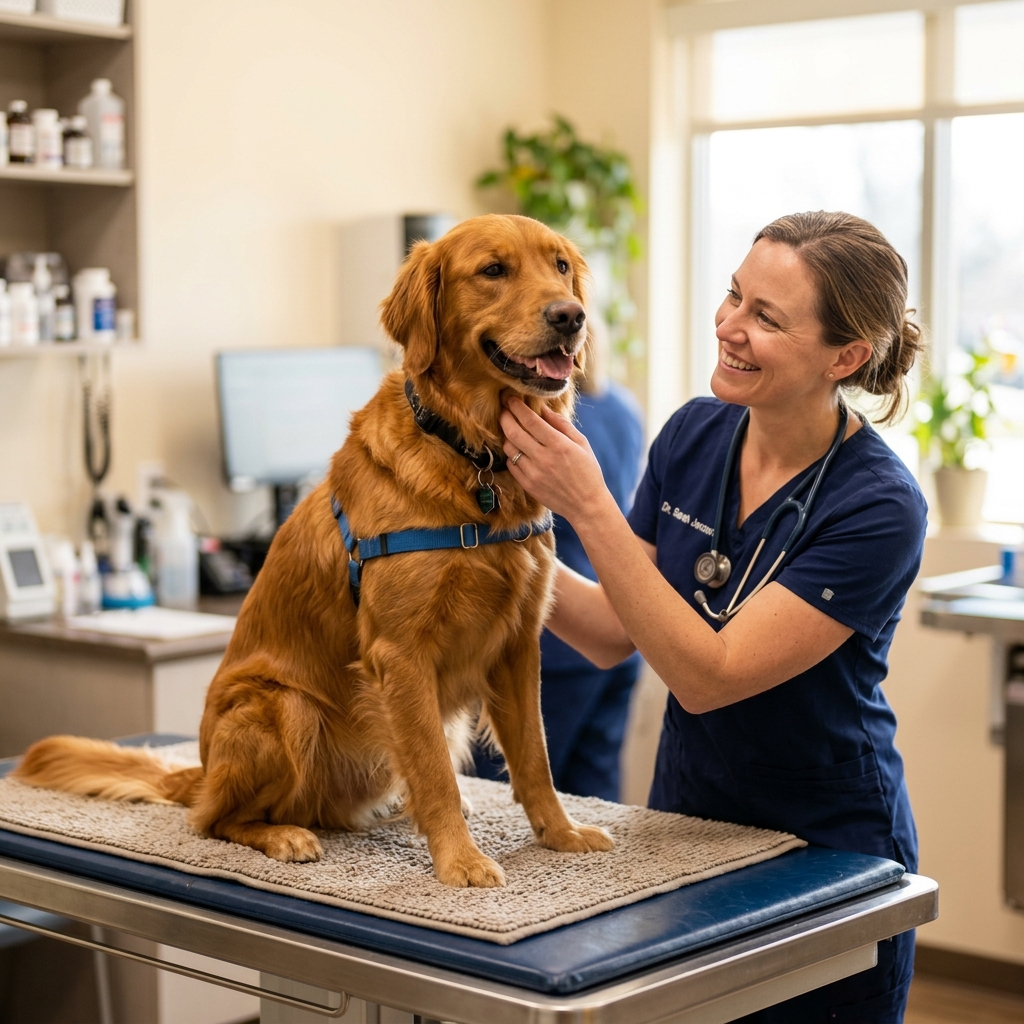
How it’s used: During an exam, the dog rests their chin in the owner’s hand. As long as the chin stays down, the vet proceeds. If the dog lifts their chin (their “opt-out” signal), the vet pauses and waits. The dog learns they have control, which dramatically reduces panic.
Happy Vet Visits
Schedule visits to the vet clinic where nothing medical happens:
- Walk in, get treats from the receptionist.
- Stand on the scale, get treats.
- Sit in the exam room, get treats.
- Leave.
These visits build a positive association with the clinic.
Handling Practice at Home
Practice the procedures your vet performs, but at home in a relaxed setting:
- Touch and hold each paw for 5 seconds. Reward.
- Lift each ear and look inside. Reward.
- Gently open the mouth and look at the teeth. Reward.
- Run your hands firmly over their entire body, pressing gently on the abdomen. Reward.
- Practice gentle restraint holds. Reward.
For the Vet Visit Itself
- Bring extremely high-value treats (cheese, deli meat, squeeze cheese).
- Ask the vet staff to let your dog explore the room for a few minutes before starting the exam.
- Use a non-slip mat on the exam table.
- Ask about Fear Free certified veterinary practices in your area, which are specifically designed to minimize stress.
DogSupplyFinder Research Team
Product Research
Our research team analyzes ingredient lists, AAFCO feeding standards, safety specifications, and thousands of verified owner reviews, with particular attention to breed-specific needs such as brachycephalic breeds and dogs with dietary sensitivities. Evaluations prioritize safety specs, third-party certifications, and manufacturer quality controls over marketing language.
Related reading
Same cluster on this site — live guides only.
- How to Teach Your Dog a Reliable Recall (Come Command)
- How to Teach a Bulletproof Recall ('Come' Command)
- How to Stop Your Dog From Pulling on the Leash (Loose-Leash Walking)
- How to Stop Nuisance Barking: Finding the Root Cause
- How to Stop a Puppy From Biting: Proven Training Methods That Work
- How to Potty Train a Puppy: The Only Method That Works
Dog Tips, Deals & Gear Guides
Expert buying guides, breed-specific product picks, and honest gear reviews. Plus our free New Puppy Checklist for subscribers.
📬 No spam, ever. Unsubscribe anytime. · Get the free puppy checklist