How to Switch Your Dog's Food Without Stomach Problems
The 7-day transition method vets recommend, plus what to do when your dog refuses new food or has digestive issues during the switch.
DogSupplyFinder Research Team
Product Research ·
📖 Table of Contents
Switching dog food cold turkey is one of the fastest ways to give your dog diarrhea. The digestive system adapts to specific protein sources, fat levels, and fiber content. Change everything at once and the gut bacteria can’t keep up, resulting in loose stool, gas, vomiting, and a dog that associates the new food with feeling terrible.
The fix is gradual transition. Every veterinary nutritionist recommends it, yet most dog food bags bury the instructions in tiny print that nobody reads.
The Standard 7-Day Transition
This works for the majority of dogs switching between any two kibble formulas.
| Day | Old Food | New Food |
|---|---|---|
| 1-2 | 75% | 25% |
| 3-4 | 50% | 50% |
| 5-6 | 25% | 75% |
| 7+ | 0% | 100% |
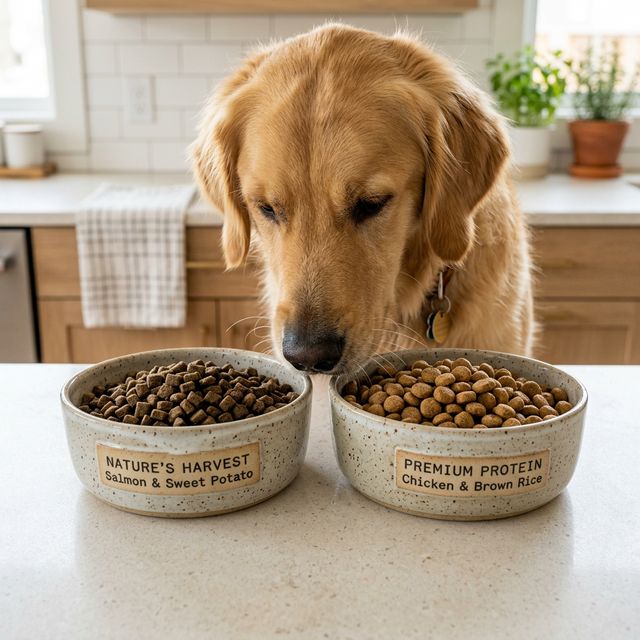
Mix the foods together in the same bowl. Some dogs will try to pick around the new food initially. That’s fine. They usually give in within a day.
When to Go Slower (10-14 Days)
Extend the transition if your dog:
- Has a sensitive stomach or history of digestive issues
- Is switching between very different protein sources (chicken to fish, for example)
- Is a puppy under 6 months
- Is a senior dog over 8 years
- Is switching from kibble to wet food or raw diet
For slow transitions, use 10% increments over 10-14 days instead of 25% jumps.
Why Dogs Need Food Transitions
Your dog’s gut is populated by billions of bacteria that specialize in breaking down specific nutrients. When you feed the same food daily, those bacteria communities stabilize around that food’s composition. A sudden change floods the gut with nutrients the existing bacteria can’t process efficiently, causing fermentation, gas, and diarrhea.
Gradual transition gives the gut bacteria time to adjust their populations. Bacteria that process the new food’s protein and fiber sources grow, while those specialized for the old food decrease. By day 7, the ecosystem has shifted smoothly.
What to Watch For During the Switch
Normal (Keep Going)
- Slightly softer stool for the first 2-3 days
- Mild gas
- Eating slightly less on the first day or two
- Sniffing the bowl suspiciously before eating
Warning Signs (Slow Down or Stop)
- Watery diarrhea lasting more than 24 hours
- Vomiting more than once
- Complete food refusal for 48+ hours
- Blood in stool
- Lethargy or unusual behavior
If you see warning signs, go back to the last ratio that worked and stay there for 3-4 days before trying to progress again. If symptoms persist at any ratio, the new food may not agree with your dog. Consult your vet.
Switching Between Food Types
Kibble to Wet Food
Follow the same 7-day schedule, but reduce total volume slightly. Wet food is more calorie-dense per cup than kibble. Check the feeding chart on the new food and adjust quantities.
Kibble to Raw Diet
This is the biggest jump and should take 2-3 weeks minimum. Some veterinary nutritionists recommend a brief digestive reset (fasting for 12-24 hours) before starting raw food. Discuss with your vet before making this switch, as raw diets require careful nutritional balancing.
Puppy Food to Adult Food
Timing depends on breed size:
- Small breeds: 9-12 months
- Medium breeds: 12 months
- Large breeds: 12-18 months
- Giant breeds: 18-24 months
Puppy food has higher calories, protein, and calcium to support growth. Switching too early can deprive a growing dog of needed nutrients. Switching too late can contribute to weight gain. Your vet can tell you when your specific dog is ready.
Adult Food to Senior Food
Most dogs benefit from switching to a senior formula around age 7. Senior foods typically have fewer calories (to prevent weight gain in less active dogs), added joint supplements (glucosamine, chondroitin), and adjusted protein levels. The 7-day transition schedule works fine here.
When Your Dog Refuses the New Food
Some dogs are stubborn about food changes. Before assuming the food is bad, try these strategies:
- Warm the new food slightly. Heating to room temperature releases aromas that make food more appealing.
- Add a small amount of low-sodium broth. Chicken or bone broth on top of kibble increases palatability.
- Try hand feeding. Some dogs will eat from your hand what they won’t eat from a bowl. This also builds positive association with the new food.
- Wait them out. A healthy dog won’t starve itself. Pick up uneaten food after 20 minutes and offer again at the next meal. Most dogs capitulate within 1-2 meals.
- Don’t add human food as a bribe. This teaches the dog to hold out for better options.
If your dog refuses all food for more than 48 hours, something else may be going on. Consult your vet.
Common Reasons to Switch Food
- Allergies or food sensitivities: Itching, ear infections, and chronic digestive issues often improve with a protein or ingredient change
- Life stage change: Puppy to adult, adult to senior
- Weight management: Switching to a lower-calorie formula
- Medical condition: Kidney disease, diabetes, or urinary issues may require a prescription diet
- Cost: Sometimes you just need a more affordable option
- Recall or discontinuation: Your current food is no longer available
One Food vs. Rotation Feeding
Some owners rotate between 2-3 foods on a regular basis, arguing that variety prevents allergies and ensures broader nutrition. Others stick with one food for consistency.
Both approaches have merit. If you rotate, transition between foods each time (even if your dog has eaten a food before). Gut bacteria adjust to the current food and still need time to readjust when switching back.
Frequently Asked Questions
Can I mix two brands of kibble permanently?
Yes, if both are complete and balanced (look for the AAFCO statement on the label). Many owners do this intentionally to provide variety. Keep the ratio consistent so the gut stays adapted.
My dog had diarrhea on the new food even with a slow transition. Should I give up?
Try one more time with a 14-day transition. If diarrhea returns, the new food likely contains an ingredient your dog is sensitive to. Try a different formula with a different primary protein source.
Do I need to transition treats too?
Not usually. Treats are a small enough portion of the overall diet that switching brands doesn’t cause digestive issues for most dogs. The exception is dogs with known food allergies, who should only get treats that match their dietary restrictions.
You Might Also Like
DogSupplyFinder Research Team
Product Research
Our research team analyzes ingredient lists, AAFCO feeding standards, safety specifications, and thousands of verified owner reviews, with particular attention to breed-specific needs such as brachycephalic breeds and dogs with dietary sensitivities. Evaluations prioritize safety specs, third-party certifications, and manufacturer quality controls over marketing language.
Dog Tips, Deals & Gear Guides
Expert buying guides, breed-specific product picks, and honest gear reviews. Plus our free New Puppy Checklist for subscribers.
📬 No spam, ever. Unsubscribe anytime. · Get the free puppy checklist