The Ultimate List of Toxic Foods for Dogs
Chocolate is just the beginning. From grapes to artificial sweeteners, here is the comprehensive list of human foods that are dangerous or fatal to dogs.

DogSupplyFinder Research Team
Product Research ·
📖 Table of Contents
The Most Dangerous Household Foods
Many foods that humans eat daily without a second thought are highly toxic to dogs. If you suspect your dog has eaten any of these, contact your veterinarian or the ASPCA Animal Poison Control Center immediately.
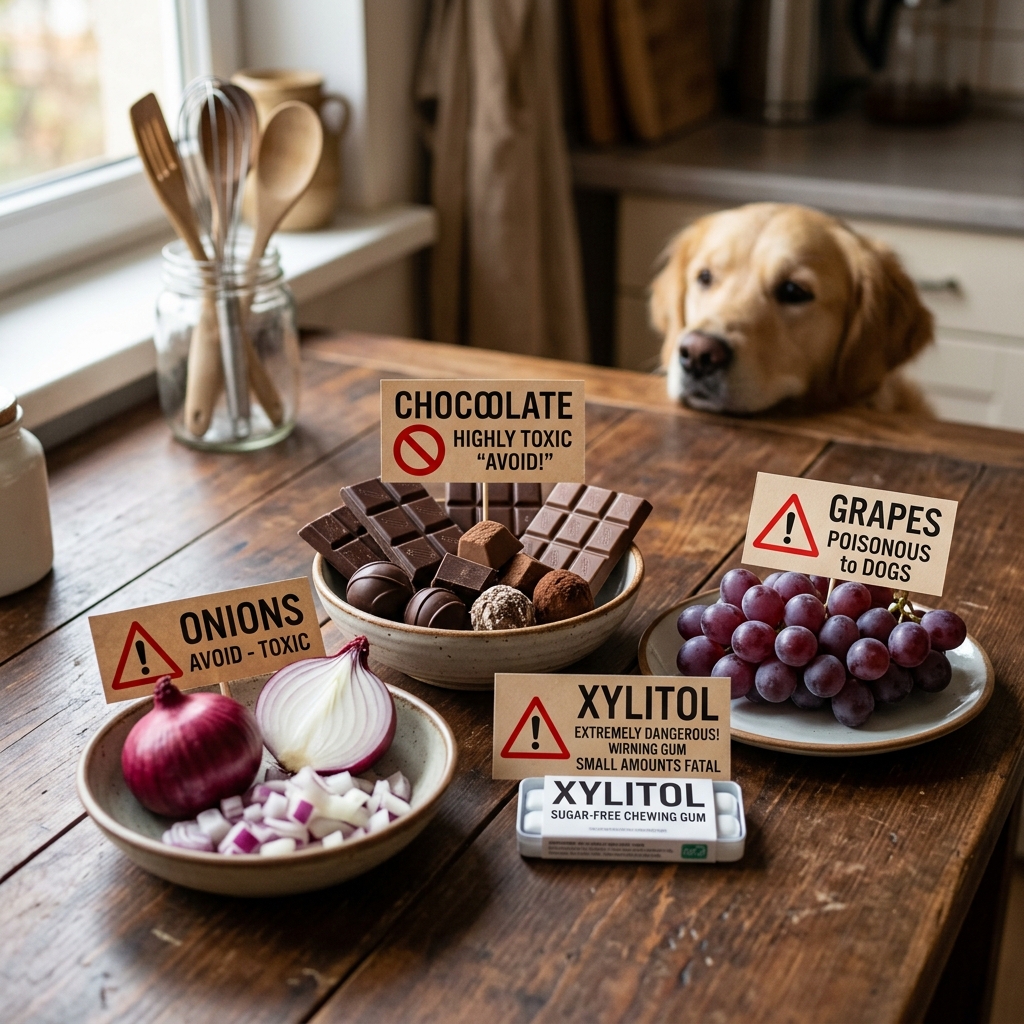
1. Xylitol (Birch Sugar)
Xylitol is an artificial sweetener found in sugar-free gum, candy, baked goods, and some brands of peanut butter. In dogs, it causes a massive, rapid release of insulin, leading to severe hypoglycemia (low blood sugar) within 10 to 60 minutes. It can also cause acute liver failure. Symptoms: Vomiting, weakness, staggering, collapse, seizures.
2. Grapes and Raisins
The exact toxic substance in grapes and raisins is still unknown, but even a small amount can cause acute kidney failure in some dogs. There is no safe dose; one dog might eat a handful and be fine, while another might go into kidney failure from a single grape. Symptoms: Vomiting, diarrhea, lethargy, decreased urination, abdominal pain.
For more on this topic, see our guide on Hot Weather Safety: Preventing Heatstroke in Dogs.
3. Chocolate, Coffee, and Caffeine
These contain methylxanthines (theobromine and caffeine). Dogs metabolize these much slower than humans do. Dark chocolate and baking chocolate are significantly more dangerous than milk chocolate because they have a higher concentration of theobromine. Symptoms: Panting, excessive thirst and urination, hyperactivity, abnormal heart rhythm, tremors, seizures, and death.
For more on this topic, see our guide on 10 Signs Your Dog Is in Pain (Dogs Hide It Well).
4. Onions, Garlic, and Chives
These belong to the Allium family and contain thiosulfate, which damages canine red blood cells, causing a condition called hemolytic anemia. This applies to all forms: raw, cooked, powdered, and dehydrated (like in soup mixes). Symptoms: Lethargy, pale gums, elevated heart rate, weakness, red or brown urine. Symptoms may not appear until a few days after ingestion.
5. Macadamia Nuts
These can cause weakness, depression, vomiting, tremors, and hyperthermia in dogs. The exact mechanism of toxicity is unknown. Symptoms: Weakness (especially in the hind legs), depression, vomiting, tremors, fever. Usually appears within 12 hours of ingestion.
6. Alcohol
Dogs are far more sensitive to ethanol than humans. Even small amounts of alcohol, including that found in unbaked yeast dough or rotting fruit, can cause significant intoxication. Symptoms: Vomiting, diarrhea, decreased coordination, central nervous system depression, difficulty breathing, tremors, blood acidity, coma, and death.
7. Unbaked Yeast Dough
If a dog eats raw bread dough, the yeast continues to multiply in the warm, moist environment of the stomach. The expanding dough can stretch the abdomen, causing severe pain and potentially rupturing the stomach or intestines. Additionally, as the yeast ferments, it produces alcohol, leading to alcohol poisoning.
8. Avocado
Avocados contain a fungicidal toxin called persin. While dogs are more resistant to persin than birds or horses, it can still cause vomiting and diarrhea. The bigger danger for dogs is the large pit, which poses a severe choking hazard and can cause a fatal intestinal blockage.
Foods That Are Generally Unsafe
While not strictly “toxic,” these foods should be avoided:
- Cooked Bones: Raw bones are generally safe, but cooked bones splinter easily, causing severe internal damage or blockages in the digestive tract.
- Corn on the Cob: The corn itself is safe, but the cob is indigestible and a notorious cause of intestinal blockages requiring emergency surgery.
- Fatty Trimmings: High amounts of fat (like bacon grease or steak trimmings) can trigger pancreatitis, a painful and potentially life-threatening inflammation of the pancreas.
- Dairy: Many dogs are lactose intolerant. Milk and cheese can cause severe digestive upset, gas, and diarrhea.
What to Do in an Emergency
Do not wait for symptoms to appear. If your dog eats a known toxin, call for professional help immediately. Have this information ready:
- What the dog ate
- Approximately how much they ate
- When they ate it
- Your dog’s current weight
DogSupplyFinder Research Team
Product Research
Our research team analyzes ingredient lists, AAFCO feeding standards, safety specifications, and thousands of verified owner reviews, with particular attention to breed-specific needs such as brachycephalic breeds and dogs with dietary sensitivities. Evaluations prioritize safety specs, third-party certifications, and manufacturer quality controls over marketing language.
Dog Tips, Deals & Gear Guides
Expert buying guides, breed-specific product picks, and honest gear reviews. Plus our free New Puppy Checklist for subscribers.
📬 No spam, ever. Unsubscribe anytime. · Get the free puppy checklist